School Visitor Badge Systems for Schools: Simple Systems for Safety
Why a School Visitor Badge Matters for Everyday Safety
A school visitor badge is a simple visual signal that someone has checked in, understands where they’re going, and is following the school’s routine. For staff, that quick clarity reduces uncertainty in hallways and helps them offer directions or support without awkward guesswork. For parents and guardians, it can feel reassuring: there’s a consistent process, and everyone is treated the same way.
Badges work best when they’re part of a repeatable, low-drama system—controlled entry through the main office, sign-in/sign-out, and clear identification that’s easy to notice at a glance. In other words, the badge isn’t about making school entry intimidating; it’s about making the process normal, predictable, and organized for everyday visits and busier event days (source).
The goal is not “more rules.” The goal is a calm routine: one entry point, one check-in process, and one clear way to show you’ve checked in.
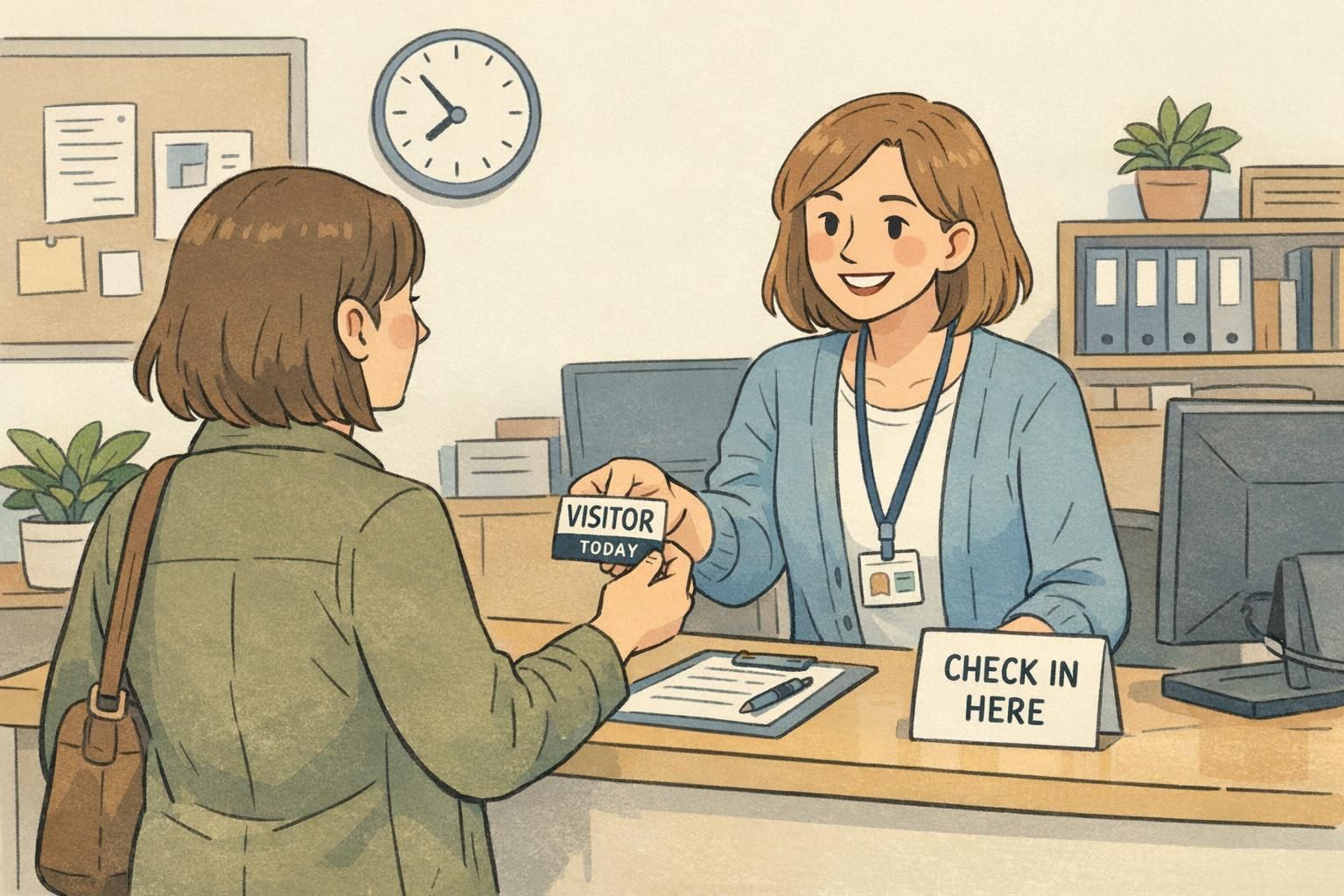
Front Office Check-In: A Simple, Repeatable Guest Flow
The best guest check-in routine is the one staff can run consistently on a normal morning and during high-traffic moments like assemblies, parent-teacher conferences, or after-school pickup. Keeping the flow simple also helps families feel welcomed, because they know what to do without being “corrected” or sent from door to door.
- Enter through the main office: Use clear signs and keep other exterior doors locked or monitored according to school policy.
- Greet and confirm the purpose of the visit: A friendly “How can we help today?” sets a positive tone while still verifying why the person is on campus.
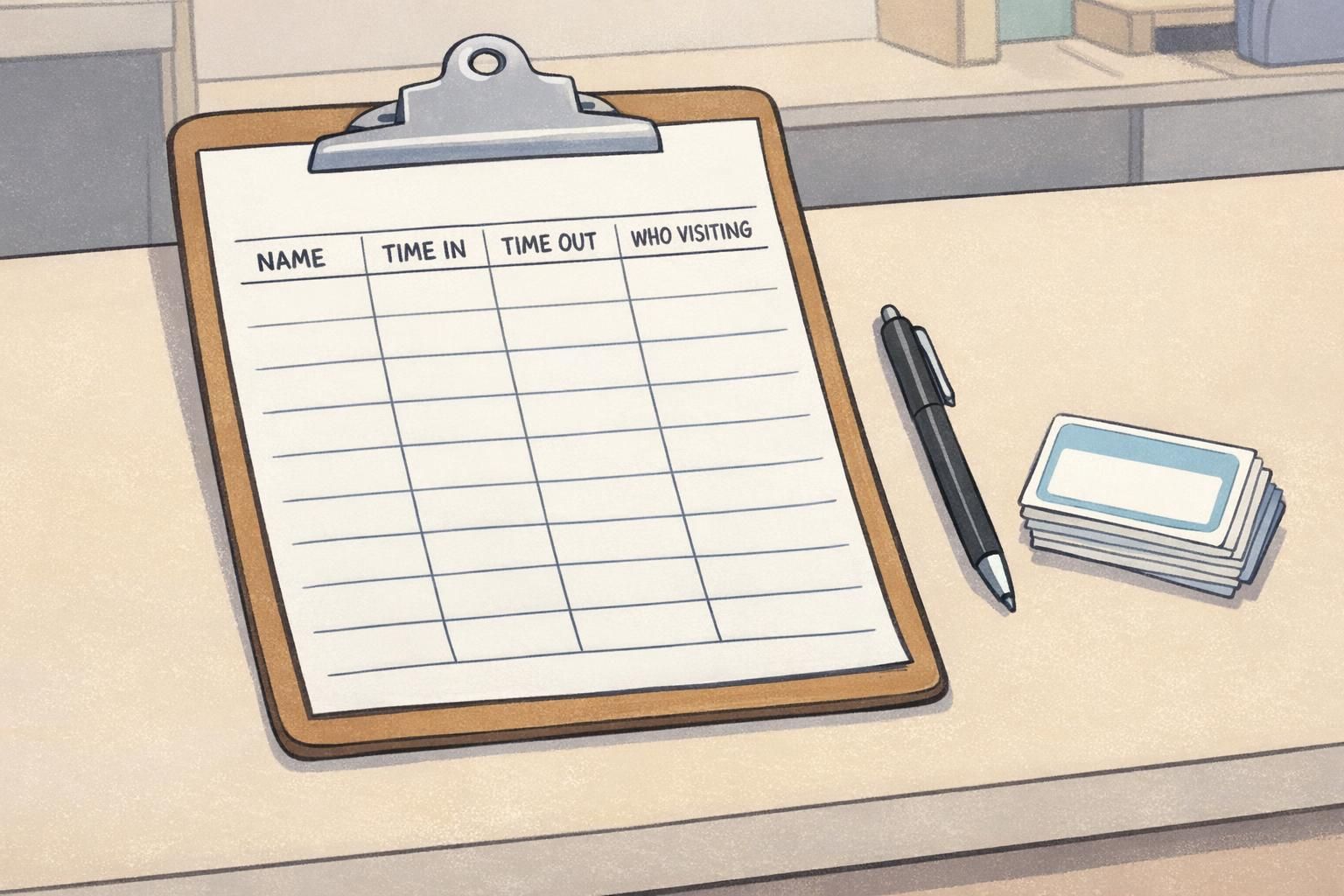
- Sign in (paper or digital): Record the essential details needed for an accurate visitor log.
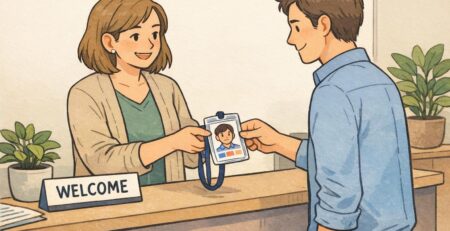
- Receive the visitor badge: Staff hands over a sticker or a reusable badge and gives a one-sentence expectation for display.
- Directions and destination: Confirm where the visitor is going and who they’re meeting (their “host”).
Most schools record a few consistent items: visitor name, time in, destination or area, and who they are visiting (host). Some also record time out during sign-out. The key is consistency—using the same fields for everyone reduces confusion and makes the office process quicker over time.
“When the check-in steps stay the same every day, families stop feeling like they’re interrupting. It becomes a normal part of arriving on campus.” – Front office staff member
Badge Display Rules Everyone Can Follow (Parents, Volunteers, Contractors)
A badge only helps if people can see it. Display rules should be simple enough to explain in one sentence and consistent enough that staff don’t have to improvise. The most common expectations are easy to follow for parents coming in briefly, volunteers helping in a classroom, or contractors working in a hallway.
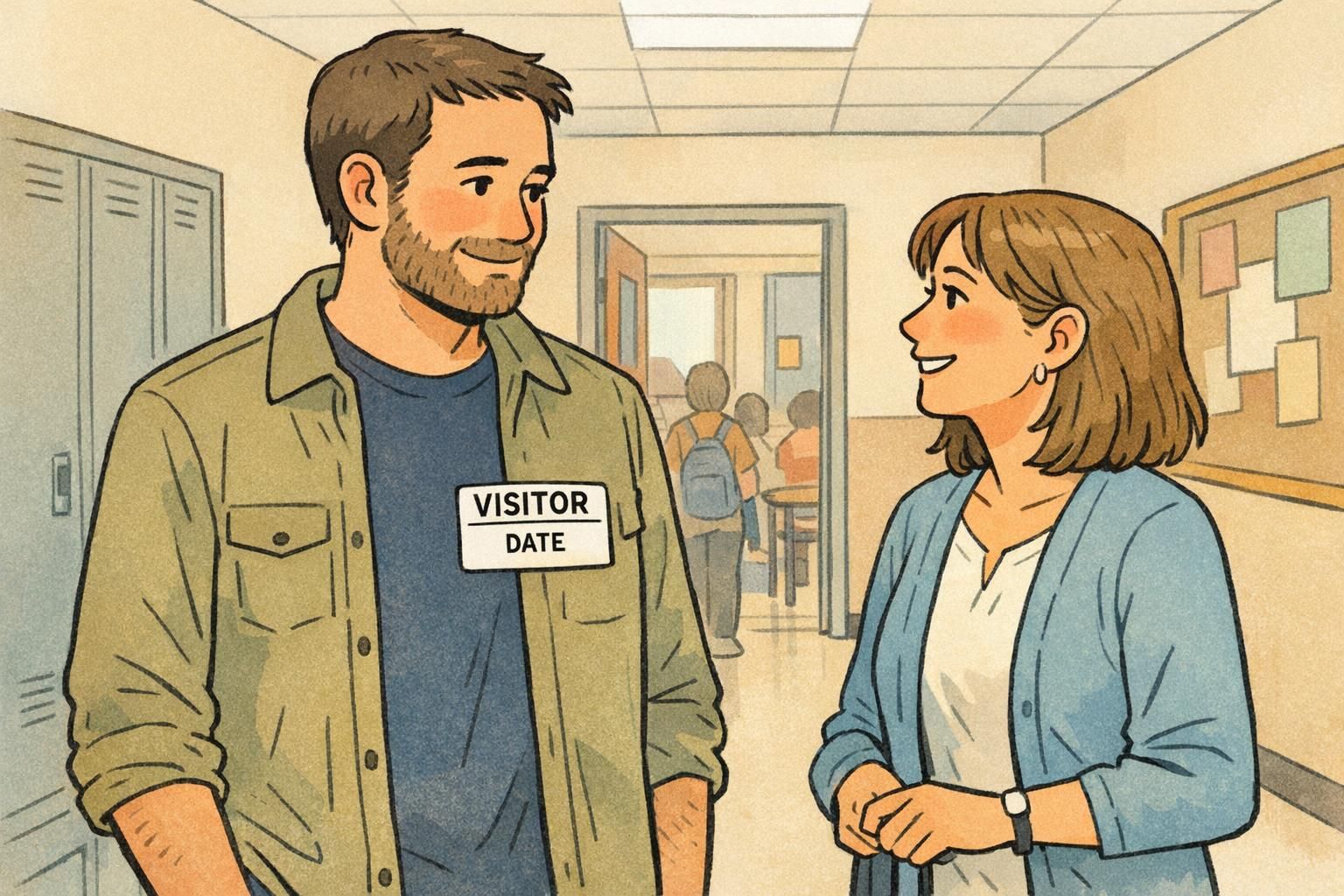
- Wear it above the waist (upper chest area is ideal).
- Keep it facing forward and visible at all times while on campus.
- Place sticker badges on outer clothing (not on bags, phones, or inside pockets).
- For longer visits, use a clip-on badge holder or lanyard so it doesn’t fall off or end up hidden under a coat.
For staff, it helps to have a polite, repeatable reminder that doesn’t sound accusatory. If someone’s badge is turned around or covered by a jacket, a gentle nudge usually fixes it immediately.
“Hi there—thanks for checking in. Just a quick reminder to keep your visitor badge visible while you’re in the building.” – Example staff script
Choosing the Right Visitor Badge Format: Sticker vs. Reusable
Not every visit needs the same badge format. The best choice depends on how many visitors you have, how long they stay, and how your office is staffed. Many schools use a mix: stickers for quick visits and reusable badges for people who are on campus often.
- Disposable sticker badges: Fast to issue, low-cost, and great for short, one-time visits (dropping off paperwork, brief meetings, conferences).
- Reusable badges: Durable and better for frequent volunteers, contractors, or event staff—especially when you want a consistent look and an easy return process.
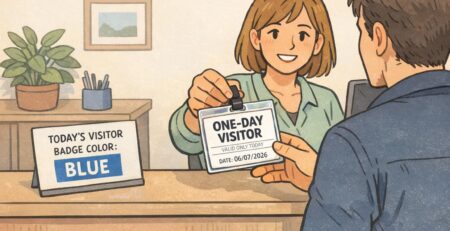
Whichever style you use, design matters. The badge should be easy to scan visually from several feet away: a large “VISITOR” label, high-contrast colors, and a prominent date and/or time indicator. Schools that want an extra layer of clarity often color-code by day (for example, changing sticker color daily). That way, an expired badge stands out quickly without staff needing to read small print.
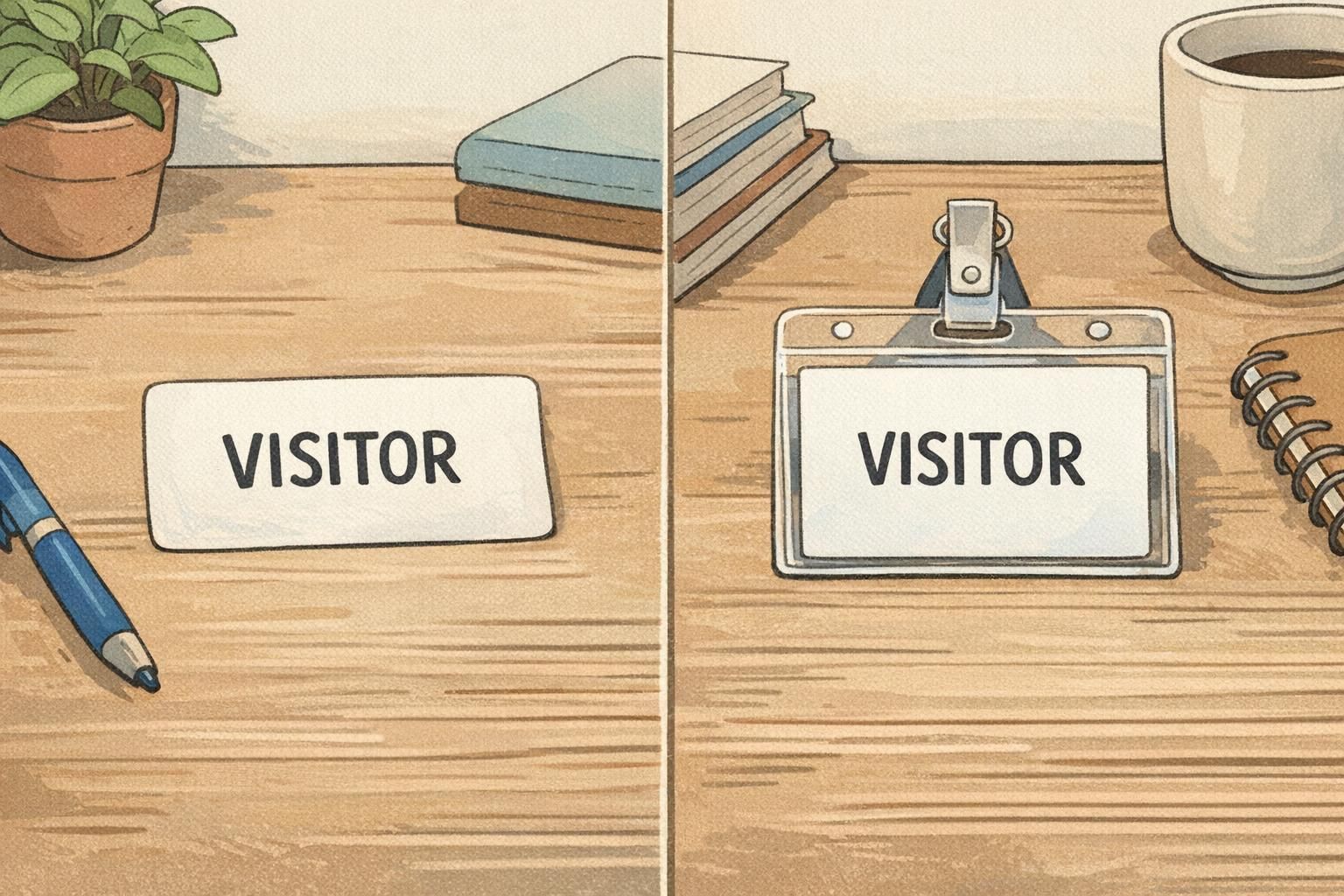
A clear badge design reduces the need for uncomfortable conversations. If staff can identify visitors quickly, reminders stay friendly and brief.
Temporary IDs: What to Include (and What to Leave Off)
Temporary IDs should help staff confirm, at a glance, that a person checked in today and is currently authorized to be on campus. They should also respect privacy. Families and visitors don’t need to display sensitive personal details to walk down a hallway to the office or a meeting room.
- What to include: A clear visitor label (such as “VISITOR”), today’s date, and an expiration time or “valid today” indicator.
- Optional: First name or first initial if your school finds it helpful for friendly greetings and office coordination.
- What to leave off: Full addresses, date of birth, or any sensitive identifiers that don’t directly support managing access and maintaining a visitor log.
Data minimization is a helpful mindset: collect only what the school needs to manage access and keep an accurate record of who is in the building. Some schools use a simple paper clipboard; others use a basic digital tool. Either can work well if the fields are consistent and staff can use it quickly under pressure.
For many everyday school visits, a photo isn’t necessary to meet the goal of clear, consistent identification. If a school chooses to add photos for certain visitor categories, it’s most effective when it’s part of the same standard check-in process, not an extra step that slows down the front office.
Some schools do, but many prefer a first name or initial to balance friendliness with privacy. The most important elements are that it clearly shows “VISITOR” and that it’s valid for the current date/time window.
Badge Return and Sign-Out: Closing the Loop
Sign-out is the step that keeps the visitor list accurate. When a school knows who is still in the building, it’s easier to support end-of-day accountability and handle unexpected situations calmly. In practice, sign-out works best when it’s just as easy as sign-in—no searching for the right person or wondering where to go.
- Make the sign-out point obvious: a return spot at the front desk, a clearly labeled drop box, or a quick “hand it back here” routine.
- Use a consistent reminder: “Please return your badge before exiting.”
- Record time out: whether on paper or in a simple digital log, complete the record before the visitor leaves.
If you use reusable badges, it helps to plan for the occasional non-return. A practical approach is to mark the badge number as missing and retire or deactivate it according to your school’s process. The goal isn’t to “catch” anyone—it’s to keep your inventory and visitor tracking accurate.
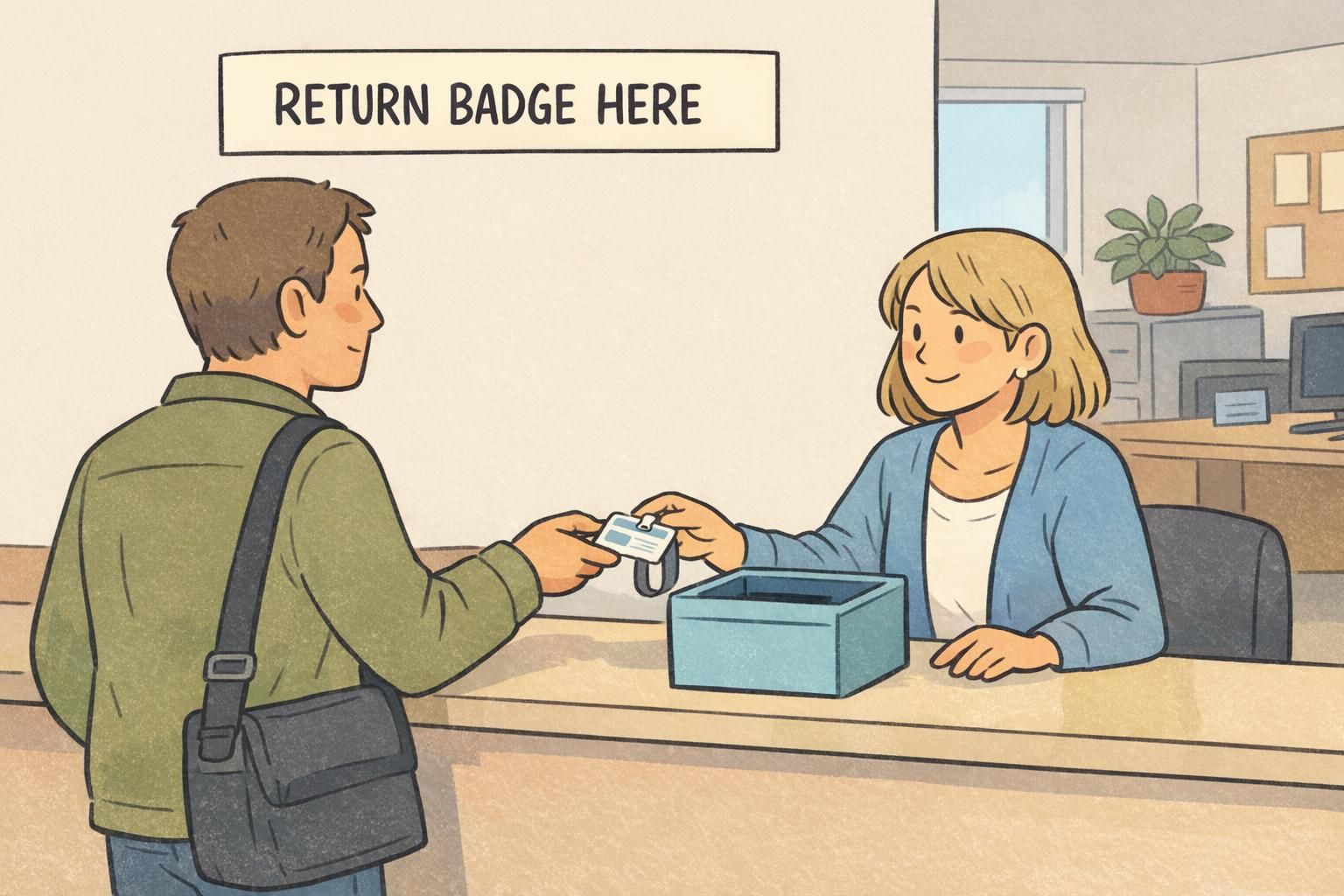
A complete loop—sign in, wear badge, sign out—keeps the system fair, easy to explain, and easier for staff to manage on busy days.
Training Staff to Support a Positive, Consistent System
Even the best badge design can’t replace a friendly, consistent front-office routine. Training doesn’t have to be complicated. It’s about giving staff a small set of repeatable behaviors and scripts so every visitor gets the same experience—especially when the office is busy.
- Greet: Make eye contact and welcome the visitor.
- Verify purpose: Ask who they’re visiting and where they’re going.
- Issue badge: Provide the sticker or reusable badge promptly.
- State the rule once: “Please wear this visibly while you’re in the building.”
- Offer quick directions: Help them get where they’re going without wandering.
Consistency matters because it prevents misunderstandings. If one visitor is asked to check in while another is waved through, it creates confusion and can lead to uncomfortable situations for staff later. A steady approach also reduces conflict, since the expectation is presented as a standard routine—not a personal judgment.
When someone refuses to check in or wear a badge, staff should follow the school’s established policy and escalation steps. The key is to avoid debating rules in the hallway; instead, calmly redirect the person back to the front office and involve the appropriate administrator or security staff as required by your procedures.
Assume it’s an accident, keep the tone neutral, and make it about the building rule, not the person. A quick line like, “Thanks—please keep your visitor badge visible while you’re here,” is usually enough.
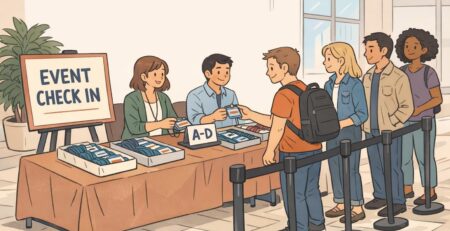
Use the same flow, just scaled up: one check-in point, pre-staged badges, and clear expectations for wearing the badge above the waist and facing forward.
Products That Make School Visitor Badges Easier to Manage
Most schools benefit from a few practical tools that match their front-office workflow. For quick daily visits, sticker visitor badges keep the line moving. For longer visits, a clip-on holder or lanyard can help the badge stay visible and reduce the chance it gets lost or tucked away.
If you’re evaluating formats, look for designs that are easy to recognize quickly: large “VISITOR” text, high contrast, and a clear date/time indicator. Schools that host frequent volunteers or recurring contractors often prefer reusable badges in holders, because they’re durable and easy to collect at sign-out.
For teams looking at visitor badge options for schools, it can be helpful to choose a format that supports the habits you want: fast issuance at check-in, comfortable wear throughout the visit, and simple return at the end. BadgeZoo can produce visitor badges and temporary ID formats with different layouts and finishes, and there’s no minimum order quantity—useful for smaller schools or pilot programs before standardizing.
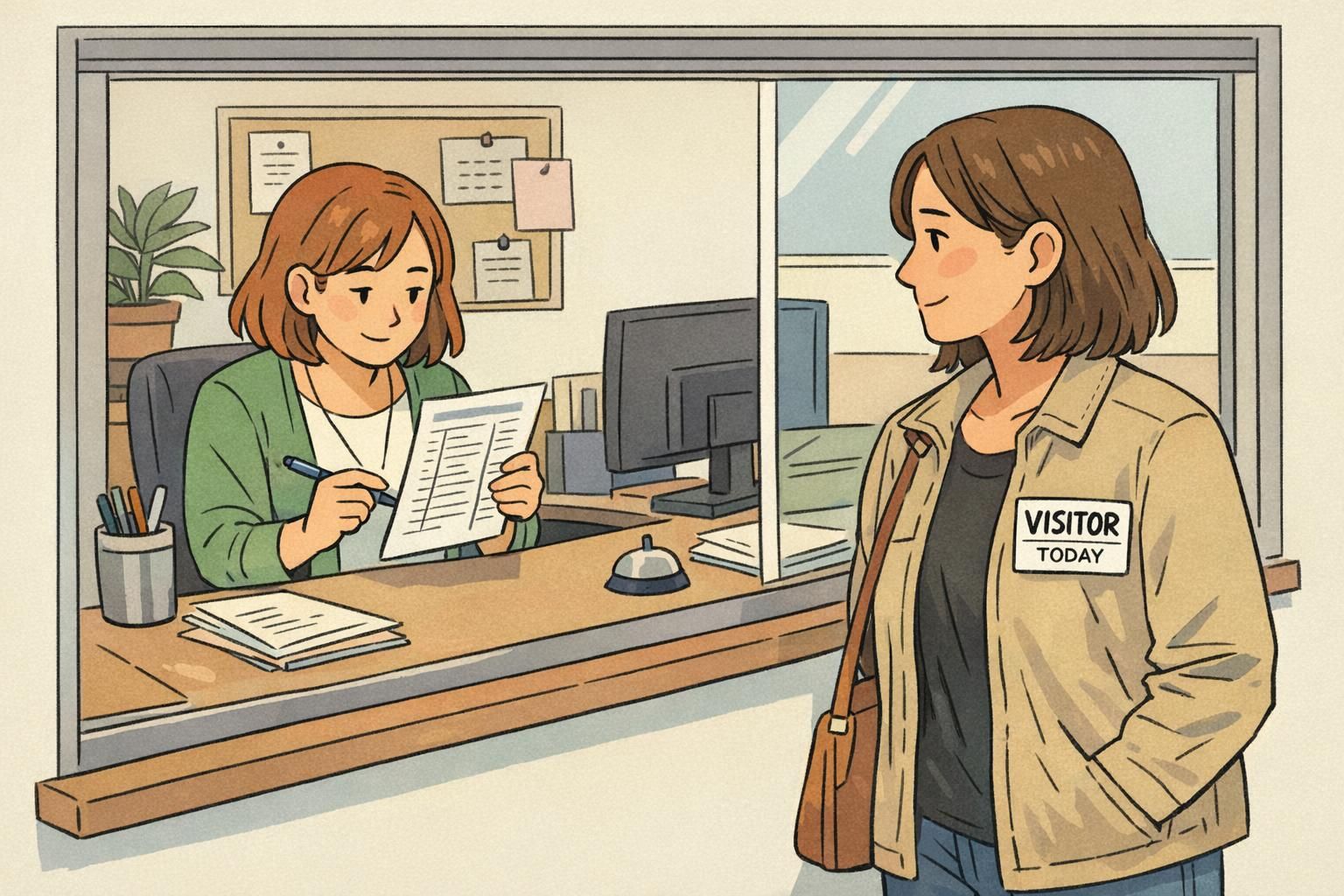
The best visitor badge system is the one your staff can run the same way every day: check in through the office, issue a visible badge, and close the loop with sign-out and badge return.