Why clear hospital badge roles matter to patients and staff
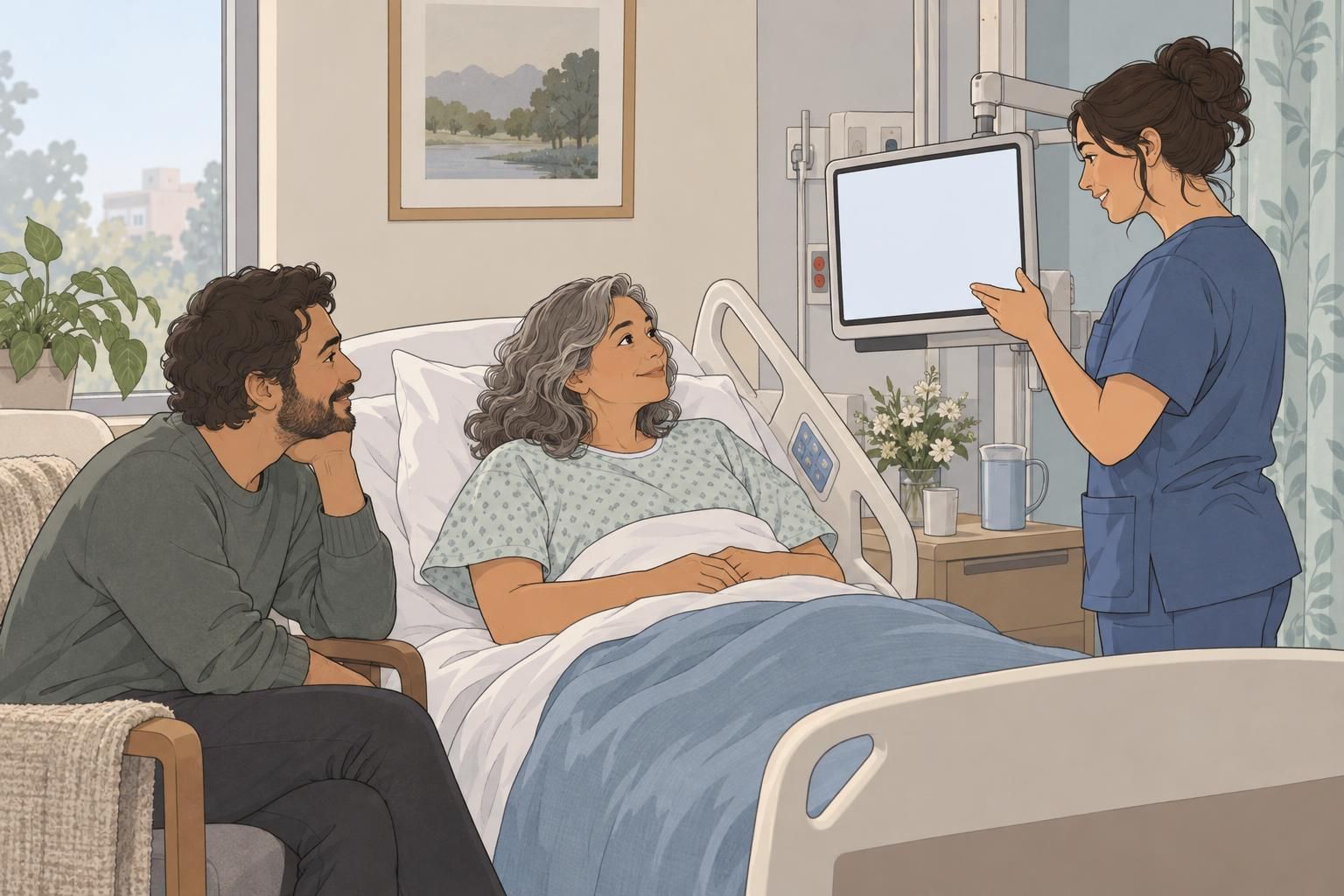
Clear hospital badge roles help patients answer a basic question: Who is caring for me right now? A patient may meet several people during a shift, each with a different responsibility. Readable badges and role cards give those encounters a visible point of reference, helping patients recognize their care team without having to remember every introduction.
The goal is not simply to display a job title. It is to connect a person, a role, and a practical next step. Patients should be able to understand who their current nurse is, which other team members may help, and how to contact the right person. That clarity can support a more confident patient experience while reducing repeated questions and avoidable interruptions for staff.
An effective identification system uses several cues together: a readable ID badge, a prominent role title, a consistent verbal introduction, and an accurate bedside display. Each answers a slightly different question. The badge identifies the person in the room; the role title explains their function; the bedside board keeps the current assignment visible after they leave.
A visible nursing title answers “What is your role?” An introduction and an accurate bedside board help answer “Are you the nurse responsible for my care right now?” Patients benefit from both.

Make the responsible nurse easy to identify at the bedside
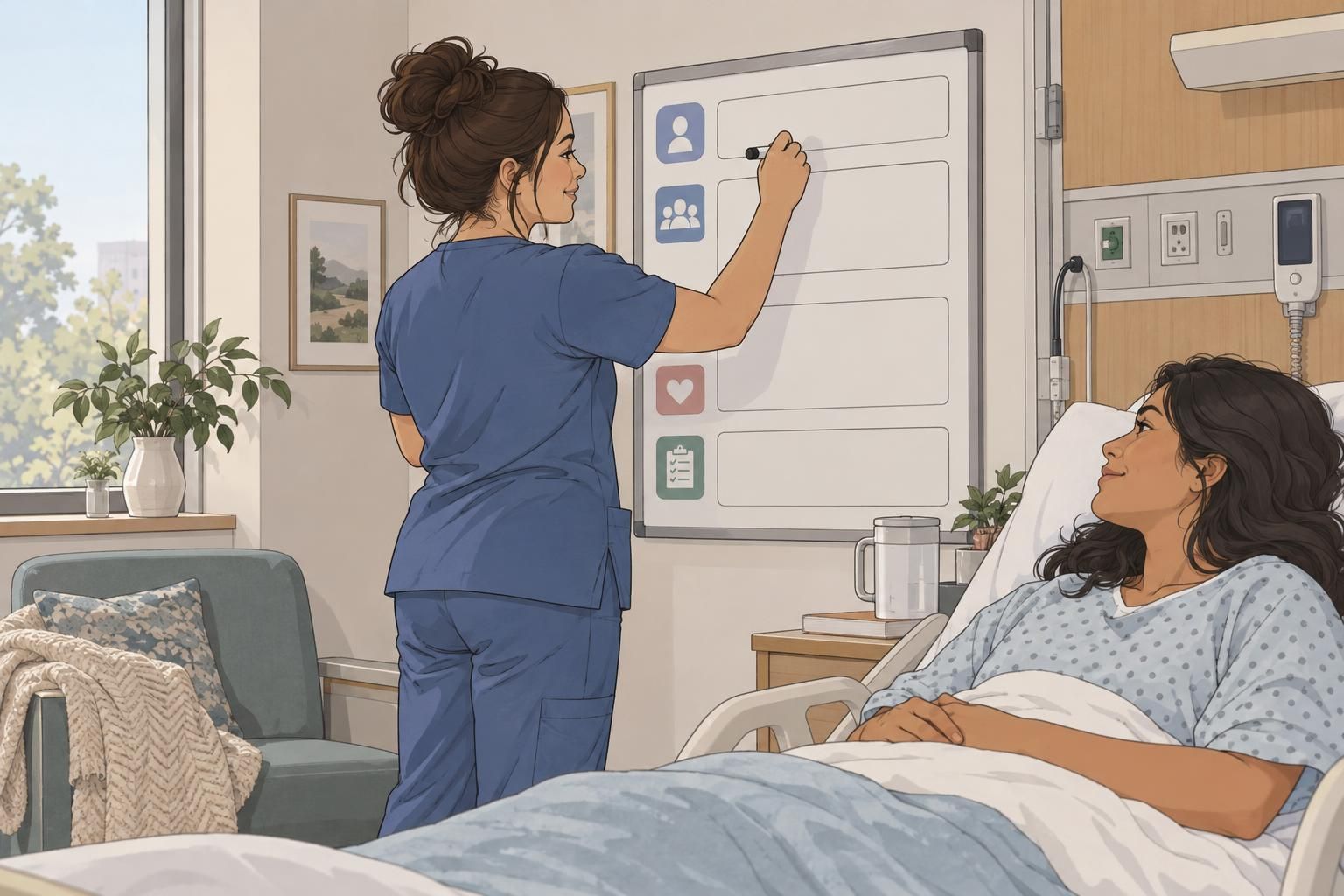
A standardized bedside whiteboard or display gives patients and families a consistent place to look for the current nurse’s name and role. It can also identify other key care-team members and show relevant daily information. Keeping the layout consistent helps people find the same information without searching through a different arrangement each time.
AHRQ describes bedside whiteboards as a way to help patients and families understand staff names, roles, and responsibilities: source. This supports a practical approach: keep the current nurse’s name and role visible, and make accuracy part of the handoff rather than an optional finishing task.
An outdated board can leave patients uncertain even when staff badges are clear. Assign responsibility for updating the display at every handoff, including changes in who is responsible for care. Then check that the board agrees with what staff tell the patient and with other information sources used by the team.
- Use a consistent location for the current nurse’s name and role.
- Include other key care-team members without crowding the display.
- Update relevant daily information alongside the care-team details.
- Make board updates an assigned part of every handoff.
- Review the display with the patient so it becomes a useful reference.
A brief explanation makes the display more useful: “My name is here, and I am your nurse this shift.” That connection between the person and the board can prevent another round of uncertainty after the introduction ends.
Use an RN badge buddy to clarify role titles
An RN badge buddy makes a nursing role easier to scan by presenting the title in large, readable lettering alongside the nurse’s ID badge. It adds a clear role cue while the ID badge continues to identify the individual. Together, they help patients distinguish a nursing role from other roles on the care team.
Choose high contrast between the lettering and background, and use consistent terminology across badges, role cards, introductions, and bedside displays. A role title should be easy to notice without competing with unnecessary visual detail. The practical question is whether a patient can recognize the title during an ordinary bedside interaction.
Keep the patient’s perspective in mind when using abbreviations. An RN badge buddy can provide a clear visual label, while a plain-language introduction explains what that label means: “I’m Alex, your registered nurse for this shift.” This lets the badge reinforce the conversation instead of asking the patient to interpret the lettering alone.
Readable hospital badge roles can reduce repeated role questions, but a nursing title does not identify the patient’s current assignment by itself. Another nurse may be helping or covering a break. Pair the visible title with a short explanation of why that person is there and who remains responsible for care.
Use the RN badge buddy as a quick role cue, the ID badge as personal identification, and the verbal introduction to explain the nurse’s responsibility during that interaction.
Explain who does what on the nursing team
Knowing that someone is a nurse is helpful; knowing how that person fits into today’s care is even more useful. Briefly distinguish the nurse providing direct care from team members who may assist, cover breaks, or coordinate care. Patients do not need a detailed staffing explanation. They need enough information to know whom to ask and how to reach them.
Clear staff identification provides a starting point for that explanation. A badge or role card shows a recognizable title, while plain language connects it to the person’s immediate responsibility. For example: “I’m helping your nurse while they are on a break” explains the interaction without making the patient work out the team structure.
- Identify the nurse currently responsible for the patient’s care.
- Explain when another team member is assisting rather than taking over.
- Clarify temporary coverage when the responsible nurse is away.
- Describe care-coordination responsibilities in everyday language.
- Explain how the patient can contact the right person for help.
Keep these explanations consistent with the bedside board. If a patient hears one name during an introduction but sees another on the display, pause to clarify the difference. Making that connection early can reduce repeated questions directed to several staff members.
Role cards are most useful when their wording matches what staff actually say. Consistent titles make it easier for patients and families to recognize familiar roles across different encounters.

Reinforce nurse identity during introductions and shift handoffs
Introductions turn visible identification into a personal connection. Clinicians should introduce themselves by name and role when beginning a shift, entering the room, or taking over care. A brief, consistent introduction helps patients connect the person they see with the title on the badge and the name on the bedside display.
For example, “I’m Jordan, your nurse for this shift” answers both identity and responsibility. When someone is assisting, the introduction should say so. This small distinction helps prevent patients from assuming that every nurse who enters the room has taken over their care.
Bedside shift report gives the incoming nurse and patient an opportunity to review the care plan together and confirm who is responsible next. It is also a natural time to connect hospital badge roles with the updated bedside information. The patient can hear the incoming nurse’s name, see their role title, and check the same information on the display.
- Introduce the incoming nurse by name and role.
- Confirm who is taking responsibility for care.
- Review the care plan together at the bedside.
- Update the nurse’s name and role on the display.
- Confirm that the patient knows how to contact their nurse.
These steps reinforce one another. Rather than leaving patients to piece together a change in staffing, the handoff makes the transition explicit and gives them a clear point of contact for the next shift.

Make the system accessible and check whether it works
An identification system is useful only when patients can understand it. Use large print, plain language, and accessible visual displays as needed. Provide translation or interpreter support when needed so that names, role explanations, and contact instructions are understandable—not merely visible.
Readability should be considered across the whole system. A prominent role card helps at the bedside, but the board and spoken explanation also need to be clear. Avoid assuming that a patient understands an abbreviation simply because it appears on a badge. Explain the role in everyday language and give the patient room to ask questions.
Check whether the approach works by asking patients to identify their nurse and explain how to contact them. A simple question such as “Who is your nurse this shift, and how would you reach them?” can reveal whether the badge, introduction, and display are communicating the same message.
Track practical measures such as bedside-board accuracy after shift change. If information is missing or outdated, review the update process and assigned responsibility. Patient answers and board checks can help the team identify where clarification is needed.
Staff identification supports clarity about the care team. It does not replace the use of two patient identifiers during care.
The strongest approach combines readable hospital badge roles, accurate bedside information, and consistent introductions. Together, these give patients a clearer understanding of their care team and help staff spend less time resolving the same avoidable confusion.