How to clean ID card surfaces safely
The safest way to clean ID card surfaces starts with the card’s care instructions—not a bottle of cleaner. Check guidance from the issuer or manufacturer before you begin, because a method suitable for one badge may not be suitable for another. The goal is to remove dust and fingerprints while protecting the printed photo, identifying information, and any features a reader needs.
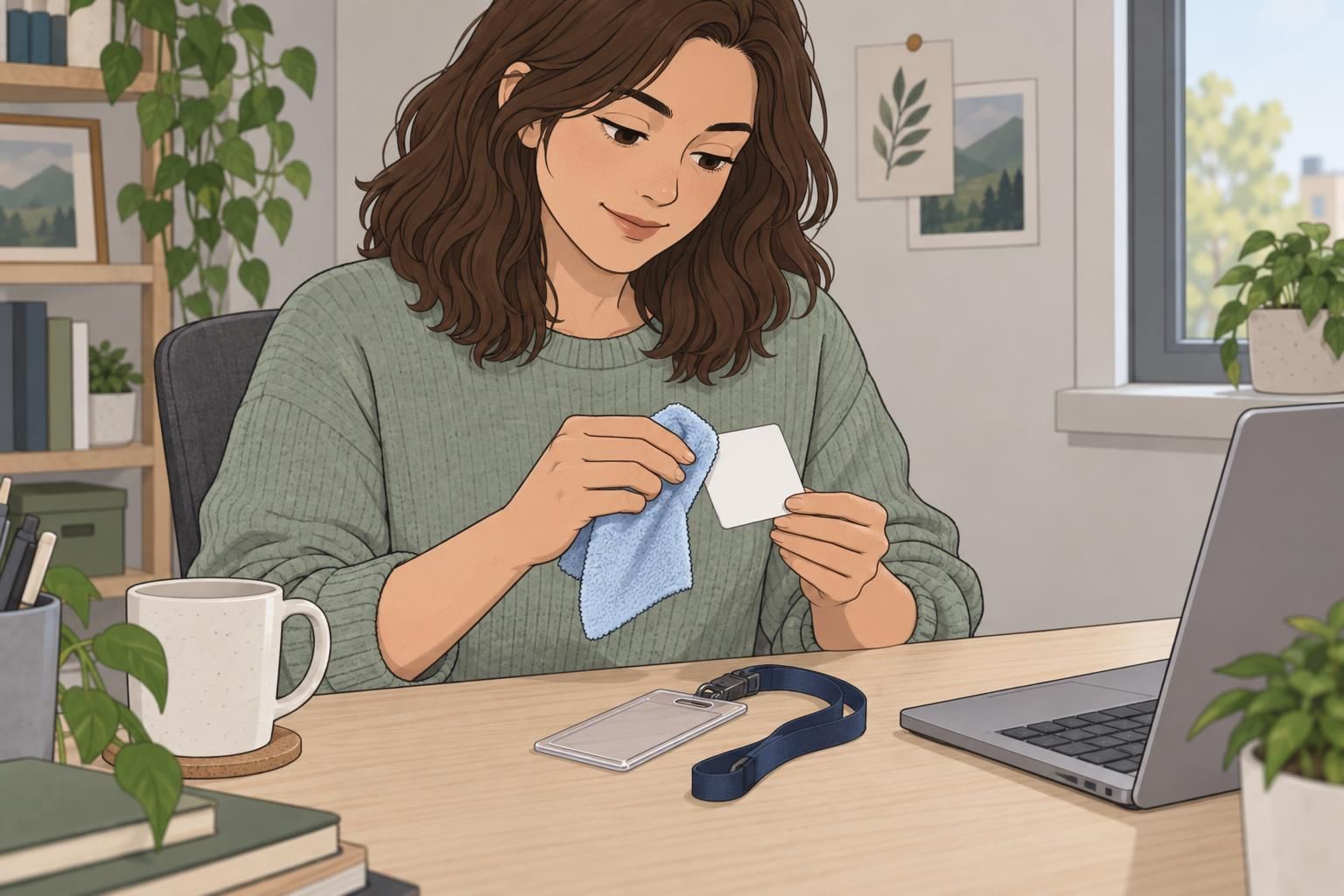
For a standard PVC employee badge, begin with a clean, dry microfiber or lint-free cloth. Take the card out of its holder and handle it by the edges rather than placing your fingers over the face. Start gently and check the result before moving on to any permitted liquid cleaner.
Do not assume that a plastic-looking surface makes a badge suitable for water, alcohol, or household cleaning products. Printed surfaces, overlays, and electronic features can have different care requirements. If you do not have instructions, ask the issuer before using liquids or attempting disinfection.
Start dry and gentle. A clean, soft cloth is the first step for a standard PVC badge; liquids and disinfectants require card-specific approval.
A gentle step-by-step cleaning method
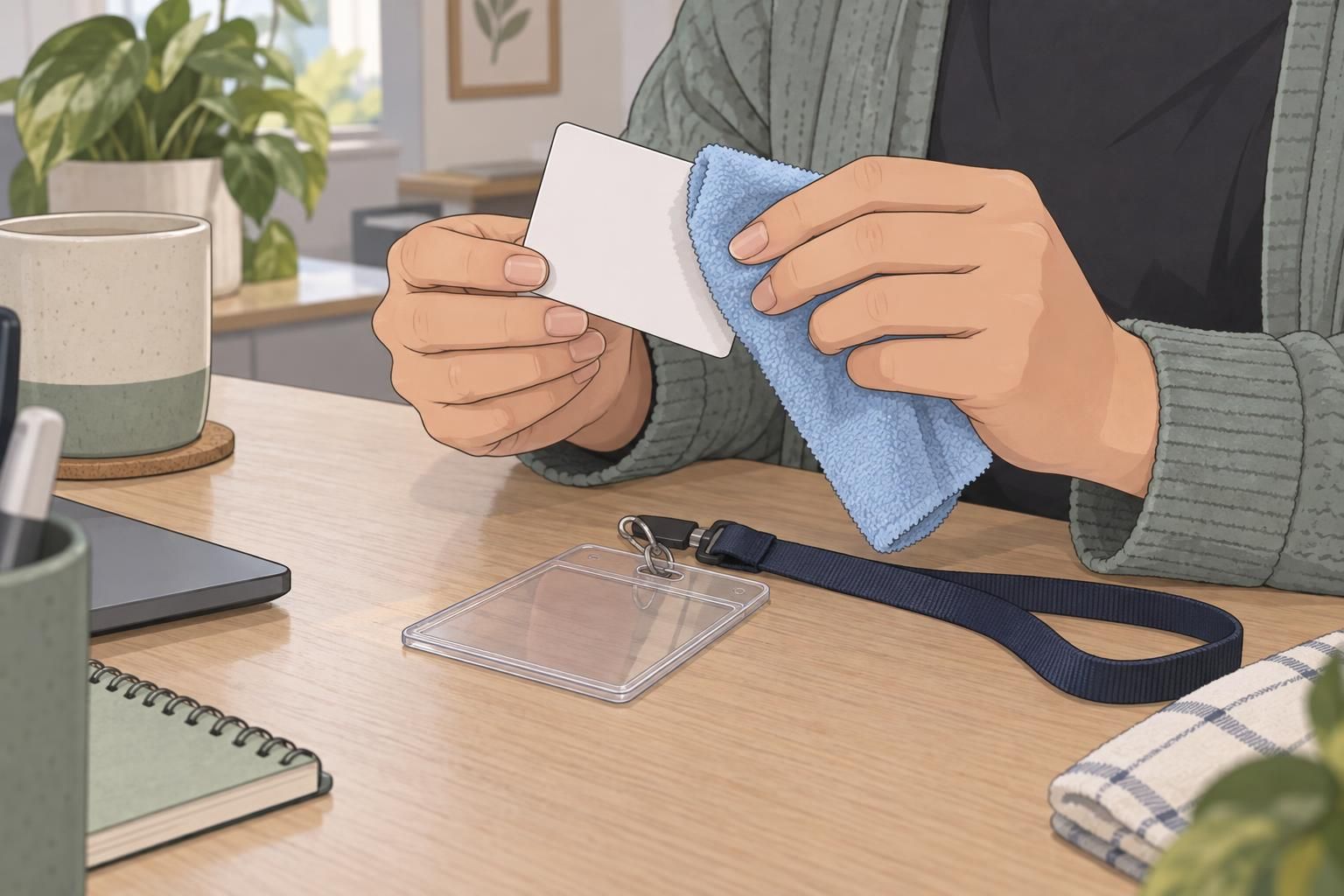
A careful sequence helps you avoid rubbing loose debris across the card or returning it to its holder while it is still damp. For an ordinary PVC employee badge, use the following method, adjusting it to match the issuer’s instructions.
- Wash and dry your hands before handling the badge.
- Remove the card from its holder and hold it by the edges.
- Use a clean, dry microfiber or lint-free cloth to lift away loose dust gently.
- Wipe fingerprints with light pressure. Avoid forceful rubbing over the photo, barcode, hologram, chip, or magnetic stripe.
- If the care instructions allow liquid, lightly dampen the cloth with water or an approved card cleaner. Apply liquid to the cloth, not directly to the badge.
- Let the card air-dry completely before returning it to its holder or using it in a reader.
The cloth should be lightly damp, not dripping. More liquid and more pressure are not useful substitutes for an approved cleaning method. If a mark remains after a gentle wipe, pause and check the care guidance rather than repeatedly scrubbing the same spot.
Disinfect ID badge surfaces only when approved
Cleaning a fingerprint and disinfecting a surface are different tasks. Before you disinfect ID badge surfaces, confirm that the proposed product is permitted for that particular card. This is especially important for healthcare badge cleaning, where a facility-approved wipe still needs to be appropriate for the badge material and its features.
Isopropyl alcohol or a facility-approved wipe may be appropriate for some cards, but neither is a universal choice. Check the card or badge manufacturer’s guidance before use. Do not choose an alcohol concentration or wiping routine based on what works for another badge.
When a liquid disinfectant is permitted, apply it to a cloth rather than spraying the badge. Keep liquid away from chips, magnetic stripes, openings, and seams. If a facility procedure calls for a product that the card’s instructions do not allow, ask the issuer or facility contact how to proceed instead of improvising.
“Facility-approved” and “approved for this card” are separate checks. Confirm both before using a disinfectant on a workplace badge.
Safe cleaners for PVC badges and badge buddies
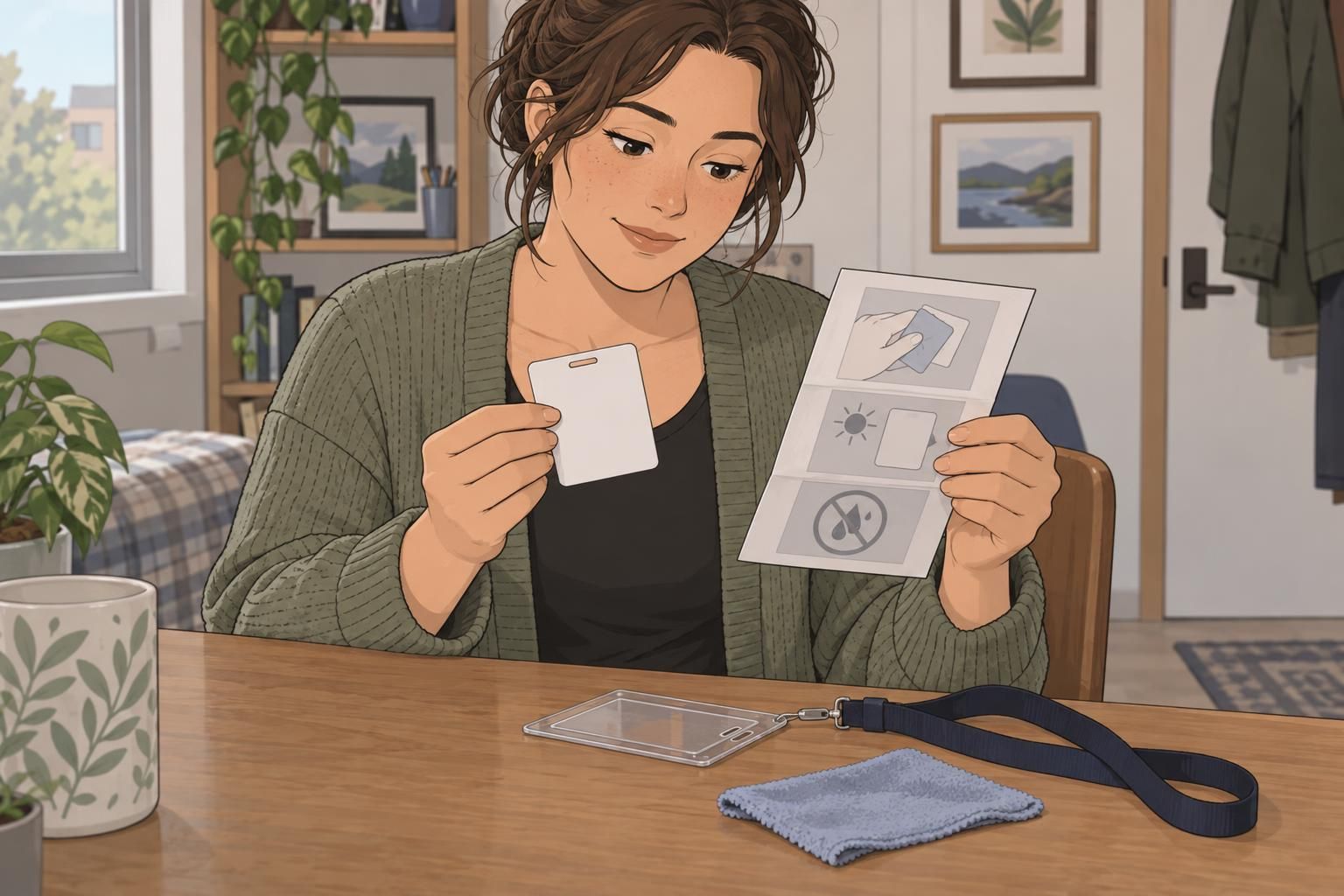
When looking for safe cleaners for PVC, keep the choices simple: a dry, soft cloth; water used sparingly when permitted; or a plastic-card cleaning solution approved for the specific badge. A product being intended for plastic does not replace the need to check the card’s instructions.
Badge buddies need their own care check. Although an ID card and badge buddy may be worn together, their print or laminate materials can differ. A cleaner approved for the employee ID is not automatically suitable for the backing card, and approval for the badge buddy does not establish approval for the ID.
- For the ID card: follow its issuer’s or manufacturer’s care instructions.
- For the badge buddy: check its separate material and print-care guidance.
- For both: begin gently and avoid using an unapproved cleaner simply because the surfaces look similar.
Treating each item separately keeps the cleaning decision clear. If only one item permits a damp cloth, use that method only on that item rather than wiping the entire assembly together.
Clean the holder separately and avoid damaging the print
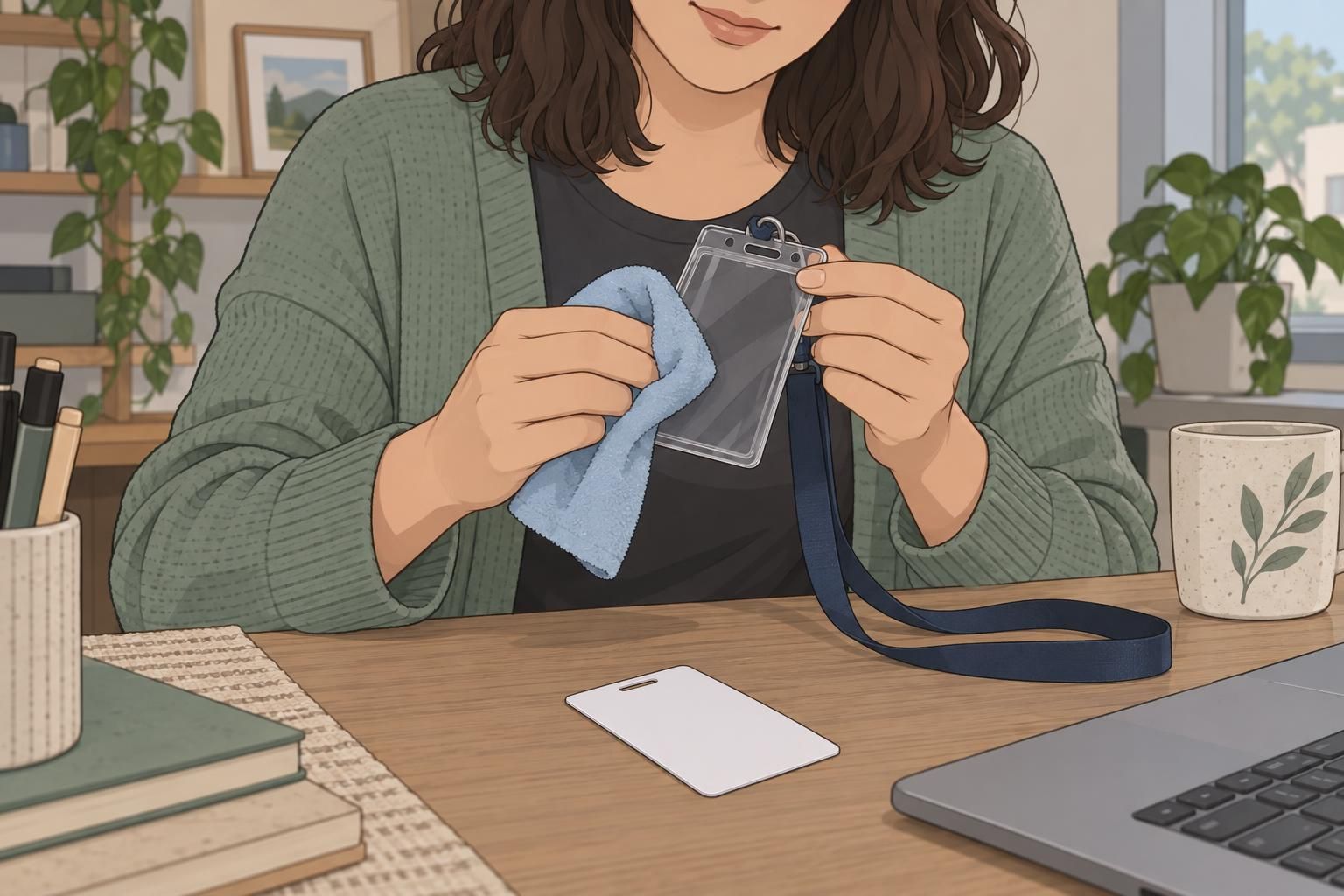
A clean ID card should not go straight back into a gritty holder. Remove the badge and clean the holder separately, taking care to remove trapped debris before reinserting the card. Grit left inside can scratch the card surface, even when the badge itself has been cleaned carefully.
Do not assume that the holder and card can tolerate the same product. Keep their cleaning processes separate, and return the card only after it has fully air-dried. This also gives you an opportunity to check the card’s printed areas without the holder covering them.
- Avoid bleach, acetone, nail-polish remover, ammonia, glass cleaner, and strong solvents.
- Avoid paper towels, rough sponges, and abrasive pads.
- Avoid aggressive rubbing over printed photos, barcodes, holograms, chips, or magnetic stripes.
- Do not try to scrub away scratches or polish a damaged printed surface.
Use light pressure rather than trying to make every mark disappear. A mark that does not lift with approved gentle cleaning may be damage rather than surface dirt. Continuing to rub can make the card’s appearance or readability worse.
Electronic ID cards need issuer-specific care
Chip, RFID, contactless, and government-issued cards may have stricter rules than a standard printed PVC badge. Do not assume that water or alcohol is suitable simply because the outside looks like an ordinary plastic card. Follow the issuing authority’s instructions for that exact card.
Some issuing authorities recommend a soft cloth only, without water or chemicals. The guidance published by Estonia’s ID-card information service illustrates why issuer-specific care matters: source. General badge-cleaning advice should not override those instructions.
Do not soak, rinse, bend, scrape, or heat an electronic card. If an approved cleaning method allows moisture, let the card air-dry fully rather than using a heater or hair dryer. If the issuer specifies dry cleaning only, stay with a dry, soft cloth.

When to request a replacement
Cleaning cannot repair every badge problem. A cracked, warped, delaminating, or unreadable card may need replacement rather than another cleaning attempt. If the card repeatedly fails in a reader after gentle, approved cleaning, contact the issuer for guidance.
Avoid polishing scratches, scraping damaged areas, or trying to repair a peeling overlay. These attempts can worsen damage to printed information or card features. Describe the visible problem and any repeated reader failures to the issuer instead.
To clean ID card surfaces safely, follow the card’s instructions, start with a soft dry cloth, use liquids only when approved, and stop when the issue appears to be damage rather than dirt.