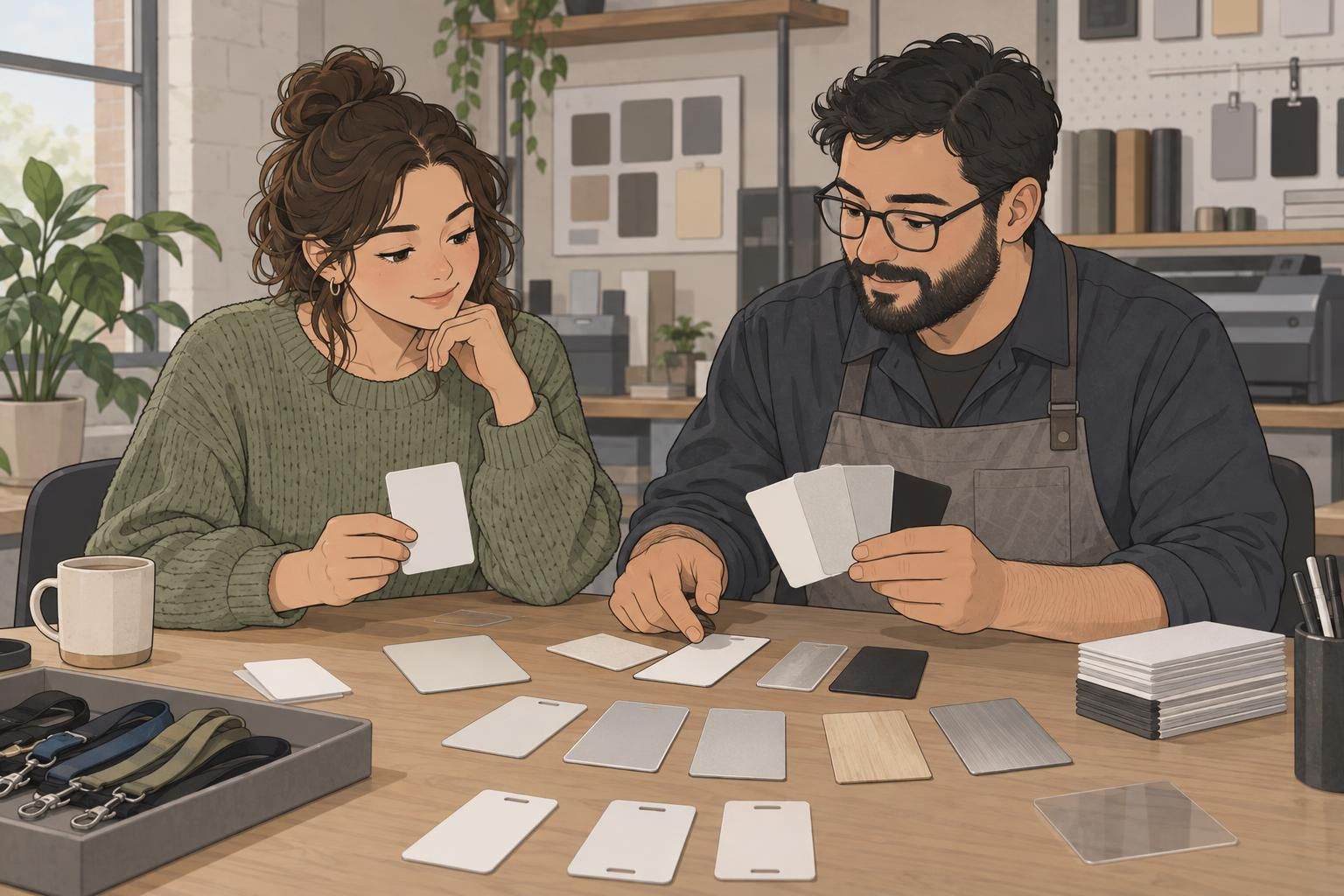
Why use layered security on ID cards?
ID card security features are most useful when they work together. A visible feature helps a receptionist make a quick check, while tiny printed details or an electronic check can support closer inspection. For a small business or organization, the goal is not to add every available option. It is to choose features that staff can recognize and check consistently.
How ID card security features support layered checks
Think of each layer as answering a different question. Does the card show the expected visual effect? Are its fine details consistent with a genuine example? Does its surface show signs of alteration? The Intergraf guidance provides a reference for this layered approach, in which different features serve different verification roles rather than one element doing everything: source.
Start with the setting. Cards checked briefly at a reception desk need an easy-to-recognize feature. Cards receiving closer inspection can also benefit from magnified or electronic checks. No single feature prevents every counterfeit or alteration, so the combination should reflect the organization’s roles, environment, and inspection needs.
Hologram overlay: a quick visual check
A hologram overlay provides an angle-dependent effect: colors, images, or patterns change as the card is tilted. That makes it useful for everyday checks without specialized equipment. Its practical value depends on staff knowing what the genuine effect should look like, rather than simply noticing a shiny area.
- Tilt the card and look for the expected change in color, image, or pattern.
- Check that the holographic detail appears sharp when compared with a genuine reference card.
- Confirm that the feature sits in its specified position and has the expected alignment.
- If the effect or placement seems wrong, follow the organization’s closer-inspection process.
A custom, issuer-specific design can be more distinctive than a widely available stock pattern. However, staff still need a reference and a repeatable check. When weighing the added cost, consider whether inspectors will recognize the custom design and actually tilt the card during routine checks.

Microtext and other details checked under magnification
Microtext consists of tiny characters placed within a card’s design. It may appear along a border, around a design element, or within fine-line patterns. When reproduced with ordinary printers, those characters may blur or merge instead of remaining individually defined.
Unlike a hologram overlay, microtext is not primarily a quick, unaided visual check. Inspectors need magnification and a genuine reference card to judge whether the characters are clear and consistently formed. A tiny line that merely looks like text from a distance is not enough to verify the feature.
- Document the exact location of the microtext so staff do not have to search for it.
- Provide magnification at the place where closer inspections happen.
- Compare character clarity, shape, and spacing with the genuine reference.
- Check nearby fine-line details against the same reference rather than judging them from memory.
For a small organization, this feature is worth considering when someone has the time and equipment to inspect it. If all checks happen at a glance, microtext can support a separate closer-review process, but it should not carry the main burden of everyday verification.

Tamper-resistant construction and personalization
Some ID card security features focus on making an existing card harder to change. Secure overlaminates, embedded foils, laser personalization, and fused layers can make photo substitution or alteration more difficult. Depending on the construction, an attempt to change the card may also leave visible evidence.
- Secure overlaminates: These add a protective layer over the card’s surface and personalized information. Inspect for unexpected lifting, separation, or disruption over the photo and other details.
- Embedded foils: These place a security element within the card construction. Check its expected position and appearance, including signs that the surrounding material has been disturbed.
- Laser personalization: This integrates personalized details into suitable card material rather than relying only on surface printing. Compare those details with a genuine example and look for inconsistent areas.
- Fused card layers: These make separating and replacing parts of the card more difficult. Inspect the edges and surface for unexpected separation or unevenness.
Where appropriate, staff can supplement visual inspection with a gentle check by touch for raised areas or disturbed edges. They should not peel, scrape, or bend the card to test it. A tamper resistant badge improves resistance to alteration; it does not make alteration impossible.
Match security features to everyday inspection
The most useful combination is one your organization can support in daily work. Consider where checks happen, how much time they allow, and whether magnifiers or readers will be available. A feature adds limited verification value if staff cannot inspect it at the moment it matters.
A practical starting point might combine an easy-to-see visual feature, a magnified detail for closer review, and a tamper-evident layer. This gives each element a clear job without expecting every inspector to perform every check on every occasion.
- For quick reception checks, prioritize a recognizable visual feature with a simple inspection routine.
- For closer reviews, provide magnification and a genuine reference for microtext and fine details.
- Where alteration is a concern, consider construction that makes changes harder and can reveal disturbance.
- For greater verification needs, consider UV, IR, or chip-based checks only alongside suitable equipment and staff procedures.
Weigh cost and complexity against actual use. A straightforward combination that staff understand is more practical than a larger collection of features that nobody checks.

Plan ID card specifications and staff checks
Before ordering or updating cards, turn the design into a short inspection specification. This helps the organization describe what it needs and gives staff a consistent reference. Avoid instructions such as “check the hologram” without explaining its location and expected effect.
- Purpose: State what each feature is intended to help verify.
- Location: Record exactly where the feature appears on the card.
- Appearance: Describe the expected image, effect, character detail, or surface condition.
- Production tolerances: Agree on acceptable variation so normal differences are not mistaken for tampering.
- Inspection method: Specify whether staff should tilt the card, use magnification, examine its edges, or use a reader.
- Follow-up: Document what staff should do when a feature does not match expectations.
Keep genuine reference cards available where inspections take place. Train staff with a short, repeatable sequence and make clear which checks are routine and which belong in a closer review. When discussing custom requirements with BadgeZoo, confirm the requested features and inspection expectations rather than assuming every option is available on every card.
Know what each feature can—and cannot—verify
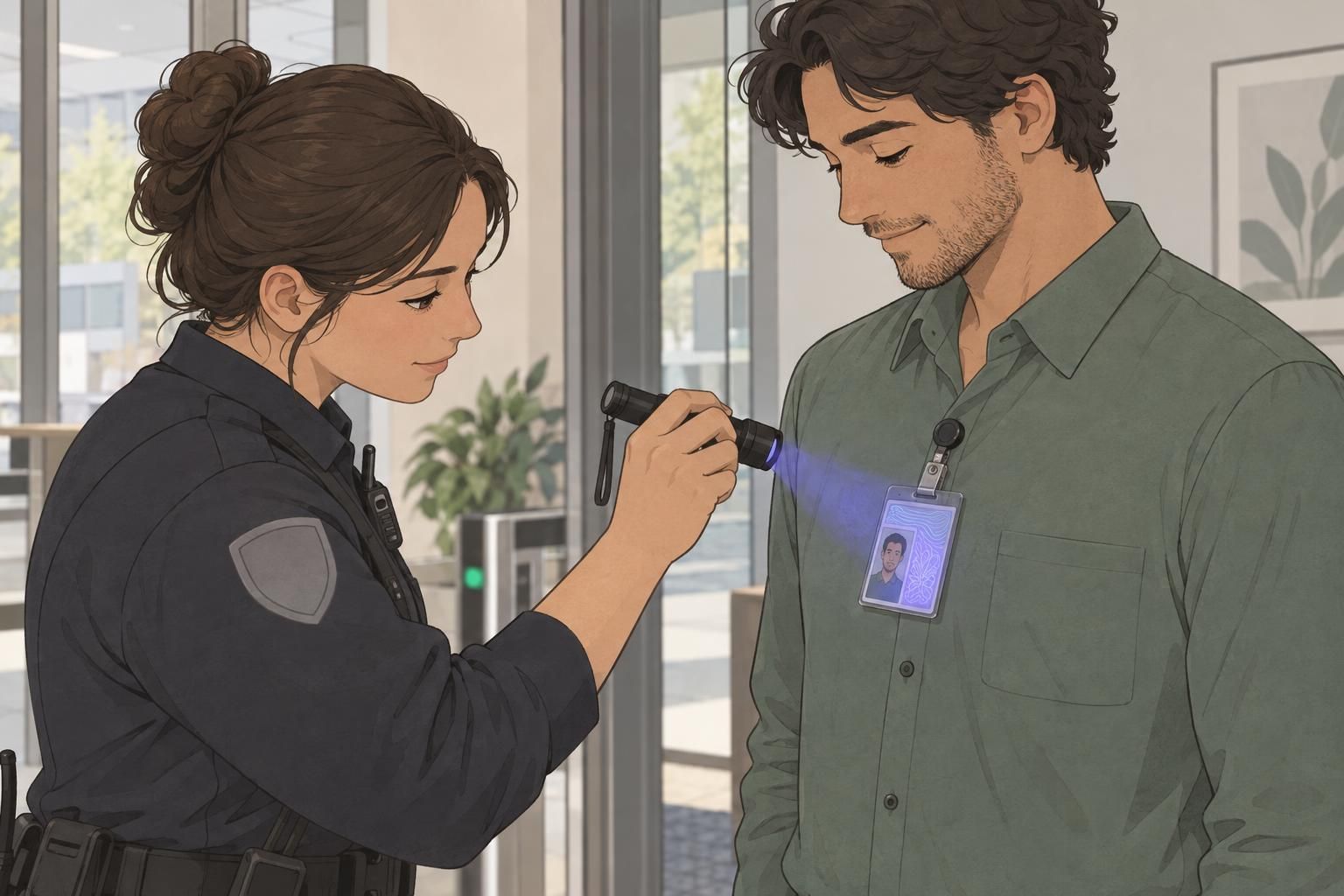
A hologram can support a quick visual check, but it may be imitated or transferred. Microtext can reveal differences under magnification, but only when inspectors know where to look and what genuine characters should resemble. A laminate can make alteration harder without eliminating the possibility.
Visual inspection also should not substitute for electronic verification when that is part of the organization’s program. Use the appropriate specialized reader for electronic checks, and keep its role distinct from checking the card’s visible features.
Secure IDs depend on both card design and a documented checking process. Choose complementary features, give staff genuine references and suitable tools, and make the inspection routine simple enough to use consistently.
For small businesses and organizations, that is the practical measure of a useful security add-on: it serves a defined purpose, fits everyday working conditions, and helps staff make a more informed identification decision.