
1. How long should each badge last?
Start your ID badge checklist with a practical question: how long does each card need to remain readable and usable? A temporary event credential, an annually updated employee card, and a badge intended for several years have different requirements. Defining that lifespan gives you a useful starting point for comparing materials, finishes, and replacement terms.
Consider how frequently people wear their badges, how often employee details change, and how turnover affects your ordering schedule. Separate planned updates from unexpected replacements. A badge replaced because someone changes roles presents a different purchasing need from one replaced because its printed surface wears away.
- Set an expected service life for each badge category.
- Estimate routine additions, updates, and replacements.
- Ask how to reorder a single worn, damaged, or updated badge.
- Confirm which replacement situations fall under the supplier’s policy.
2. What conditions will the badge face?
Describe a normal working day before asking for durable badges. An indoor office badge may experience different conditions from a card worn outdoors, handled frequently, or cleaned throughout a shift. The supplier needs those details to recommend a construction and finish appropriate to the intended use.
Include exposure to sunlight, sweat, abrasion, heat, cleaning products, and workplace chemicals where relevant. Explain how employees actually wear and store their cards, rather than describing only ideal conditions. If different teams face different environments, ask whether one specification is suitable for everyone or whether separate options deserve consideration.
Make the environment specific: describe the cleaning routine, handling frequency, and exposure conditions. A general request for a “durable” card is less useful than a clear account of the job it must do.

3. What card construction suits the job?
Ask the supplier to explain each proposed material and construction in plain language. If the description includes fused PVC, ask what that term means for the specific product, how the card is constructed, and why it suits your expected lifespan and environment. Do not assume that similar product names describe identical cards.
PVC may suit basic visual identification, while composite or polycarbonate options may be considered for more demanding or longer-term use. The useful comparison is not simply which material sounds strongest; it is how the complete badge will perform with your chosen printing, finish, attachment, and technology.
Request the material and thickness in writing. When comparing fused PVC with another construction, keep the intended use and finished-card specification consistent so you can evaluate the differences meaningfully.
4. Which finish will protect the badge?
Compare an unlaminated finish with laminate or overlaminate, and ask exactly what protection each option provides. Establish whether the treatment covers one side or both. Discuss expected resistance to scratching, fading, and frequent handling without treating any finish as a guarantee against every kind of wear.
Lamination should be considered alongside production cost, maintenance needs, and the badge’s intended life. Use the printing FAQ from this source as background when discussing lamination trade-offs and the value of reviewing a representative finished sample before approving the full order.
Ask to see the proposed finish on the actual card construction, including fused PVC if that is your selection. Record the approved finish and any related warranty exclusions so that the appearance you accept and the protection you expect are both clear.

5. Which printing method fits the image and use?
Ask your print shop to compare direct-to-card and retransfer printing for your specific design. Explain the desired image coverage, the information that must remain readable, and the conditions the badge will encounter. Request a recommendation based on the complete specification rather than choosing a method by name alone.
Confirm that the printing method works with the selected material and finish. Ask whether the printed information receives a protective layer and how that layer relates to any laminate or overlaminate already quoted. The aim is to understand what you are buying, not to assume that printing and surface protection are interchangeable.
Evaluate the finished combination: card construction, printing method, and protective finish. Approval of one component should not substitute for checking the complete badge.
6. How will the badge attach?
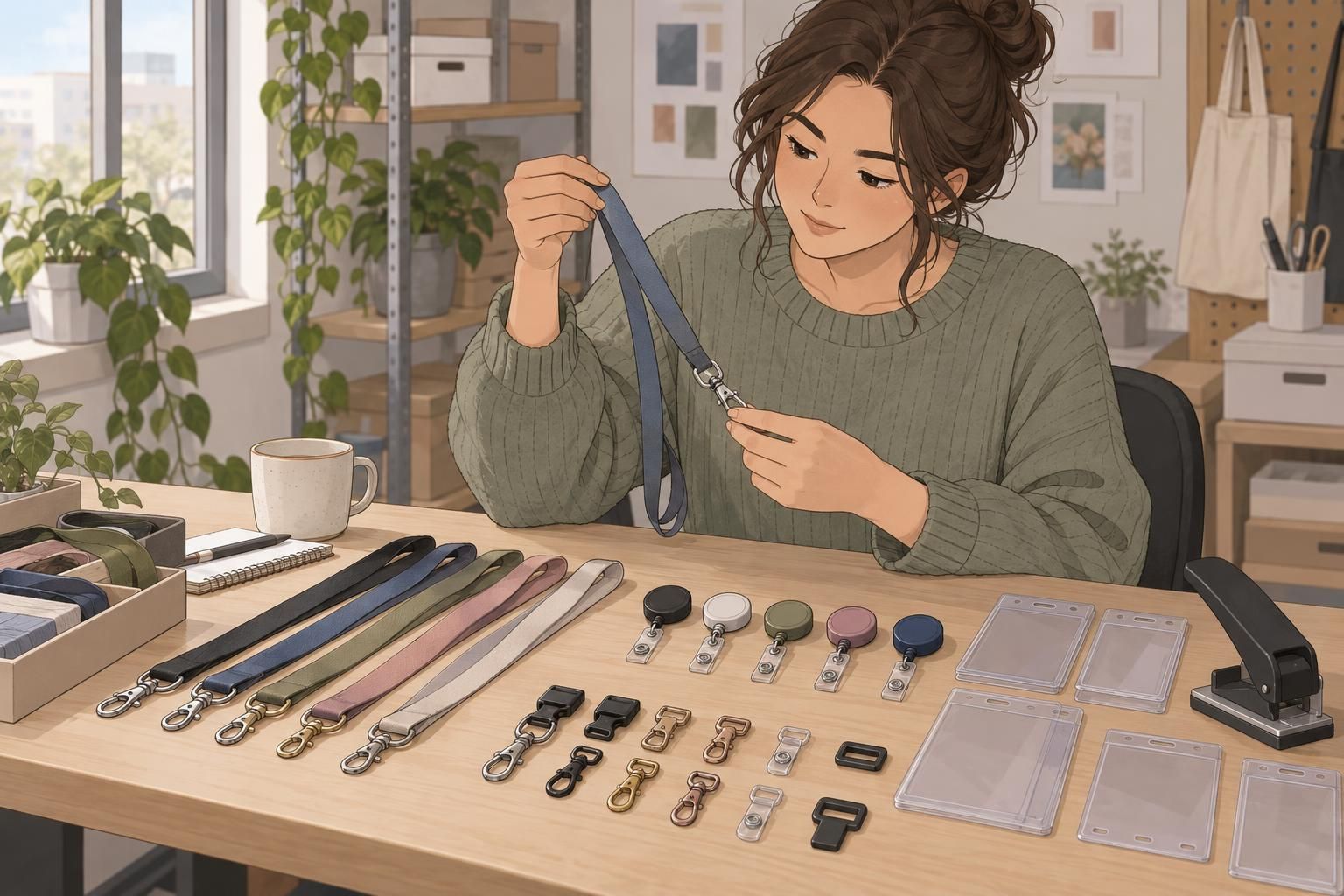
Decide whether employees will use a clip, lanyard, reel, or holder before production. Confirm the slot-punch location with the supplier and check the hardware against the proposed layout. Attachment choices belong on the ID badge checklist because they affect how the finished card is worn and handled.
Test the actual attachment with a finished sample. Look for covered names or photos, interference with scanning, and excess stress on the card. If the badge will sit inside a holder, evaluate the complete setup rather than the loose card alone.
Include attachment details in the approved order so future replacements match the original arrangement. A replacement card should work with the hardware employees already use, unless you have deliberately approved a change.
7. Does the construction support required technology?
List every technology requirement before approving the card construction. That may include a barcode, QR code, RFID, magnetic stripe, or smart chip. Identify the readers, scanners, software, and encoding specifications involved, then have both the supplier and the person responsible for your system confirm compatibility.
Do not treat a visually correct card as proof that the technology will work. Test a representative finished sample with the equipment and software it will actually encounter. Keep those results connected to the approved material, printing method, finish, and layout.
Do not punch a technology-enabled card without an approved location. Confirm the attachment arrangement with the supplier and system owner before production, rather than adding a hole after delivery.
8. What proofing and sample checks happen before production?
Ask how proofs are supplied, who approves them, and how corrections are handled. Review names, photos, colors, and every data field. A design proof helps you check the layout; a representative finished sample lets you assess the physical result.
Use both typical and worst-case content during review. Include your longest names and the fullest expected data fields so approval is not based only on the easiest example. The sample should reflect the intended construction, printing method, and finish.
- Check that names, photos, colors, and data fields appear correctly.
- Fit the sample to the selected attachment hardware.
- Evaluate it using the planned cleaning routine.
- Test relevant readers and scanners.
- Record approval and resolve discrepancies before authorizing the full order.

9. What durability evidence and replacement terms are available?
Useful badge supplier questions go beyond how a card looks on delivery. Ask for material specifications, representative finished samples, warranty terms, and the replacement policy. These details help you compare quality ID cards on the basis of intended performance and support, not appearance alone.
Clarify whether coverage addresses fading, scratching, abrasion, or printed-surface wear. Ask which materials, finishes, uses, or conditions are excluded, and how a replacement request is evaluated. A clear answer is more useful than a broad promise that a badge is durable.
Also separate warranty replacements from routine updates and additional orders. Confirm what information the supplier needs for each request and whether the replacement will match your approved construction and finish. Keep these terms with the original specification for future reference.
10. What should the written order confirm?
Turn the decisions into one written specification. This gives the supplier a clear production reference and gives your team a reliable record for reorders. If fused PVC was selected, record the supplier’s specific construction description rather than relying on that name alone.
ID badge checklist: final approval
- Intended lifespan, replacement schedule, and working environment.
- Card material, construction, and thickness.
- Printing method and finish, including protected sides.
- Attachment hardware and approved slot-punch location.
- Technology, encoding, and compatibility requirements.
- Approved proof and representative sample.
- Order quantity and future reorder needs.
- Warranty coverage, exclusions, and replacement terms.
Ask the supplier to confirm material, finish, attachment, and technology compatibility in writing. Your completed ID badge checklist should connect the approved sample to the badges delivered—and make the next replacement or reorder easier to manage.