
Why a fading ID card loses color and readability
A fading ID card usually reflects several kinds of wear working together. Sunlight can weaken printed colors, everyday rubbing can remove exposed printing, and heat or moisture can affect the card’s surface and protective layers. The result may be a washed-out photograph, a name that becomes difficult to read, or artwork that looks uneven and scratched.
Price alone does not explain those changes. An inexpensive card may perform adequately in a sheltered setting, while a card with unsuitable printing or finishing may deteriorate quickly outdoors. What matters is how the plastic base, printed image, protective film, and bonding work together under actual workplace conditions.
It also helps to distinguish fading from physical damage. Fading changes the color itself; abrasion wears away or scratches the surface. Peeling or lifting points to a protective-layer or adhesion problem. These issues can overlap, but recognizing the main cause makes it easier to choose a better replacement rather than reorder the same construction.
UV fade badges: how sunlight affects printed colors
Ultraviolet radiation can gradually damage the dyes and pigments responsible for a card’s colors. As that damage accumulates, photographs can lose contrast, background colors can wash out, and printed characters can become less distinct. Different inks and protective materials respond differently, so two cards used in similar conditions may not age at the same rate.
For anyone researching “UV fade badges,” the important distinction is between dirt and permanent color loss. Cleaning may remove a surface film that makes a card look dull, but it cannot restore color already damaged by sunlight. Repeatedly scrubbing a faded card can add abrasion without improving the image.
Exposure builds over time. A badge regularly left beside a sunny window or worn outdoors can receive much more sunlight than one used mainly inside. Prolonged exposure may also degrade some protective overlays. A clear covering should therefore not be assumed to provide UV protection unless that property is specified.

How friction, moisture, heat, and cleaners cause scuffs
Friction creates a different kind of wear from sunlight. Sliding a card into a wallet, rubbing it against clothing, handling it throughout a shift, or repeatedly swiping it through a reader can abrade exposed printing. Small scratches may first make the surface look cloudy; continued wear can remove parts of the image.
Perspiration and humidity can contribute to surface or adhesion problems, depending on the card’s construction. Heat can also affect the card and the bond between its layers. A vehicle dashboard is a poor storage location because it combines prolonged sunlight with heat, exposing several weaknesses at once.
Cleaning needs the same care. Harsh cleaners or unsuitable solvents may damage printing, finishes, or protective layers. Follow the card supplier’s cleaning guidance rather than assuming that a product suitable for a desk is suitable for an ID. Avoid aggressive rubbing, and do not keep applying stronger cleaners to damage that is actually fading or abrasion.
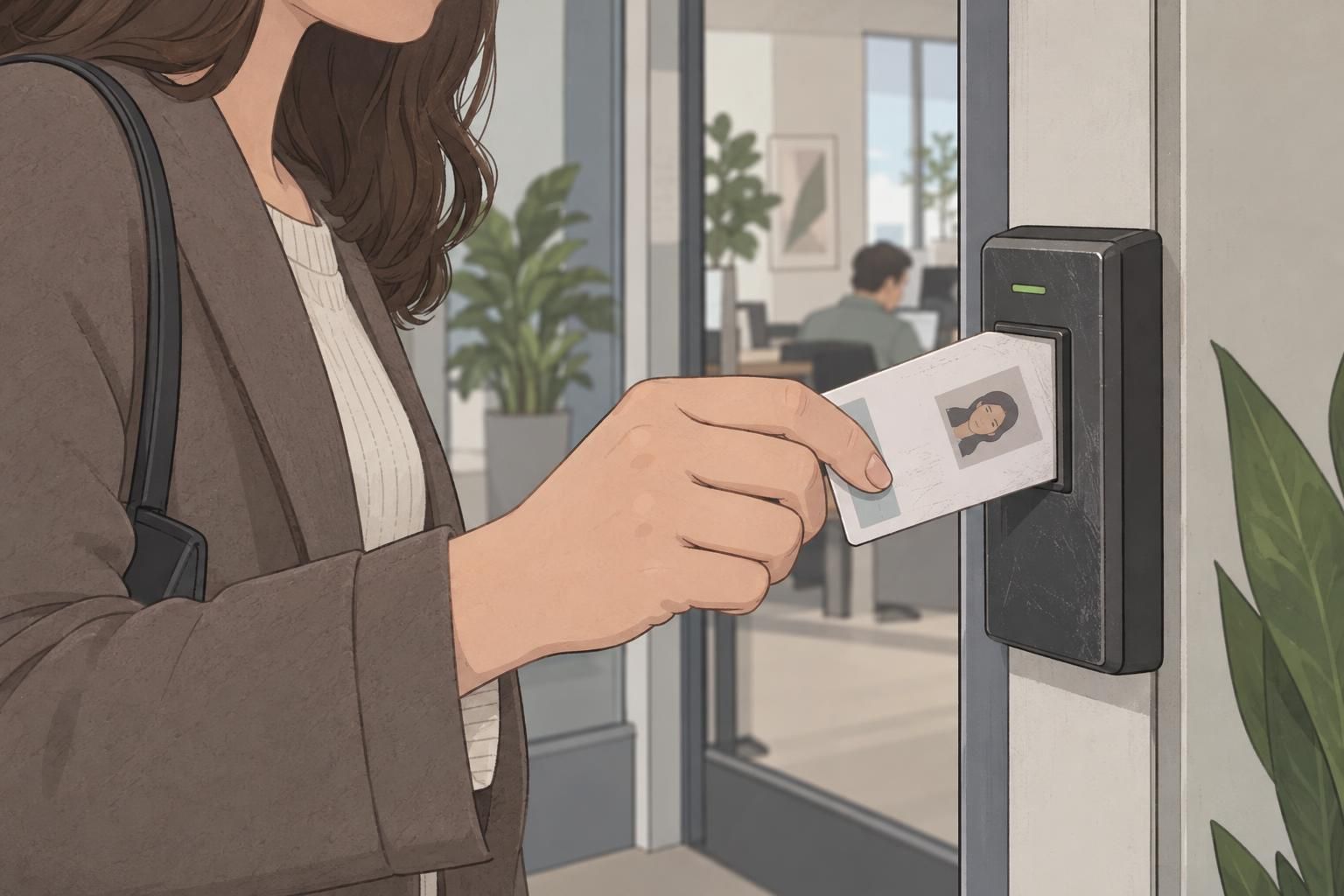
How printing and overlays protect an ID card
Exposed surface printing puts the image directly in the path of handling and rubbing. Methods that place the image beneath a protective film provide a barrier between the artwork and everyday contact. That barrier can improve durability, but its performance depends on more than simply being present.
- Thickness: The amount of protective material matters, but thickness alone does not establish overall durability.
- Material: Different films and laminates offer different levels of protection against environmental and mechanical wear.
- UV resistance: A film intended to resist sunlight damage addresses a different need from one selected mainly for abrasion protection.
- Bonding: A protective layer needs a reliable bond to the card to avoid lifting or separating during use.
Durable printing is therefore one part of a complete construction. The substrate, inks, finish, laminate, and manufacturing quality all influence how well a card withstands sunlight, abrasion, moisture, and chemicals. This whole-card view of durability is discussed in the linked source.
Scratch resistance and fade resistance are not interchangeable. A card may withstand rubbing well but still lose color in sunlight, so ask about both properties.

Choosing durable ID card options for the environment
Start with the conditions the card must survive, not a general promise of toughness. An indoor office badge, an outdoor staff ID, and a frequently swiped access card have different wear patterns. Matching construction to those patterns is more useful than choosing a finish by appearance alone.
- Frequent reader swipes: Prioritize abrasion protection and ask how the finished card performs under repeated contact.
- Outdoor exposure: Ask about ink lightfastness and UV-resistant protective layers rather than assuming any clear overlay blocks UV.
- Routine handling: Consider protection against rubbing, perspiration, and repeated insertion into wallets or holders.
- Humid or frequently cleaned settings: Confirm that the card construction and approved cleaning method suit the expected conditions.
For long lasting badges, request information about the complete card rather than treating one material or finish as a guarantee. If you are considering BadgeZoo cards, you can contact BadgeZoo with questions about your intended environment and custom requirements. Explain how employees will wear, store, clean, and use the cards so the discussion stays focused on practical suitability.
Practical ways to reduce fading and scuffing
Good handling cannot compensate for every manufacturing weakness, but it can reduce unnecessary wear. The aim is to keep identification visible and usable while avoiding exposure that serves no workplace purpose.
- Keep cards away from direct sunlight when they are not in use, especially on windowsills or desks beside sunny windows.
- Do not leave badges in hot vehicles or on dashboards.
- Store unused cards in a cool, dry, dark location rather than leaving them exposed near a window.
- Minimize unnecessary rubbing against other objects, repeated bending, and loose storage with abrasive items.
- Use an appropriate protective holder where practical, while keeping the card usable for its intended reader.
- Follow supplier cleaning guidance and avoid harsh chemicals or abrasive scrubbing.
- For expected outdoor use, consider specified UV-resistant overlays or durable polyester laminates, and confirm their suitability for the environment.
A holder can help reduce direct contact and scuffing, but a clear holder is not automatically a UV barrier. If a fading ID card is a recurring problem outdoors, review both storage habits and the card’s protective construction instead of relying on the holder alone.
What to check before ordering cards in quantity
Before placing a larger order, ask how the proposed construction has been evaluated. A useful specification should connect the printing method and protective layers to the conditions your staff actually encounter. General descriptions such as “durable” are less helpful than an explanation of what was tested and how the finished card performed.
- Lightfastness: What testing addresses color retention under light exposure?
- Abrasion: How is resistance to repeated rubbing or reader contact evaluated?
- Flexing: Has the finished construction been assessed for the bending expected during normal use?
- Solvents and cleaners: Which substances were tested, and which cleaning methods are approved?
- Humidity: How does the card perform under moisture conditions relevant to the workplace?
- Printing and bonding: Where does the image sit, what protects it, and how is overlay adhesion checked?
Where practical, evaluate samples under realistic working conditions before committing to quantity. Check whether photographs, names, and other essential details remain legible, not just whether the card still looks glossy. Choosing a card around its intended service life helps preserve the everyday value of clear, dependable workplace identification.