Psychological Safety at Work: Using Name Tags to Reduce Awkward Introductions
Why psychological safety makes introductions feel easier
Psychological safety is the feeling that it’s okay to take small interpersonal risks at work—like starting a conversation, asking a question, or admitting you don’t know something—without worrying you’ll be embarrassed or shut down. And when it comes to everyday interactions, few “small risks” are as common (or as oddly stressful) as introductions.
A simple workplace moment—walking past someone in the hallway, joining a meeting late, stepping into the break room—often comes with a quick internal calculation: Do I remember their name? Will it be awkward if I don’t? Should I just nod and keep moving? When names are visible, that mental load drops. The social “entry cost” of saying hello gets lower, especially for new hires, visitors, and cross-functional teams that don’t see each other every day.
Visible names don’t create connection by themselves—but they reduce the friction that prevents connection from starting.
This is why clear identification cues (like readable name tags and badges) can support a calmer, more welcoming environment. They help people begin interactions naturally—without forcing artificial icebreakers or putting anyone on the spot.
The hidden friction of not knowing names at work
Not knowing names at work creates a quiet kind of micro-stress. It’s not dramatic, but it’s persistent: you hesitate before approaching someone, you avoid starting a conversation, or you delay asking for help because you don’t want to reveal you forgot a name.
That friction tends to be worse in a few common scenarios: large organizations where you meet many people quickly, fast-paced environments where there’s little downtime to re-introduce, and hybrid workplaces where face time is limited and “recognizing a face” doesn’t always equal “remembering a name.” Even in small teams, frequent visitors, rotating shifts, or cross-department projects can make knowing names at work surprisingly hard.
- People avoid asking quick questions because they don’t know who to address.
- Newcomers struggle to build relationships when every interaction starts with uncertainty.
- Employees default to “Hey…” or generic greetings, which can feel colder than intended.
- Mistakes happen (wrong person, wrong role), creating more awkwardness later.
Over time, these tiny hesitations can reduce collaboration. When people feel unseen—or feel like they’re constantly “supposed to know” who someone is—participation gets quieter. The cost is often paid by new hires, contractors, and anyone working across multiple teams.
How visible names support psychological safety (without overcomplicating it)
At its core, psychological safety reduces fear of negative social consequences—like embarrassment, rejection, or being judged for speaking up. Research often frames it as a shared belief that it’s safe to take interpersonal risks in a group, which is a key reason people participate more when they feel supported (source).
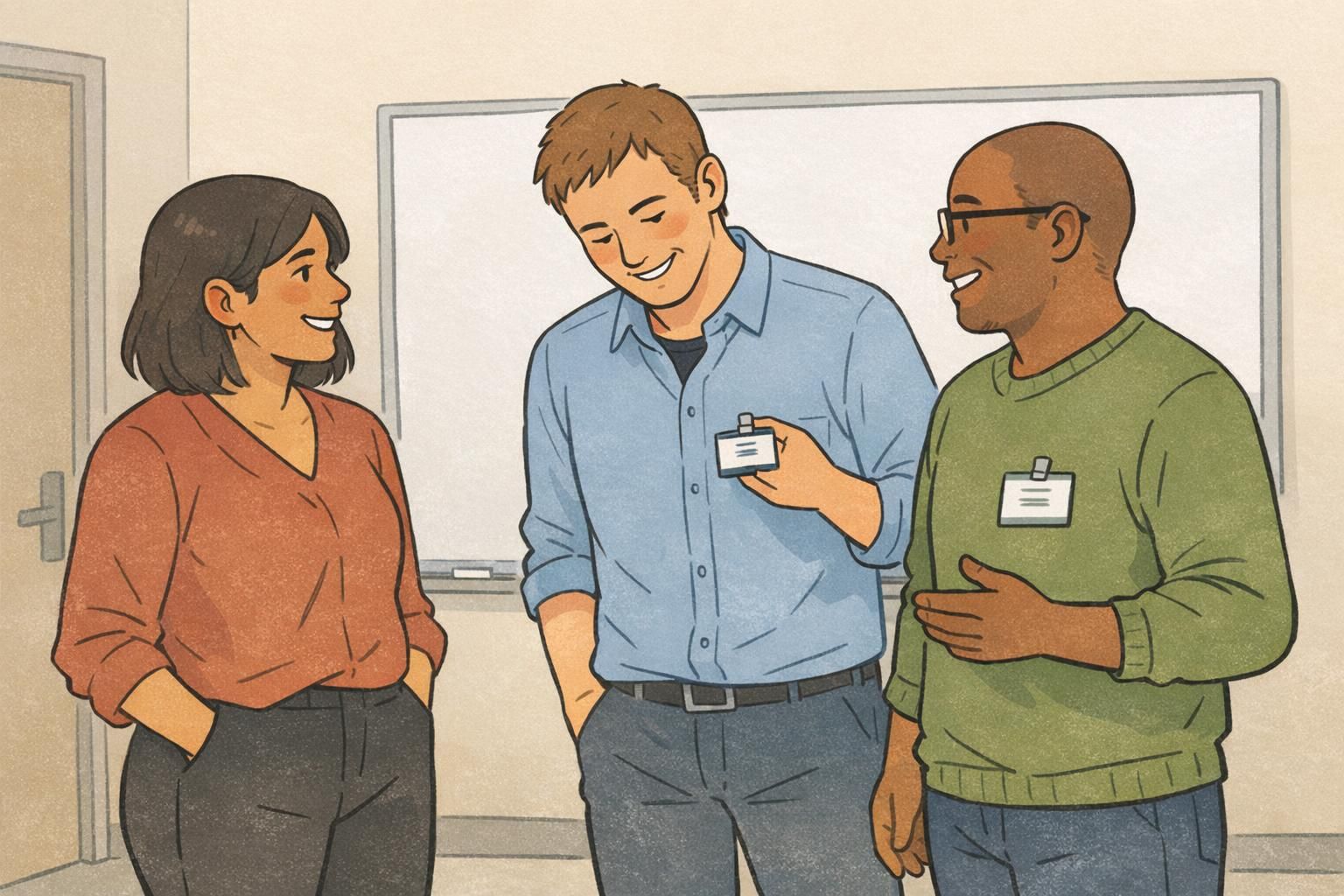
Visible names are a practical “low-effort” support for that safety. They remove one common uncertainty from everyday interactions: what to call someone. Instead of hovering, guessing, or avoiding the moment, you get an easy opening line: “Hi Sam—can I ask you something?” That tiny reduction in ambiguity can make it easier to speak up, ask for help, and connect across roles.
This matters not only for the person doing the greeting, but also for the person being greeted. When your name is visible, you don’t have to re-introduce yourself repeatedly throughout the day—something that can be surprisingly draining for employees who interact with many people (front desk staff, floor supervisors, trainers, clinicians, event leads, and more).
A name tag isn’t about formality—it’s about removing guesswork so people can focus on the actual conversation.
Name tags that help people actually use names in greetings
Name tags only reduce awkwardness if they’re readable in real life. The goal is simple: someone should be able to see your name at a normal social distance without staring or stepping closer than is comfortable.
- Make the name the largest element: If people have to hunt for the name, they won’t use it.
- Use high contrast: Dark text on a light background (or vice versa) is easier to scan quickly.
- Keep the layout clean: Too many lines, icons, or decorative elements can bury the name.
- Consider a preferred name: A clear preferred name supports natural greetings and reduces uncertainty.
- Add role/department when helpful: A simple line like “HR” or “Facilities” helps people route questions without guessing.
If your workplace includes pronouns on badges, keep it optional and formatted in a way that doesn’t compete with the name. In practice, most people glance first for the name; if the name is not immediately obvious, the whole purpose—making greetings smoother—gets undermined.
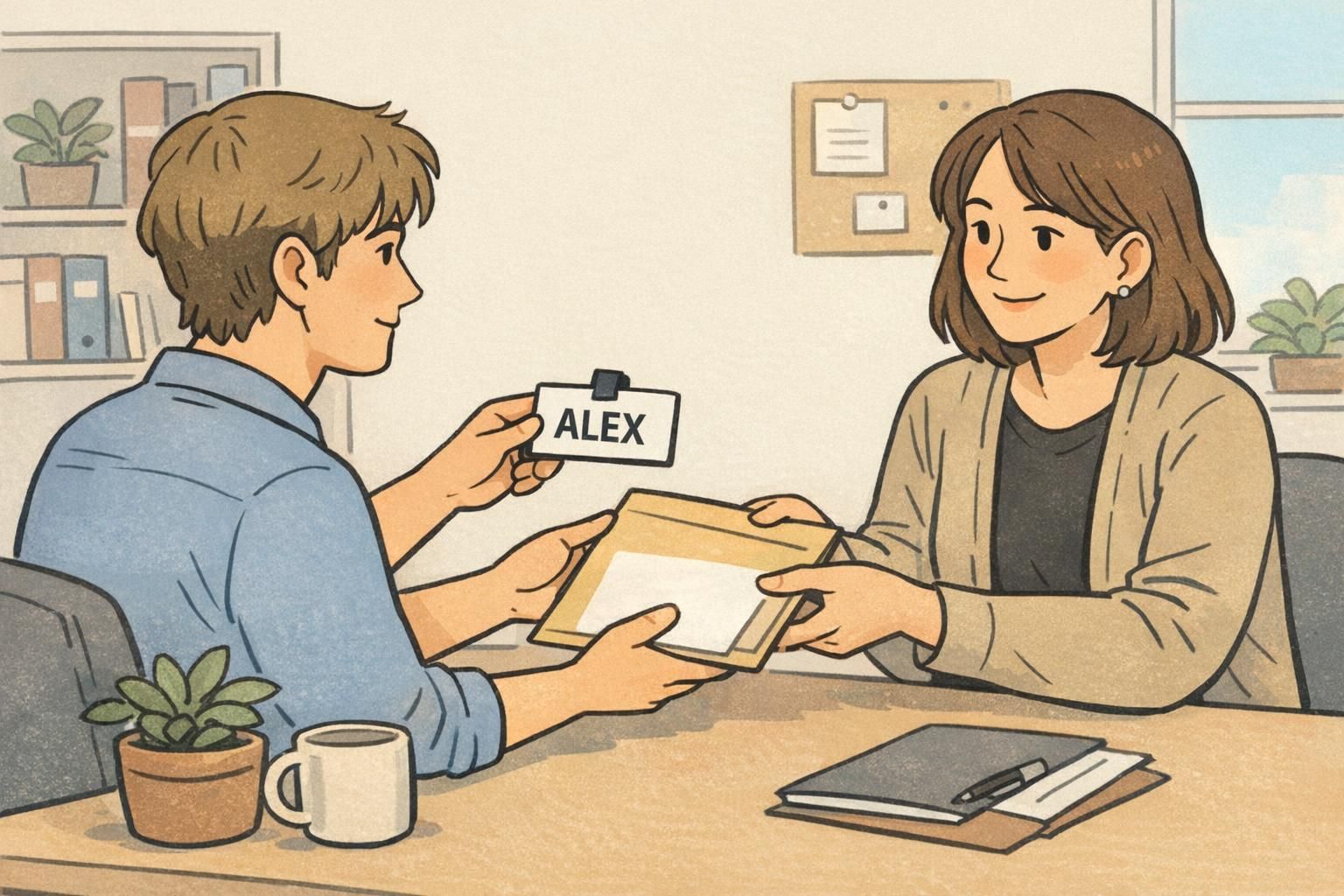
Simple norms that make ‘using names’ feel natural (not forced)
Even the best badge design works better when it’s paired with lightweight social norms. The goal isn’t to make introductions performative—it’s to make them easy, warm, and routine.
- Leaders model name-based greetings: A quick “Morning, Jordan” signals that names matter here.
- Normalize asking again: “Thanks for reminding me” or “I’m glad you told me again” removes shame.
- Do quick reintroductions when someone new joins: Especially in recurring meetings with rotating attendance.
- Use a consistent, low-pressure script: “Hi, I’m __, I’m on __, and I’m here for __.”
- Avoid calling people out: Invite intros without singling out the newest person as “the one who must speak.”
“When I can see someone’s name, I’m more likely to start the conversation I was already thinking about. It turns the moment from ‘Should I?’ into ‘Sure.’” – Team lead
These small practices help people use names without it feeling like a scripted “culture initiative.” Over time, they support knowing names at work as a shared habit rather than an individual burden.
Where name visibility matters most: onboarding, events, and high-stakes settings
Some workplace moments make introductions clumsy fast—usually when many people are meeting at once, roles are unfamiliar, or the environment feels high-pressure. In those settings, name visibility is less about convenience and more about lowering the barrier to approach the right person.
- Onboarding days: New hires meet a lot of faces quickly; visible names reduce overload and improve early connection.
- All-hands meetings and trainings: People from different teams sit together and may not know each other’s roles.
- Conferences and multi-department projects: Networking is easier when you don’t have to start by asking, “Sorry—what was your name again?”
- High-stakes or hierarchical settings: People may hesitate to ask names or roles; clear identifiers create a safer starting point.
- Visitor-heavy environments: Guests can quickly identify who can help them without interrupting the wrong person.
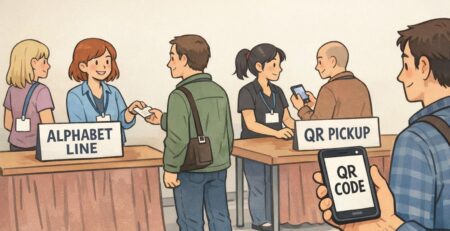
Event badges can be especially effective because they’re expected. When someone can instantly see “Taylor — Guest” or “Morgan — Volunteer,” the first interaction becomes more direct, less awkward, and more helpful.
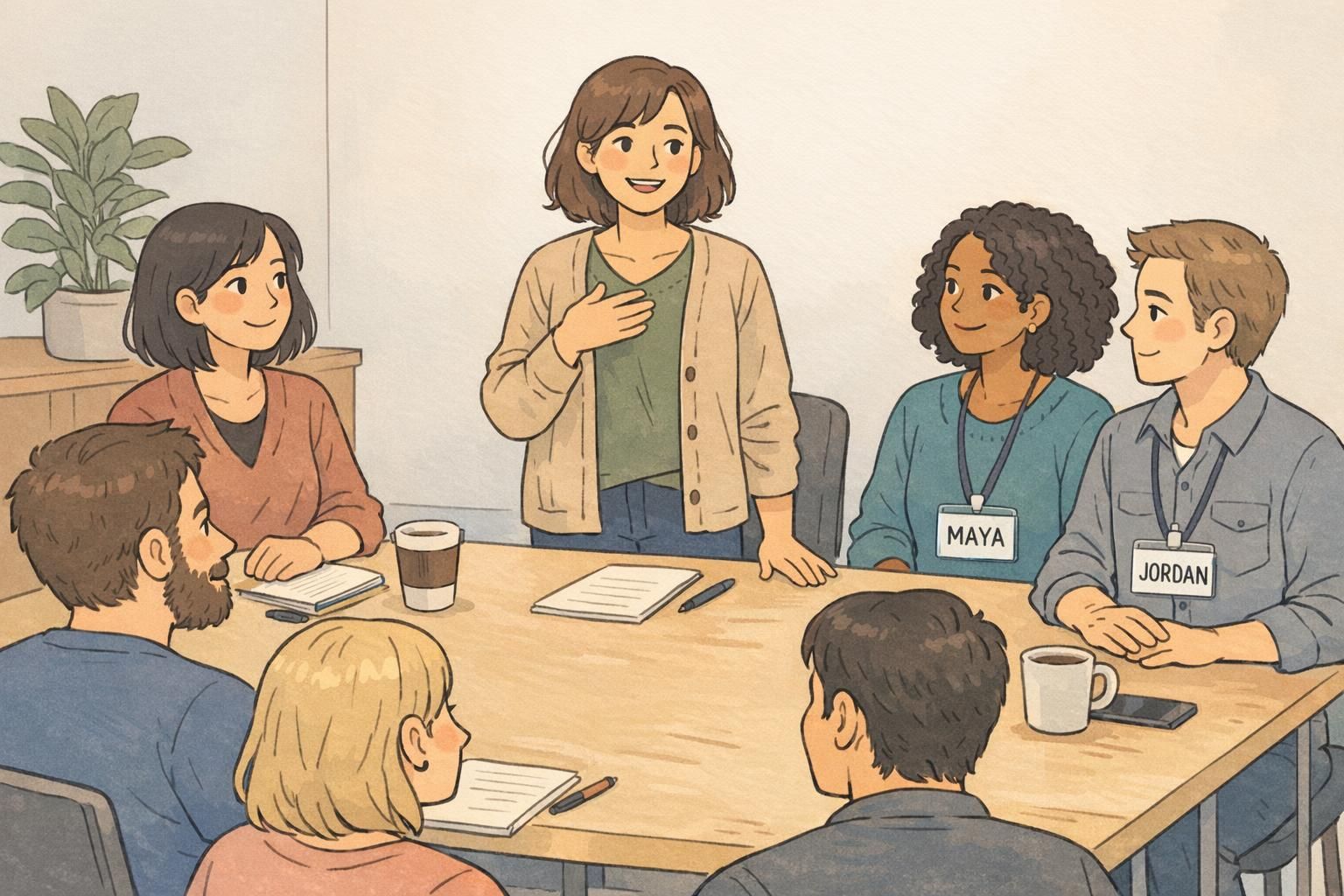
Designing a badge setup for comfort and clarity (role, readability, and wearability)
A good badge setup does two jobs at once: it keeps names visible, and it feels comfortable enough that people actually wear it consistently. If it flips around, gets covered by a jacket, or feels annoying, the best layout in the world won’t help.
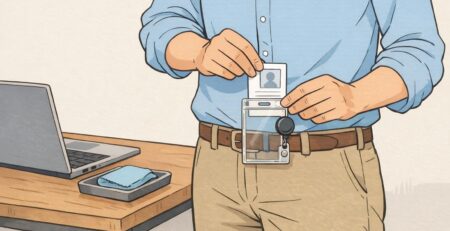
- Choose a wear method that stays visible: Lanyards work well in movement-heavy settings; clips can be great at desks, counters, and retail-style interactions.
- Aim for “quick scan” design: Consistent placement and formatting helps people find the name instantly.
- Avoid clutter: Too much information makes the eye work harder; keep the badge focused on identification.
- Right-size the role line: If job titles are sensitive, use a broad department label (e.g., “Operations”) to preserve privacy while still offering a conversational starting point.
- Plan for durability: If badges are used daily, holders can reduce wear and keep the badge looking clean and readable.
If you want people to greet each other by name, the name has to be easy to find, easy to read, and easy to wear.
Product ideas that support friendlier introductions (without feeling corporate)
Different teams need different levels of identification, but the underlying goal stays the same: make it easier for people to start conversations respectfully and confidently. Reusable name tags can work well for rotating shifts or visitor-heavy environments. Custom printed name badges can support consistent layout and readability across a department. And event badges help groups mix and network without the awkward first step of trading names repeatedly.
If your organization has multiple roles in the same space, adding a simple role line (like “Volunteer,” “Guest,” or a department) can reduce confusion and speed up help-seeking—without turning the badge into a mini résumé. Many workplaces also appreciate flexibility when rolling out identification tools; for example, BadgeZoo offers no minimum order quantity, which can make small pilots or phased rollouts easier to test before standardizing.
For teams building an onboarding kit or an event check-in table, you can explore BadgeZoo’s custom name tags to see common formats and options.
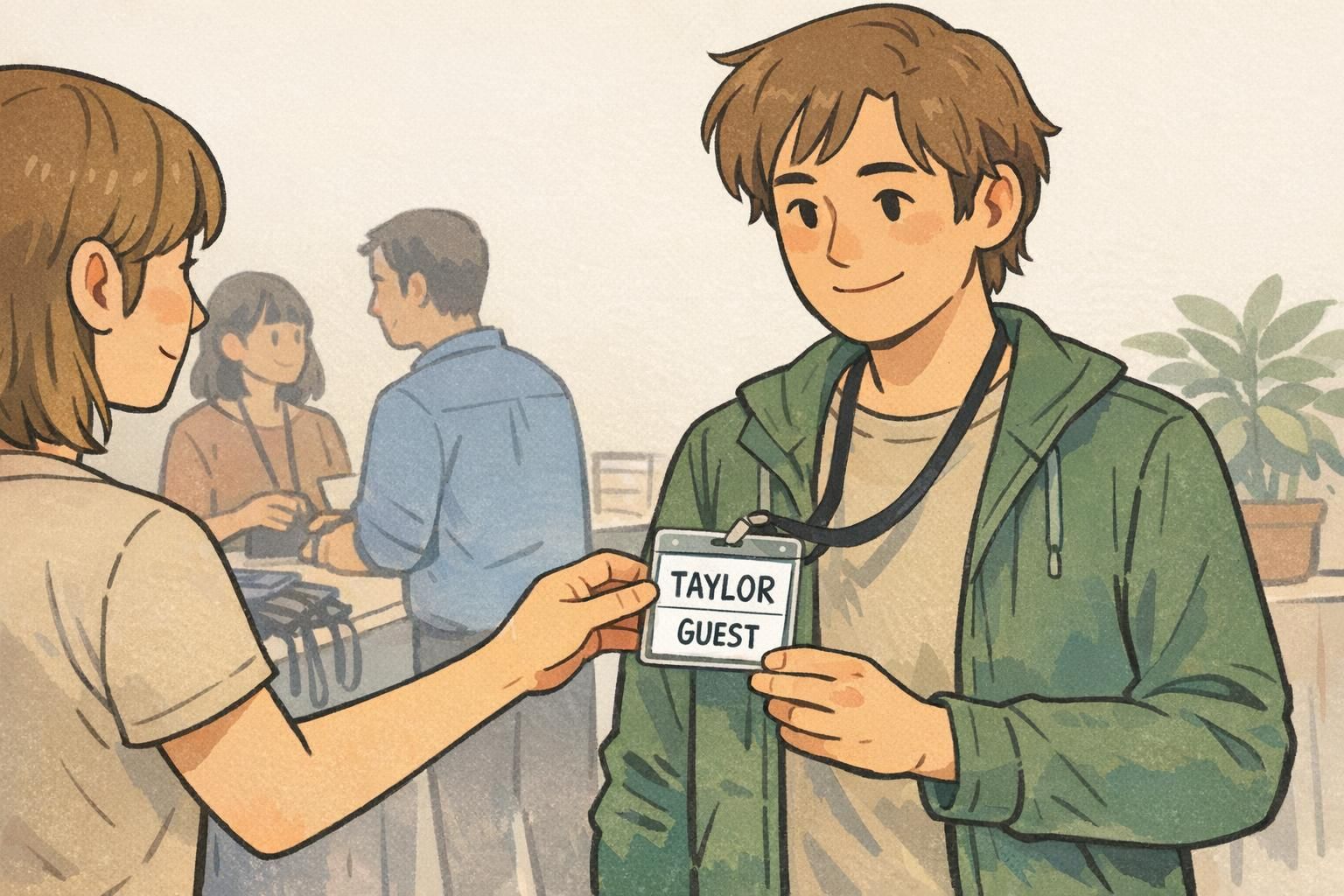
A quick rollout plan: from ‘we should’ to a smoother first week
The easiest way to make name visibility stick is to treat it like a small workflow improvement, not a big culture campaign. Start small, learn quickly, then standardize.
- Pick a pilot group: Front desk, event staff, trainers, or one department with lots of cross-team contact.
- Test readability in real conditions: Ask people to stand at normal distance and confirm the name is instantly legible.
- Check comfort and wearability: Make sure badges don’t flip, snag, or get hidden by typical clothing.
- Standardize the format: Same name placement, consistent font size, and a simple role/department line if needed.
- Set clear “when to wear” expectations: At the start of shifts, during shared meetings, and at cross-team events.
- Reinforce friendly norms: Model name-based greetings and normalize re-asking so people don’t feel embarrassed.
Use a preferred name or first name only when appropriate, and keep any role information broad (like a department). The goal is comfort and clarity, not over-disclosure.
They don’t have to. Simple, readable designs—used mainly during onboarding, events, or cross-team moments—can feel practical rather than performative.
Visible names make repetition easier in the short term (more correct greetings), which helps names stick naturally over time. The cumulative effect is fewer awkward moments and smoother collaboration.
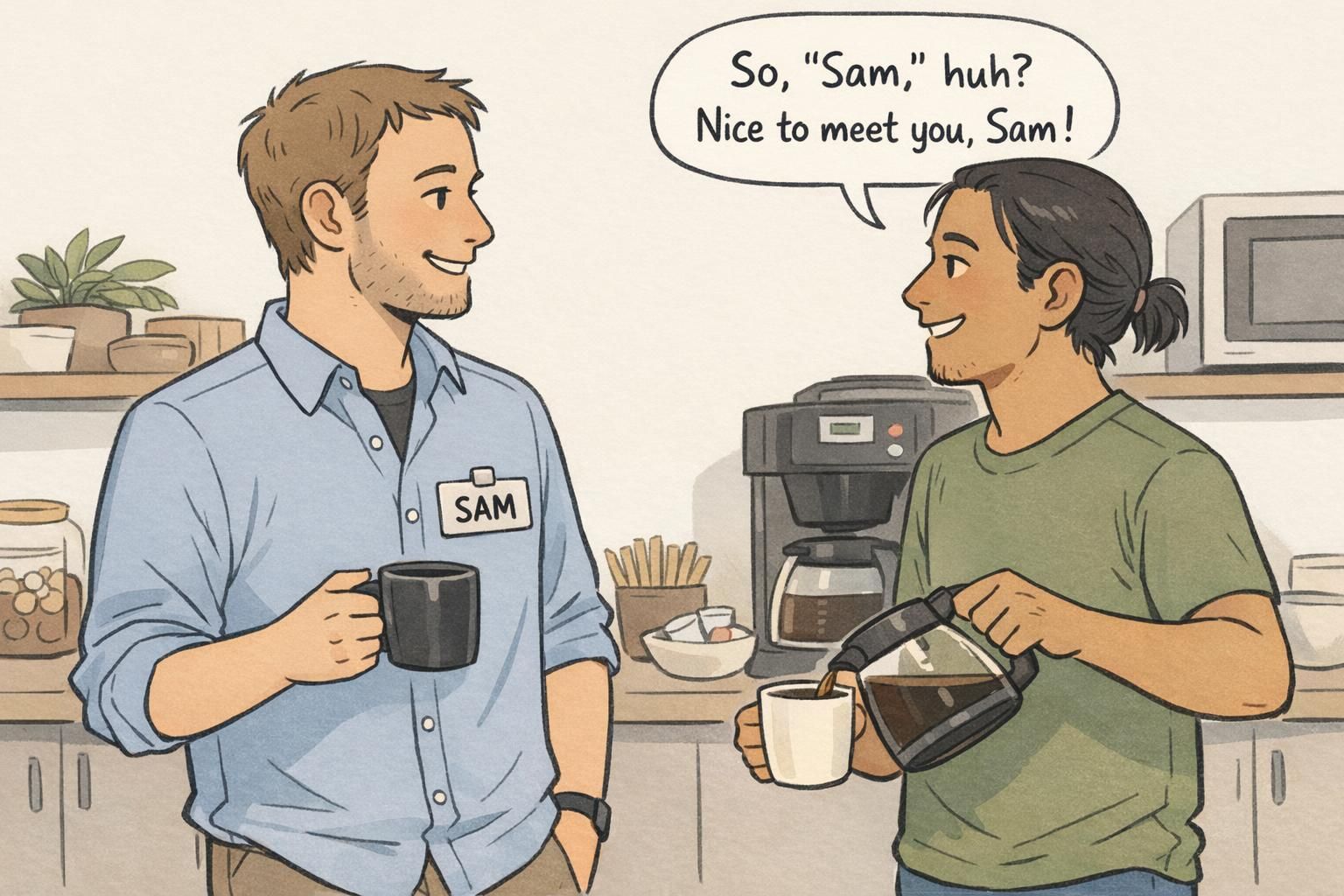
When introductions are easy, people ask questions sooner, collaborate faster, and feel more at home—especially in the first week.