Badge Compliance Culture: Badge Policies That Don’t Feel Like Policing
Why badge policies can feel personal (and how to reset the tone)
A badge compliance culture can fall apart fast when people experience badge reminders as a test of trust. If the first thing employees hear is “you’re out of compliance,” many will translate that into “they think we’re the problem.” A better starting point is to make the policy feel like help, not surveillance. Badges make it easier for coworkers and visitors to quickly identify who’s who, what roles people have, and where to go for the right kind of support. That matters most in busy or shared spaces—lobbies, hallways, clinics, campuses, warehouses, multi-tenant buildings, and event venues—where people interact with unfamiliar faces every day. When the tone is right, badge wearing becomes a shared norm: “We’re making it easier to work together and keep the space clear and welcoming.” That’s also the heart of friendly security—visible identification that reduces confusion and improves safety without turning every interaction into a confrontation. This article focuses on three practical moves that consistently reduce resistance: 1) communicate the “why” in plain language, 2) make the process simple and comfortable, and 3) train people to remind each other respectfully, with a quick fix ready.
Define the “why” in one sentence everyone can repeat
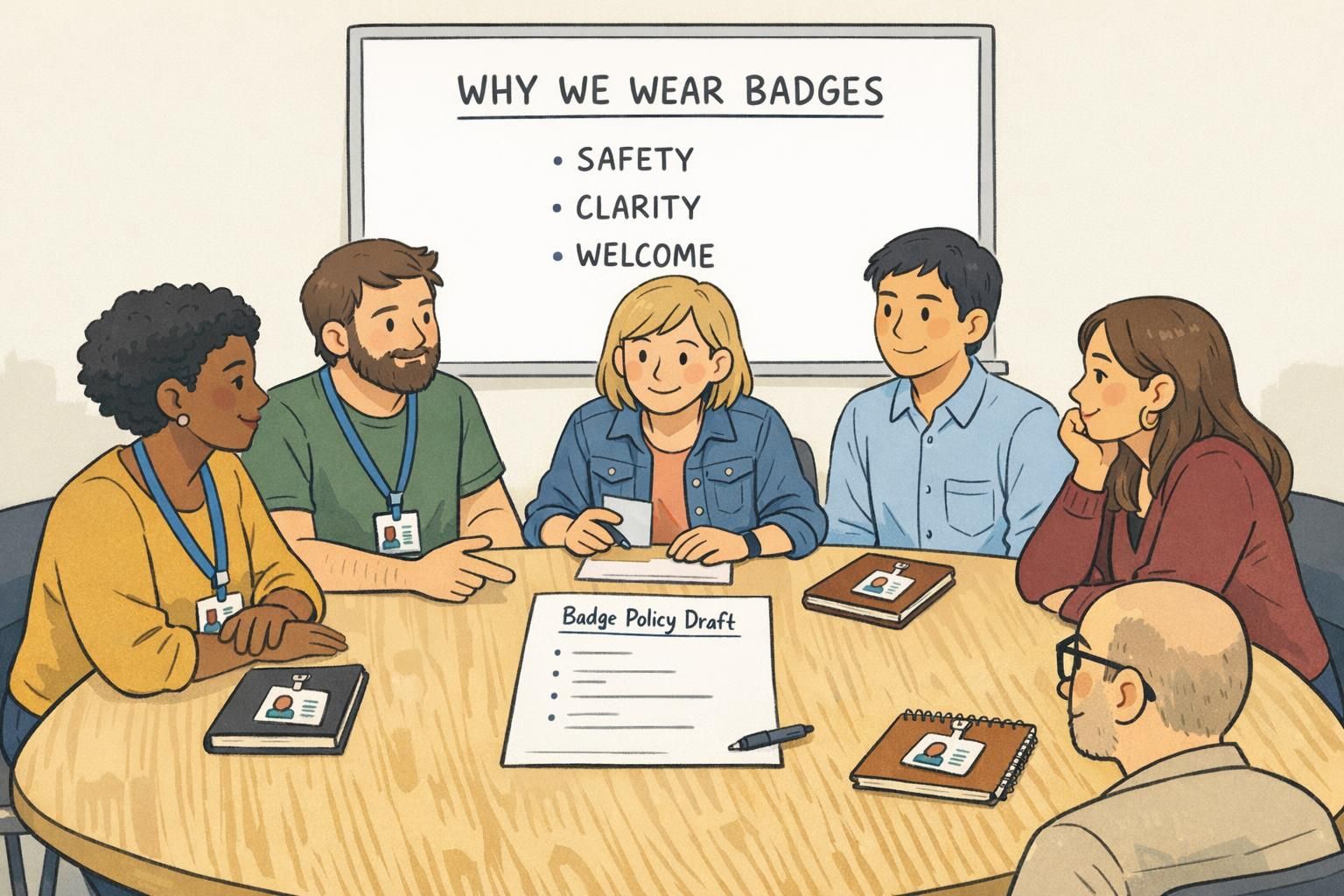
If your badge message takes a paragraph, people will fill in the blanks themselves—often with a story about suspicion or control. A single sentence that leaders and frontline staff can repeat (in the same wording) keeps the purpose consistent and credible. Here are a few options you can adapt. The key is that they explain the benefit without sounding like a warning. One-sentence purpose statement examples: – “We wear badges so everyone can quickly see who’s here, what role they’re in, and where to get help.” – “Badges help us keep the building welcoming and organized while reducing confusion for staff and visitors.” – “Visible IDs support safety and smooth handoffs—especially when we’re busy.” How this lands across common settings: – Healthcare: quick recognition supports smoother handoffs and reduces misdirection in high-traffic hallways. – Education: clearer identification helps staff and visitors navigate campuses and improves front-office confidence. – Offices and shared workplaces: it reduces the awkward “Do I know you?” moment and helps new hires integrate. – Events: it makes check-in, scanning, and networking easier, while helping staff spot who needs help. When the “why” is consistent, your ID badge rules feel less like enforcement and more like a shared operating standard.
- Keep the “why” under 20 words if possible
- Use everyday language (avoid legal or security jargon)
- Tie it to cooperation and clarity, not punishment
- Repeat it in onboarding, signage, and reminder scripts
Write ID badge rules that sound like service, not suspicion
Rules don’t have to sound like accusations. The most effective ID badge rules describe what “good” looks like and what to do when something goes wrong—assuming good intent. Instead of writing policies that focus on violations, write them like customer service: clear expectations, fast fixes, and respectful language. People lose badges. Clips break. New hires start before their permanent card is printed. Contractors arrive with different schedules. If your policy accounts for real life, staff will trust it—and follow it. Below are sample wordings you can copy into a handbook or SOP and tailor to your environment.
Service-oriented badge policies set a clear standard and provide an easy next step. That combination prevents most “compliance moments” from becoming personal.
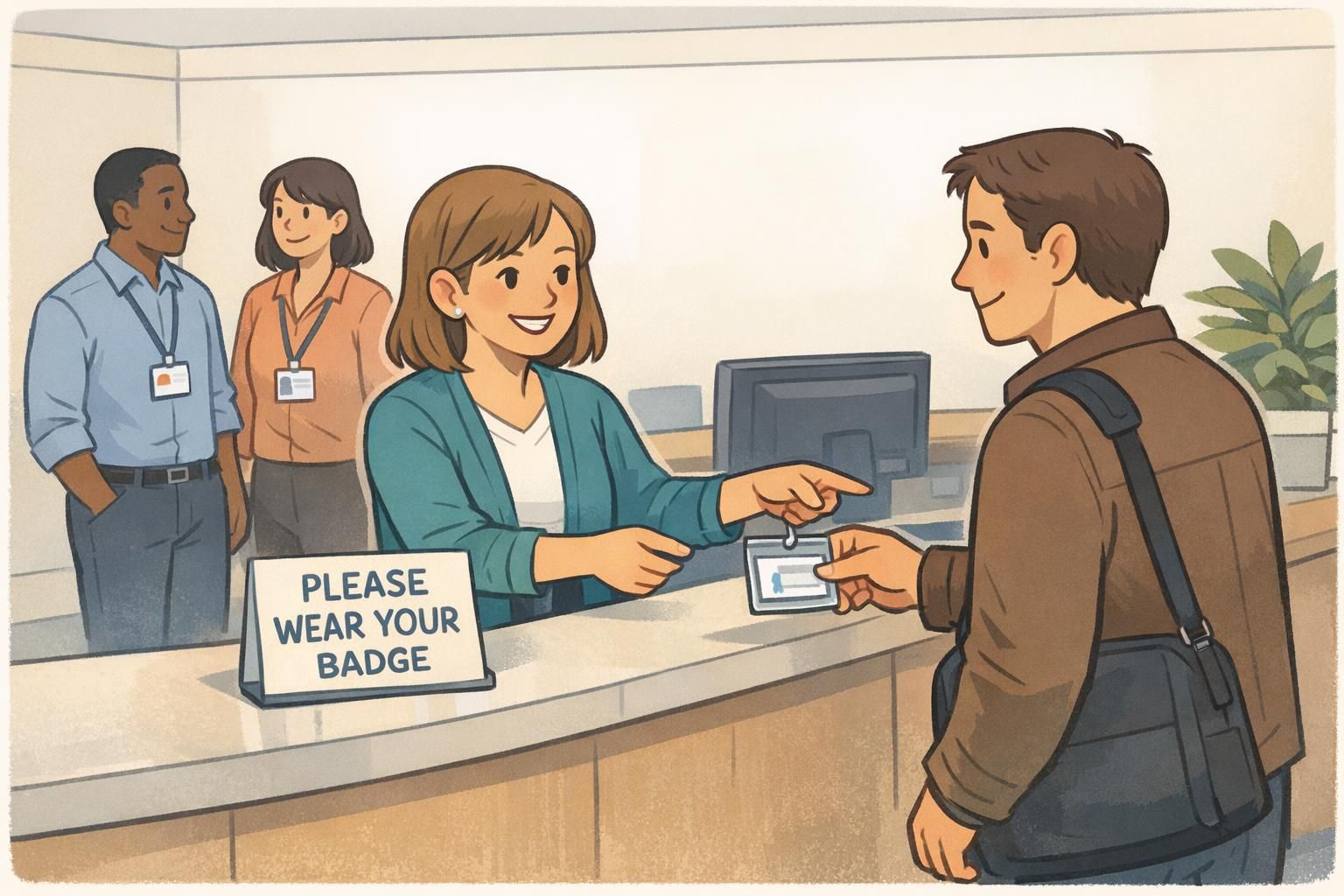
- Daily wear: “Please wear your ID badge above the waist and visible while on-site (hallways, shared areas, and customer-facing spaces). If you’re in a private office, keep it available and put it back on when you step out.”
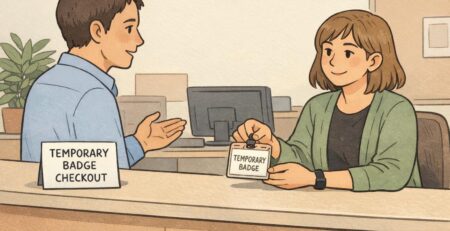
- If a badge is missing: “If you forgot, lost, or damaged your badge, stop by the front desk for a temporary badge and a quick replacement request. We’ll help you get back to normal in minutes.”
- Replacement process: “Report a lost badge as soon as you notice. A temporary badge will be issued the same day, and a replacement will be printed as soon as available.”
- Visitor badges: “All visitors check in, receive a visitor badge, and return it when leaving. Hosts meet visitors at reception when possible.”
- Offsite/remote scenarios: “Remote staff don’t need to wear a badge offsite, but should use approved ID/credentialing methods when visiting any company location or event.”
Use “please” for tone, but keep the standard unambiguous. Many teams combine them: “Please wear your badge visibly while on-site.” The clarity comes from describing where, when, and what to do if it’s missing.
Yes—because their access and oversight differ. Keep the visual standard consistent (visible identification), while tailoring what each group receives (employee ID, contractor badge, visitor badge) and how check-in works.
Make the policy easy to follow: visibility, comfort, and options
The fastest way to increase compliance is to reduce friction. If badges are hard to wear comfortably, easy to forget, or confusing to display, reminders multiply—and so does resentment. Start with three basics: – Visibility: people should know at a glance where a badge goes. – Comfort: the badge should feel natural during real work. – Options: allow small choices without losing a consistent look. Practical ways to make compliance easier: – Standardize placement: for example, “above the waist, front-facing” is simple and easy to self-correct. – Use clear holders and readable layouts so the badge actually helps (not just checks a box). – Offer a couple of wearing options—lanyard vs. clip—so different roles can work safely and comfortably. – Choose vertical vs. horizontal orientation based on your card design, but keep it consistent within the workplace. – For access-controlled doors, align physical wear with how people move (tap, swipe, scan) so they’re not constantly fumbling. When templates are consistent, people don’t need to be told they’re out of compliance—they notice it themselves. Role-based color cues can also reduce friction: staff can quickly identify who to ask for help, who is a visitor, and where someone belongs, without a tense conversation.
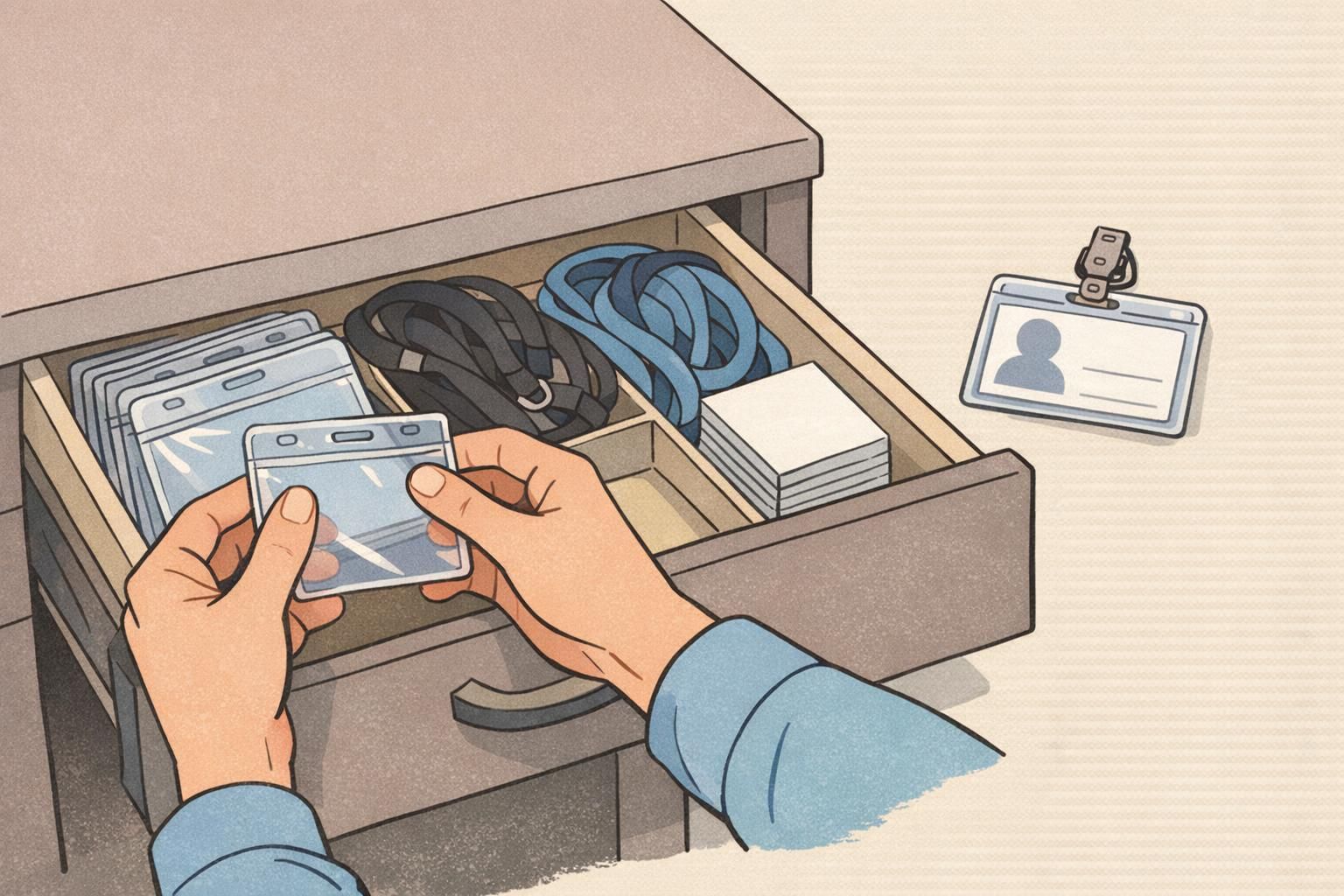
- Make replacements obvious: one location, one process, one point of contact
- Keep temporary badges in stock for “forgot it” days
- Use consistent templates so names and roles are in the same place every time
- Use color cues to support quick recognition without singling anyone out
Training that reduces resistance: micro-scripts, not lectures
Most badge conflict happens in tiny moments: a hallway pass, a quick stop at reception, someone “just running in.” Long trainings don’t help much in those moments—what helps is a short, consistent script that protects dignity and offers an immediate solution. Think of this as giving your team “one sentence and one next step.” It keeps tone consistent across managers, front desk staff, security, and event volunteers—and it strengthens friendly security by making the interaction feel helpful rather than suspicious. Below are micro-scripts you can teach in five minutes and use for months.
- Scenario: “Forgot mine.” Script: “No problem—can we get you a temp badge real quick? It helps everyone know who’s here.” Next step: issue temporary badge and start replacement request if needed.
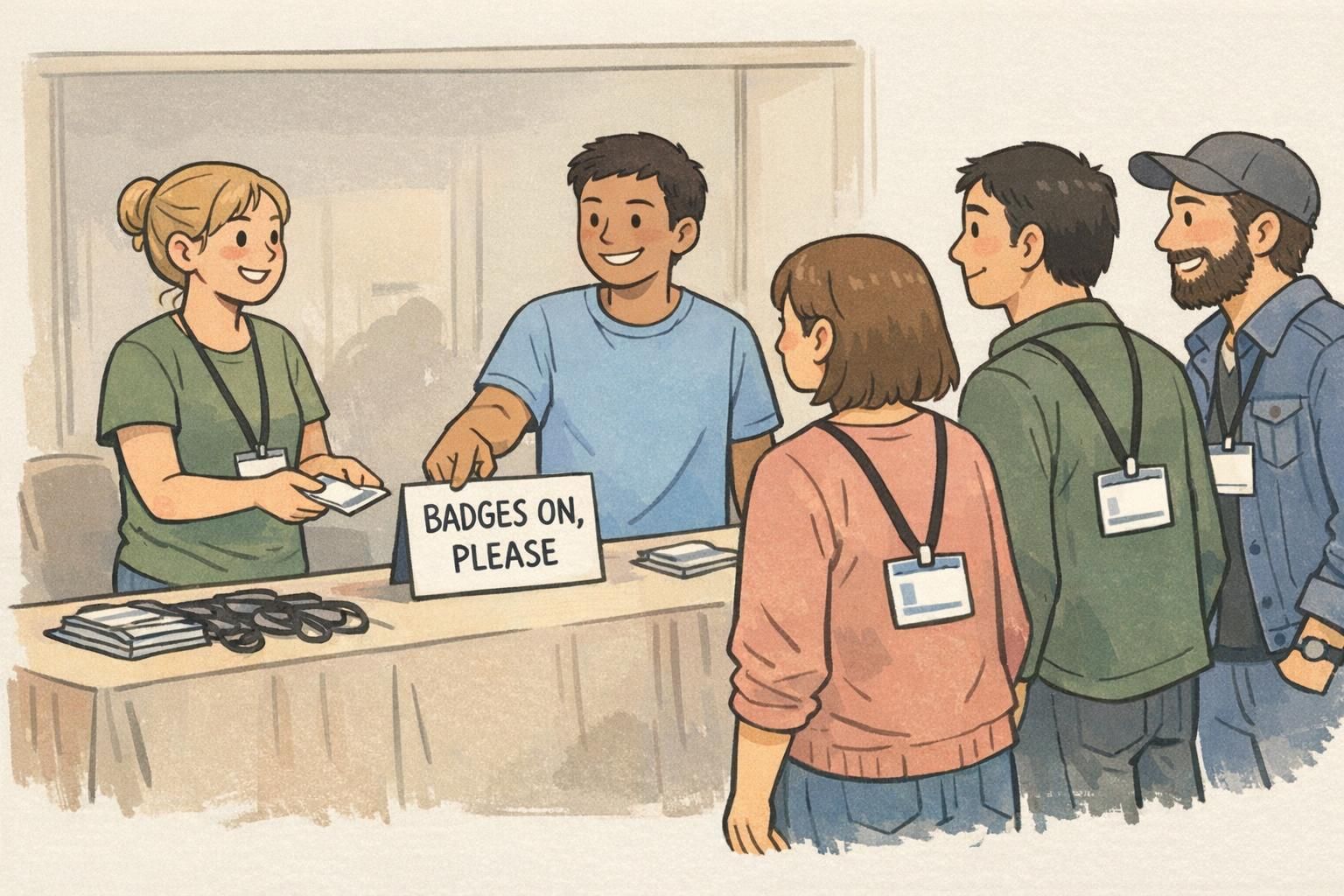
- Scenario: “I’m just running in.” Script: “Totally—please pop your badge on while you’re in shared areas. Want a clip or lanyard?” Next step: offer a spare holder/clip if available.
- Scenario: “I don’t like wearing it.” Script: “Thanks for telling me. Let’s find a comfortable option that still keeps it visible—lanyard, clip, or different holder.” Next step: provide options; document a preference, not a complaint.
- Scenario: “I’m a contractor.” Script: “Welcome—contractors wear the contractor badge while on-site. We’ll get you checked in and set up.” Next step: confirm identity/check-in process and issue the correct badge.
- Scenario: Visitor without badge visible. Script: “Hi—can I help you find your visitor badge? We just need it visible while you’re here.” Next step: escort to reception for a replacement visitor badge.
“The goal isn’t to catch people without a badge. It’s to keep the day moving—clear, safe, and welcoming.” – Facilities Coordinator
Build procedural fairness: consistent reminders, grace periods, and fixes
People accept workplace rules more readily when those rules feel fair in practice—not just on paper. That means reminders are predictable, applied consistently, and paired with a clear path to fix the issue. Procedural fairness isn’t about being lenient; it’s about being transparent and respectful. When employees can anticipate what happens next (and when they’re treated with dignity), they’re more likely to cooperate voluntarily. That’s a core idea behind procedural justice: legitimacy grows when rules are communicated clearly and applied consistently with respect (source). A simple, fair escalation ladder helps prevent badge policies from feeling like personal judgment.
- Step 1: Friendly reminder + immediate help (temporary badge, spare clip, directions to reprint)
- Step 2: Assistance + documented follow-up if the pattern continues (focus on barriers: shift change, storage, comfort, unclear standard)
- Step 3: Formal follow-up only for repeated, unresolved noncompliance (with clear expectations and a fix plan)
If two people do the same thing and get two different responses, the policy won’t feel legitimate. Consistency is what turns reminders into a normal routine instead of a personal critique.
It also helps to publish an exception process that protects both the standard and real needs. Examples may include medical or sensory constraints, role-based safety limitations, or job functions that require specialized wear. The point isn’t to lower expectations—it’s to handle exceptions transparently so the overall system stays trusted.
Use design to make compliance effortless (color, roles, and readability)
Design is an underrated compliance tool. When a badge is easy to read and visually consistent, it reduces “badge friction”—the everyday hassle that makes people less likely to wear it correctly. A few design principles that help: – Readable names: large enough to see in a quick greeting. – Helpful role labels (when appropriate): department, team, or role category can make handoffs faster. – Consistent placement: name, photo (if used), and role in the same location across every badge. – Color systems that inform without stigma: colors should help recognition (staff vs. visitor vs. contractor, or role groups) without “marking” people in a negative way. There are also real trade-offs to decide intentionally: – Privacy vs. visibility: some workplaces prefer first name + last initial; others need full names for operational reasons. – Job titles vs. departments: titles can be helpful, but may require frequent updates; departments can be more stable. – Multi-location consistency: if staff move between buildings, consistent templates reduce confusion. For event badges and multi-day visitors, clarity matters even more. A badge that stays readable after a day of wear, scans easily, and clearly shows attendee type reduces bottlenecks at doors, sessions, and help desks—without making volunteers feel like bouncers.
- Aim for “readable at greeting distance” (about an arm’s length away)
- If you use colors, document what each color means and keep it consistent
- Keep layouts consistent across teams so people can recognize badges instantly
- For events, prioritize quick scanning and all-day readability
Products that support a positive policy (without adding hassle)
The best policy in the world struggles if the tools don’t match how people actually work. Durable ID cards, clear name tags, badge buddies for role visibility, and event badges that stay readable all reduce the little points of friction that lead to noncompliance. A practical approach is to build around the moments you know will happen: – New hire start days – Contractors arriving for short projects – Event check-in rushes – The inevitable “I left it in my other jacket” morning That’s why many organizations keep a small stock of temporary badges and replacement supplies at reception or a known badge station. When the fix is fast, reminders stay calm. If you’re reviewing options for everyday employee credentials, you can explore BadgeZoo’s custom ID badges as one example of a standard format that supports clear visibility and consistent templates.

A rollout plan that earns buy-in: co-design, pilot, and feedback loop
If you want a policy that feels shared—not imposed—bring in the people who live with it. Before you enforce anything, ask representatives from teams who wear badges every day to help you spot pain points: comfort issues, role differences, workflow realities, and where reminders tend to get tense. A lightweight rollout plan that earns buy-in often looks like this: – Co-design: pick 6–10 representatives (front desk, managers, facilities, a few frontline roles, and someone from events if applicable). – Pilot for 2–4 weeks: test the policy language, badge wear options, replacement flow, and reminder scripts. – Measure success in everyday terms: fewer interruptions at reception, faster visitor routing, fewer “who is that?” moments, smoother event entry. – Maintain a simple feedback channel: a short form or a shared inbox so people can report friction (holders break, lanyards snag, printing delays). After the pilot, update the policy once, publish the final “why” sentence, and train everyone with the same micro-scripts. Over time, the culture shifts from enforcement to routine: the badge becomes part of how the workplace stays clear and welcoming. A repeatable checklist: – Message the “why” in one sentence – Make the steps obvious (where to get help, how to replace) – Train with micro-scripts and a solution-first mindset – Keep reminders consistent, respectful, and fair – Improve the physical experience (comfort, readability, fast fixes)
When badge wearing is easy, the “why” is clear, and reminders come with a quick fix, compliance stops feeling like policing—and starts feeling like teamwork.