
What Is a Badge Buddy?
If you have ever wondered, “what is a badge buddy?” the answer is straightforward: it is a rigid or laminated card worn behind a standard photo ID badge, with a job title or role printed in large, easy-to-read text. Its purpose is to make the wearer’s role easier to recognize without replacing the official identification they already carry.
A photo ID and a role label answer different questions. The ID helps establish who someone is; the badge buddy makes it easier to see what role that person holds. In a busy clinic, school, or event space, that distinction can help people decide whom to approach without first reading the smaller details on an ID card.
At a glance: what is a badge buddy?
Think of a badge buddy as a visible role label that works alongside an official ID. It adds clarity about the wearer’s role while leaving the person’s identification available to read.
The useful feature is not simply having another card. It is giving role information a clear, readable place in the identification setup. That makes a badge buddy especially relevant wherever people regularly meet staff members they do not already know.
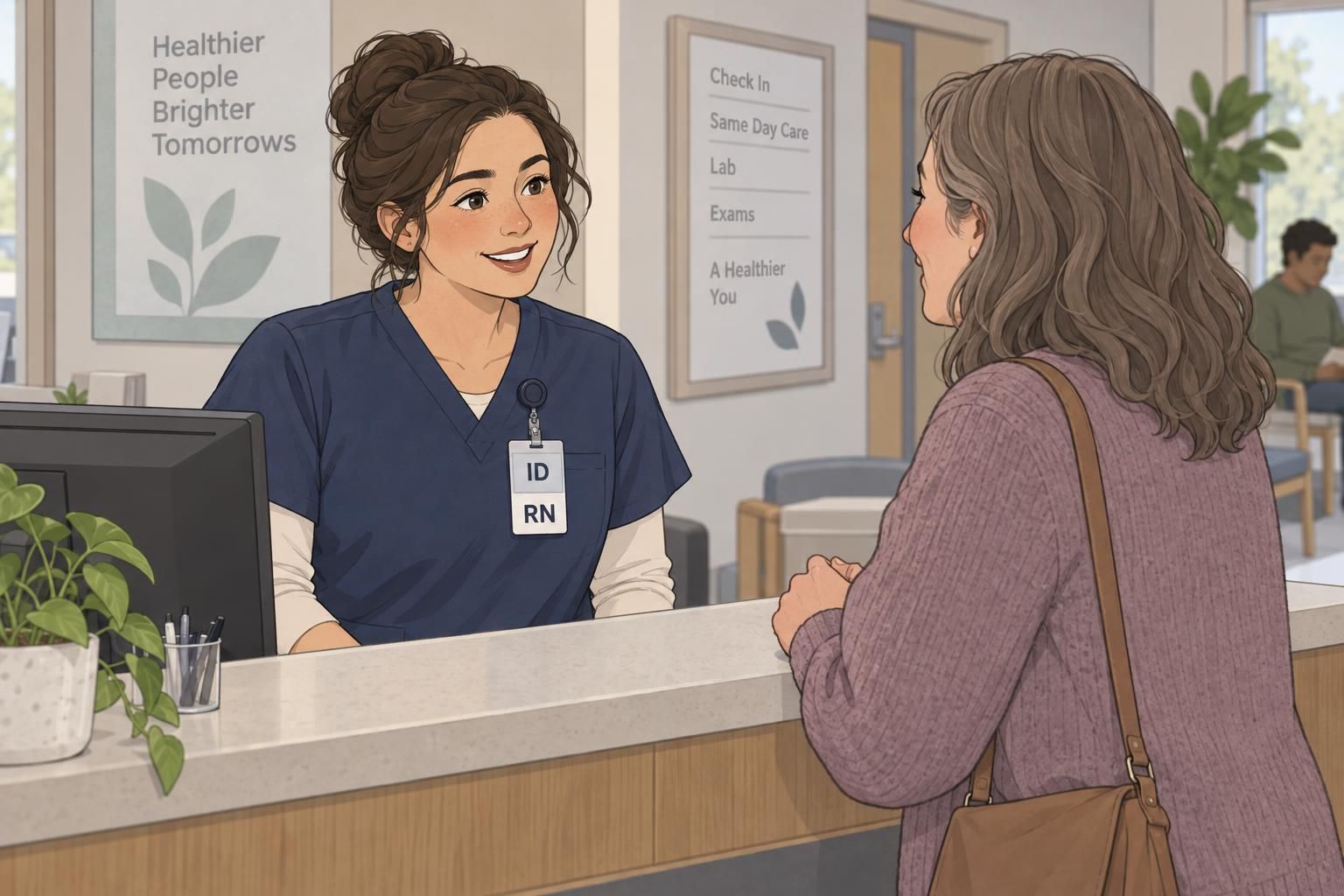
How a Badge Buddy Works With an ID Card
A badge buddy sits behind the photo ID, with its role label extending beyond the ID’s edge so people can read it. In an aligned vertical arrangement, the cards form one straight stack rather than two separate pieces competing for attention. The front card remains the official ID, while the visible backing card highlights the role.
This arrangement gives each part a clear job. Someone looking for a staff member’s role can notice the larger label first, then look at the ID for the person’s identifying details. The badge buddy should not cover the photo or any information that the workplace requires people to see.
- The photo ID identifies the individual.
- The badge buddy makes the person’s role more noticeable.
- The aligned stack keeps both pieces together in one visible location.
- The official ID remains readable and available for required checks.
Placement matters as much as wording. If the role label is hidden behind the ID holder or the cards do not line up, the extra card may add little clarity. Before using the combination, check the complete setup as it will actually be worn, not just how each card looks separately.
Common Badge Buddy Uses for Faster Role Recognition
Common badge buddy uses center on helping people recognize roles in settings where many staff members interact with the public. The goal is practical: make it easier to find the appropriate person, start a conversation, or understand who is providing assistance.
In healthcare, a clear role label can help patients and coworkers distinguish among professionals and trainees. However, the benefits should be described carefully. A peer-reviewed healthcare study found that badge buddies improved trainees’ and nurses’ awareness of medical trainees’ training levels, but did not change patient and family perceptions in that study (source). That finding supports a specific role-recognition benefit, not a promise that every audience will respond in the same way.
Schools, events, and venues present similar identification needs. A visitor may need to find a school staff member, while an event attendee may be looking for someone who can provide directions. Clear labels on workplace identification can support those interactions; a badge buddy is one way to make the role more prominent alongside an ID.
- Healthcare: help people recognize professional roles and trainee levels.
- Schools: make staff roles easier for visitors to identify.
- Events and venues: help attendees locate organizers or other team members.
- Public-facing workplaces: make reception and visitor-service roles easier to spot.

Who Can Benefit From a Badge Buddy?
A badge buddy is useful when other people need to identify someone’s role quickly. It is not limited to one profession. The strongest reason to use a role identifier card is a recurring need for clear, visible role information alongside an existing ID.
- Healthcare professionals and trainees whose roles need to be clear to patients and colleagues.
- Teachers and school staff who regularly interact with visitors.
- Security and emergency personnel whose role labels help people recognize whom to approach.
- Event teams who need to be identifiable among attendees.
- Receptionists and visitor-service staff who provide a starting point for questions.
- Mobile professionals who meet people away from a fixed workplace.
Consider the setting from the other person’s perspective. A coworker may already recognize a team member, while a first-time visitor may have no context at all. A prominent role label gives that visitor a useful starting point without requiring familiarity with the organization.
When deciding what is a badge buddy’s main value for your team, focus on the moments when role confusion occurs. If people regularly need help distinguishing responsibilities, a readable label can support those conversations. Its value comes from matching a real identification need, not simply adding another item to every badge.

Choosing a Badge Buddy for Your Workplace
Start with the role wording. Use the organization’s official job titles rather than creating an informal label that could suggest different responsibilities. If the workplace has an approved badge format or color-coding system, follow it so the new card fits the identification approach people already use.
Next, check the fit with the actual ID and holder. A badge buddy should make information easier to see without hiding the photo, barcode, expiration date, or another required credential. Review the assembled cards together, including the attachment point and the exposed role label.
- Confirm that the role wording matches the official job title.
- Follow any approved badge layout or color-coding system.
- Check that the card fits the ID holder and stays aligned with the ID.
- Keep the photo and all required credential information visible.
- Choose clear lettering and a readable layout.
- Select a rigid or laminated material with durability suited to the work environment.
Readability should guide the final choice. A role identifier card needs to communicate its main message quickly, so avoid treating it as a place for unnecessary information. Review longer job titles carefully: the wording should remain accurate without becoming difficult to read in the available space.

Using Role Labels Clearly and Consistently
A badge buddy is a visibility aid, not proof of licensure, authority, or access permission. It helps communicate a role, while the official ID and the organization’s credential-checking processes retain their separate purposes. Clear role labeling supports workplace identification rather than replacing it.
Consistency makes the system easier to interpret. Use the same terminology for the same roles, follow approved placement, and keep the official ID visible. If a person’s role changes, the displayed label should continue to match their current official role rather than create uncertainty.
Does a badge buddy replace a photo ID?
No. It supplements the photo ID by making the wearer’s role easier to see. The official ID still identifies the individual.
Does a role label grant access or verify credentials?
No. A visible role label is not proof of access permission, licensure, or authority. Those checks remain separate.
What makes a badge buddy useful?
Accurate wording, readable text, consistent placement, and an unobstructed official ID help it communicate the wearer’s role clearly.
The simplest answer to “what is a badge buddy?” is a role label that works with an ID. Used clearly and consistently, it can help patients, visitors, customers, and coworkers recognize whom to approach.