Reuse Lanyards After the Event: Recycle, Repurpose, and Store Accessories
A Simple Post-Event Plan to Reuse Lanyards Without Hassle
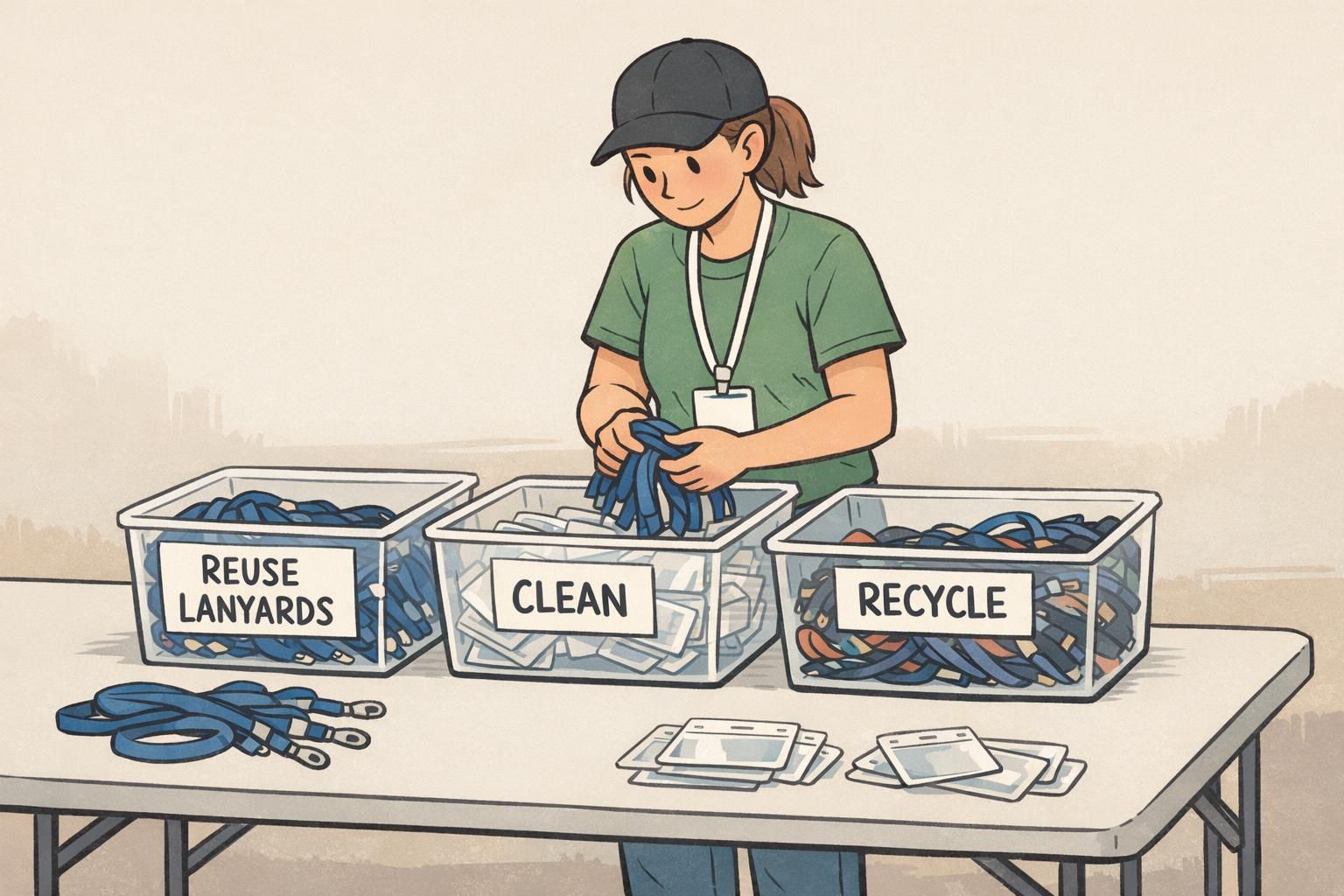
When an event ends, the accessories pile up fast: lanyards, badge holders, clips, and leftover inserts. The easiest way to keep costs down and reduce waste is to start with a clear hierarchy—reuse first, then repurpose, then recycle, and only discard as a last resort. That approach is widely supported because extending the life of an item typically avoids more environmental impact than using a new one, even if the new one gets recycled later (source).
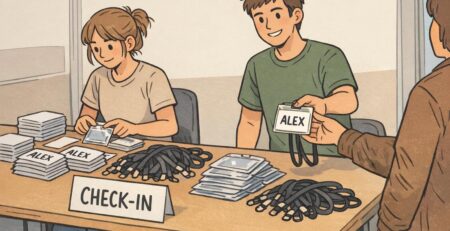
A practical post-event plan doesn’t need a committee or a long checklist. It just needs a simple flow that any staff member can follow at teardown: collect everything in one place, sort by condition, and decide what’s ready for the next check-in versus what needs cleaning, repair, recycling, or disposal. The more consistently you can reuse lanyards across events, the less you’ll spend replacing “mystery missing” supplies—and the less you’ll send to the trash.
- Collect: Bring all lanyards, badge holders, clips, and paper inserts to one station.
- Sort by condition: Separate items that are ready now, need cleaning/repair, or are end-of-life.
- Decide: Reuse first, then repurpose, then recycle what’s accepted locally, and discard only what can’t go anywhere else.
- Store: Put reusable items into labeled bins so your next event starts with a ready kit.
Keep it practical: three bins and one person in charge is usually enough to prevent hours of cleanup later.
Quick Collection & Sorting Station (The 10-Minute Breakdown)
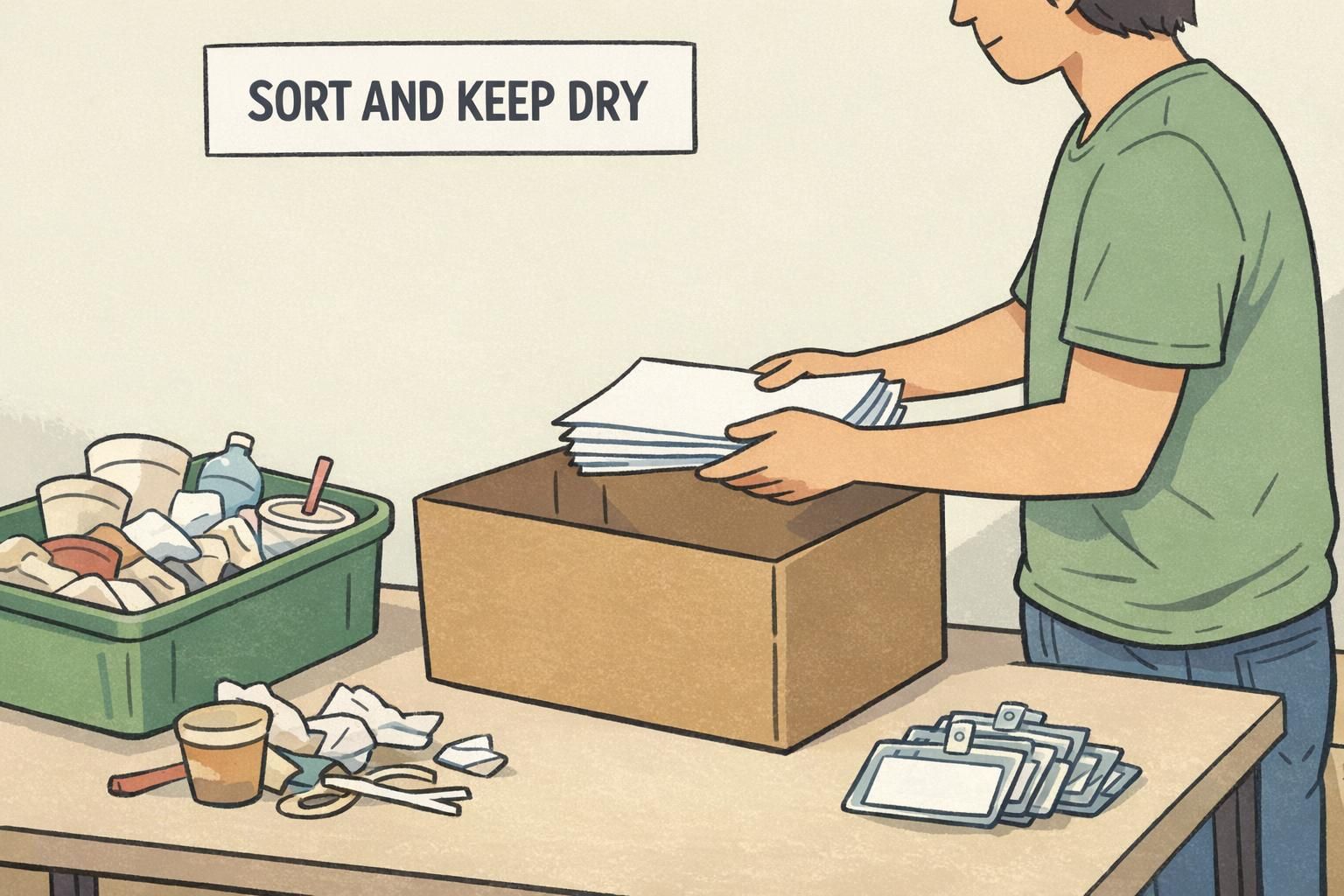
Most waste (and re-buying) happens because supplies scatter during teardown. A single, clearly marked collection point is the fastest fix. Set up one folding table or rolling cart near the exit path—somewhere every staff member naturally passes on the way out.
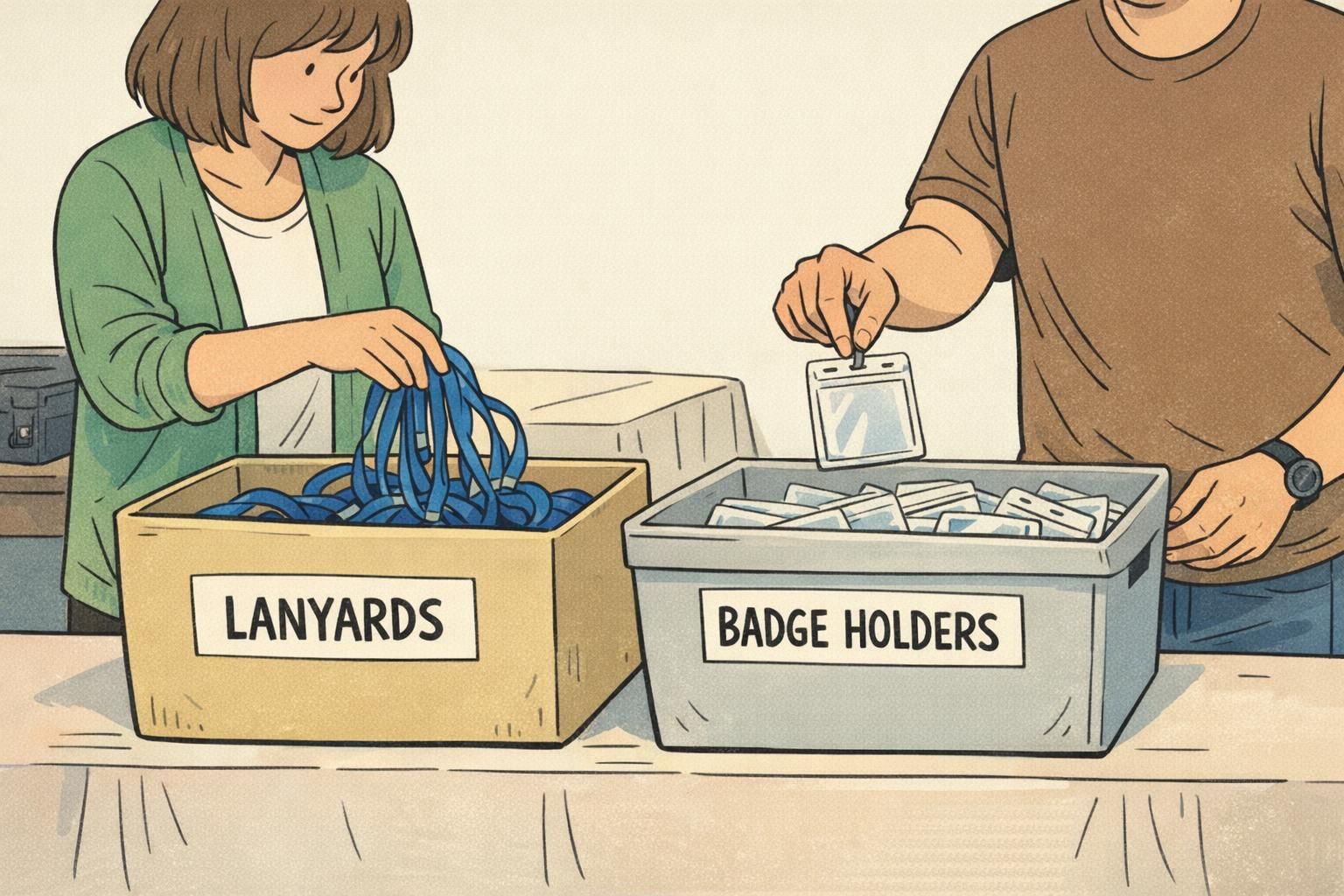
Use separate containers for lanyards, badge holders, and paper items. The goal is to prevent a tangled, mixed pile that takes an hour to untangle later. If people can drop items into the correct bin in seconds, you’ll get a cleaner reuse stream and a more accurate count of what you actually have for next time.
- Place the station where foot traffic already flows (near registration teardown, not in a back hallway).
- Use large containers with simple labels (big enough to read from a few feet away).
- Assign one person to do a quick “glance check” for obvious trash or broken pieces.
- Do a final sweep: under tables, behind pipe-and-drape, and around the check-in area for dropped holders.
Plan for some loss, but reduce it by placing return bins right at exits and reminding staff to collect extras during teardown. The more visible and convenient the return point is, the more items you’ll recover.
Yes. Keeping paper separate prevents contamination (especially if it’s damp) and makes it easier to decide what can be reused internally versus recycled.
How to Clean and Reuse Accessories Safely for Your Next Event
Before anything goes back into circulation, do a quick inspection. Lanyards can fray; clips can bend; swivels can break; and badge holders can crack, cloud, or split at the seam. A short check now protects your next event from avoidable day-of problems like badges falling off, hard-to-read IDs, or last-minute runs for replacements.
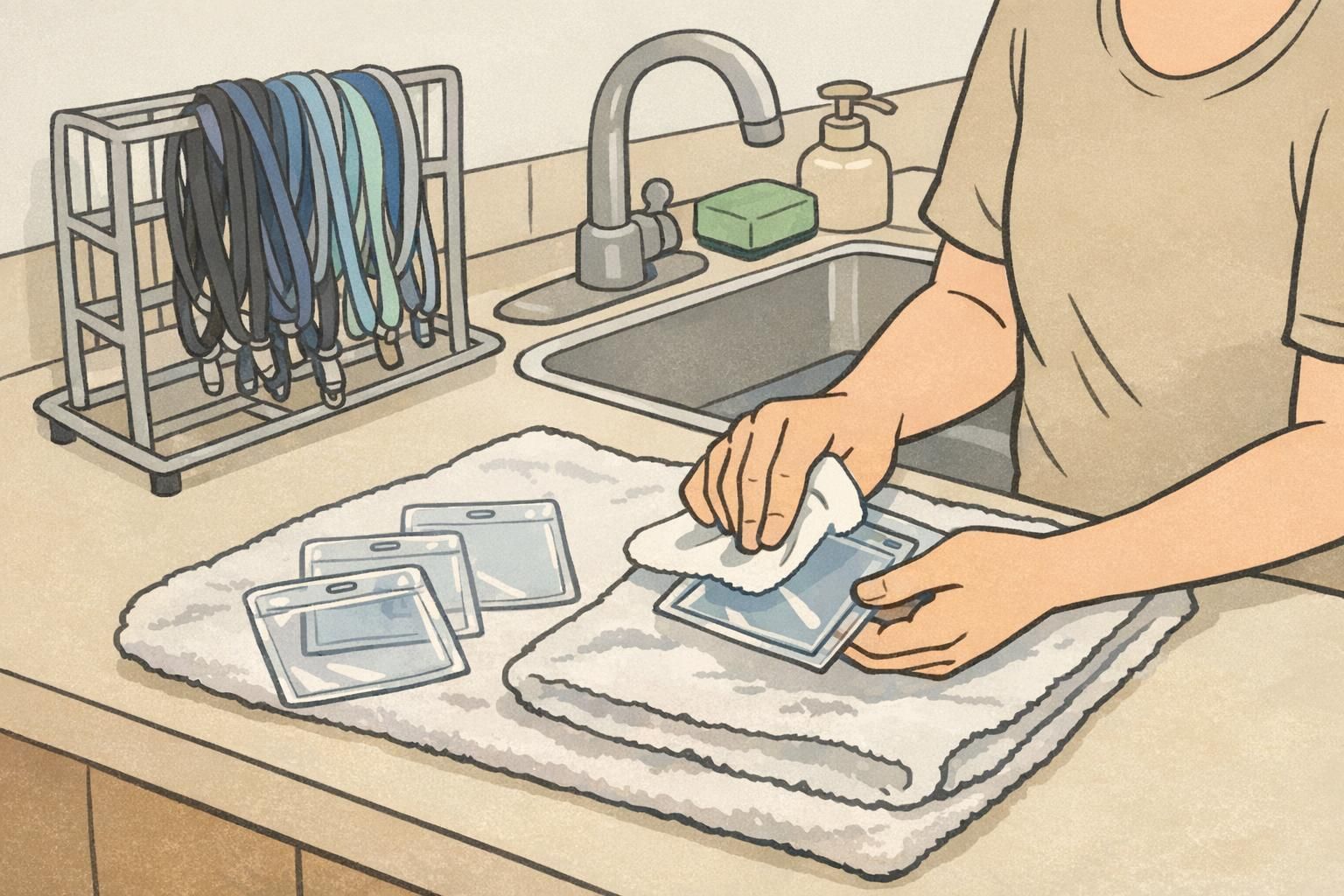
For cleaning, keep it simple and consistent. Wipe down or wash items as appropriate, and then let everything dry fully before it goes into a closed bin. Moisture is the easiest way to create odor, stickiness, or warped plastic—problems that make perfectly reusable supplies feel unusable.
- Inspect lanyards for fraying edges, weak stitching, and damaged clips.
- Check badge holders for cracks, split seams, bent edges, and cloudy plastic.
- Clean with a wipe-down method or gentle wash as appropriate for your materials and time.
- Air-dry completely before storing (especially holders stacked together).
- Standardize colors/styles when possible so reissuing is fast and your check-in looks consistent.
“We started treating lanyards and holders like reusable check-in equipment—inspect, wipe, dry, store. The next event became a grab-and-go setup instead of a last-minute scramble.” – Event Operations Lead
If you want faster future setup, avoid mixing too many lanyard styles. Consistency makes check-in smoother and reduces “we don’t have the right clips” surprises.
When and How to Recycle Badge Holders the Right Way
Sometimes you can’t keep everything in rotation. When holders are cracked, heavily scuffed, or no longer close securely, it’s time to recycle badge holders—if your local program accepts the material. The key is to keep recycling streams clean and realistic: contamination and mixed materials can cause entire batches to be rejected.
Start by separating paper inserts from plastic holders. If your holders include metal clips or mixed parts and your local guidance recommends separation, remove what you can. Keep items clean and dry; even a little moisture can cause paper to stick to plastic, which makes sorting harder and can interfere with recycling.
- Remove paper inserts before recycling plastic holders.
- If feasible, separate mixed components (plastic + metal clips) based on local guidance.
- Keep everything clean and dry to avoid contamination.
- Set aside questionable items for specialized recyclers or vendor take-back options when available.
Not always. Acceptance depends on local rules and the type of plastic. If you’re unsure, treat them as “special handling” and look for specialized recyclers or take-back options rather than guessing.
Yes—just keep it targeted. Recycling works best when you only send materials you know are accepted and properly prepared.
Event Sustainability: Repurpose What You Can Before Recycling
The easiest wins for event sustainability often come from extending the life of what you already bought. Repurposing is especially useful for items that aren’t quite “nice enough” to reissue at a front desk but are still functional and safe.
Retired lanyards can become equipment ties, cable organizers, or simple straps for bins and signage kits. Generic, non-dated supplies are also great for internal trainings, volunteer days, school events, or community groups that can use practical accessories without needing a perfect match to your branding.
- Use old lanyards as cable organizers for chargers, AV cords, and extension leads.
- Bundle small equipment (adapters, clickers, microphone packs) with a lanyard tie to keep kits together.
- Create “training day” badge kits with mixed-but-functional holders and lanyards.
- Donate usable, non-dated lanyards and holders to schools, nonprofits, or community programs.
- Keep a small stash of extras for unexpected volunteers or late adds at future events.
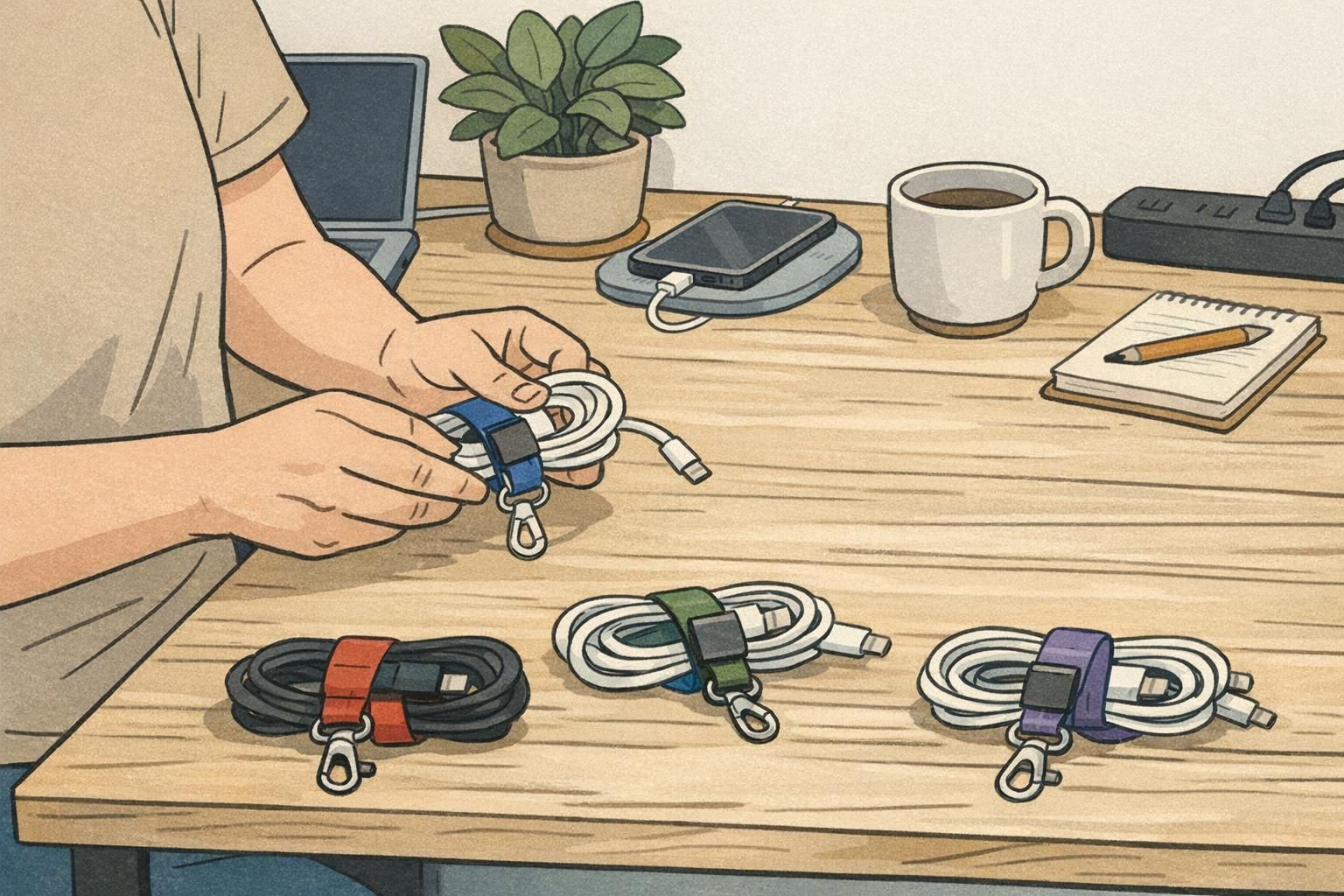
A simple rule: if an item isn’t front-desk ready, it may still be back-of-house useful.
Storage That Prevents Rebuying: Inventory, Labels, and Realistic Keep/Donate Rules
Storage is where reuse plans succeed or fail. If your supplies go into an unlabeled box, they’ll be forgotten—and you’ll rebuy the same items next time. A small amount of structure prevents that cycle.
Start with a realistic time horizon: only store what you can reasonably reuse in the next 6–12 months. Anything in good condition that you won’t use soon is a better candidate for donation while it’s still clean and functional. This keeps your storage space workable and your inventory meaningful.
- Use clear bins with plain labels such as “LANYARDS,” “BADGE HOLDERS,” and “CLIPS.”
- Coil lanyards in consistent bundles so you can count quickly (for example, by handfuls).
- Create a simple inventory list: item type, quantity, condition, and exact storage location.
- Store in a clean, dry space away from heat and direct sunlight to preserve plastics and fabric.
- Adopt a keep/donate rule: keep what you’ll use within 6–12 months; donate the rest if it’s still in good shape.
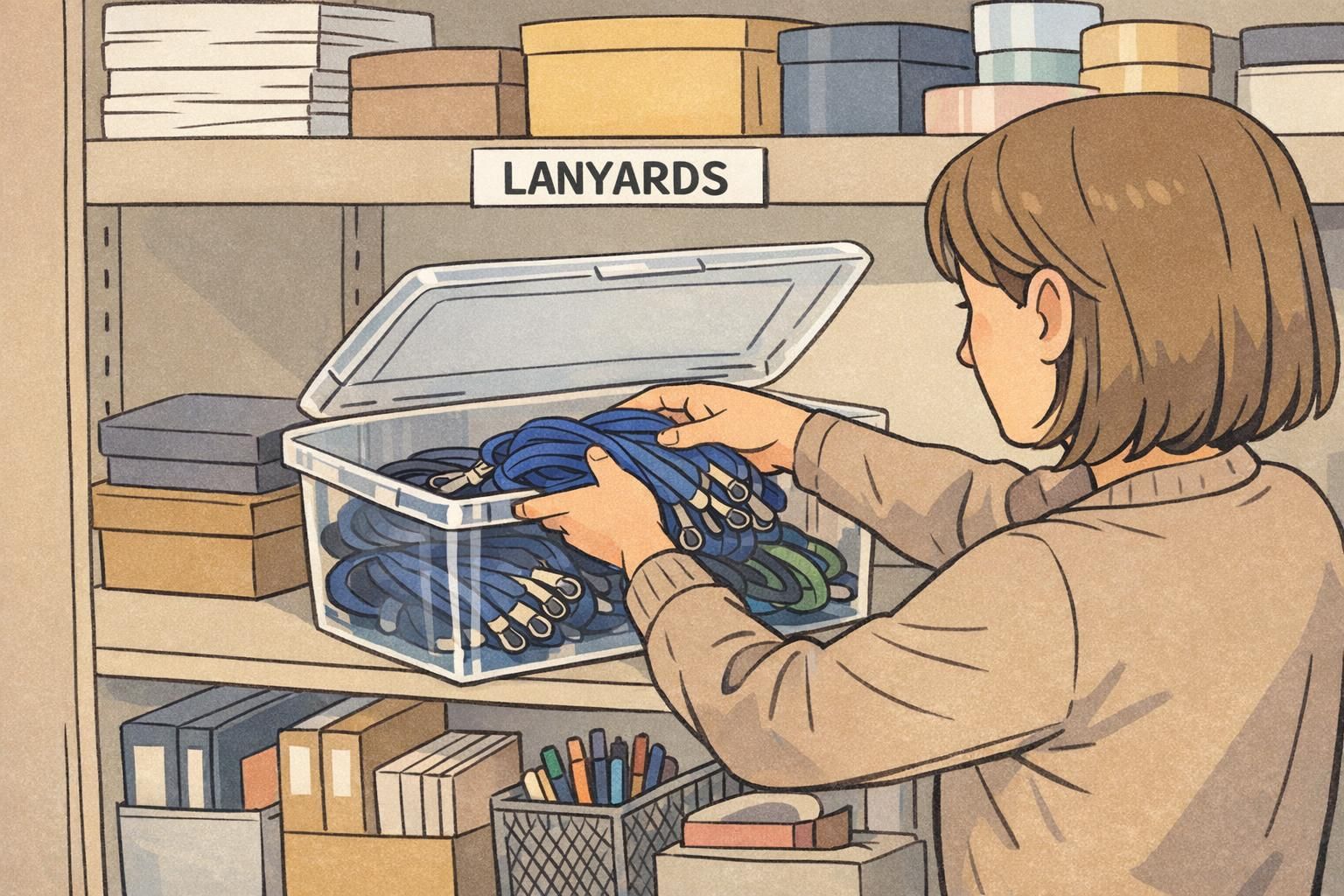
At minimum: three labeled bins (lanyards, holders, clips) and a one-page inventory note with rough counts and condition.
Do a quick count as you store items and update your inventory list immediately. Even approximate numbers reduce over-ordering compared to guessing.
Design for Next Time: Choosing Accessories That Reuse and Recycle Better
If you want less waste and less spending long-term, design your event identification program for reuse from the start. Durable, modular accessories hold up better, clean up faster, and are simpler to sort when they eventually reach end-of-life.
Avoid turning durable parts into single-use items. For example, dating a sturdy lanyard can make it feel “expired” after one conference even when it’s still in great condition. Instead, keep durable pieces generic and apply dates to the parts that are meant to change—like printed inserts—so your core kit stays reusable.
- Choose durable lanyards and holders that can handle repeated wear and cleaning.
- Favor simpler constructions that are easier to sort and prepare at teardown.
- Avoid over-customizing durable accessories with dates that block future reuse.
- Standardize colors or styles across events for faster check-in and fewer replacements.
- Match materials to common local recycling streams where possible to simplify end-of-life handling.
Good identification supports smoother operations: consistent accessories help attendees and staff spot names and roles quickly while your team spends less time fixing broken setups.
Recommended Badge Accessories for Repeat Events (Easy to Reissue)
For repeat events, the best accessories are the ones your team can clean quickly, store in labeled kits, and reissue without sorting for hours. Consistency also helps onsite organization: when badge holders and lanyards work the same way each time, check-in is smoother and it’s easier for staff to confirm that event badges and workplace identification are displayed properly.
A practical approach is to build a “standard kit” and only customize the pieces that truly need to change (like the printed insert). If you’re updating your accessories, you can browse options such as event badge holders and lanyards that are suitable for repeat use and easy storage.
- Create a grab-and-go check-in kit: lanyards, badge holders, clips, and a small set of spares.
- Keep a separate “cleaning/repair” bag so worn items don’t sneak back into ready-to-issue stock.
- Use generic, reusable accessories and rotate fresh printed inserts per event.
- Stock a small buffer for last-minute attendees instead of over-ordering everything.
“Once we standardized our lanyards and holders, we stopped buying emergency replacements. We just refresh the inserts and keep the accessories in labeled bins.” – Registration Coordinator