Visitor Badge Expiration: Dates, Times, and Return Rules for Guests
Why Visitor Badge Expiration Matters for Safety and Smooth Check-Out
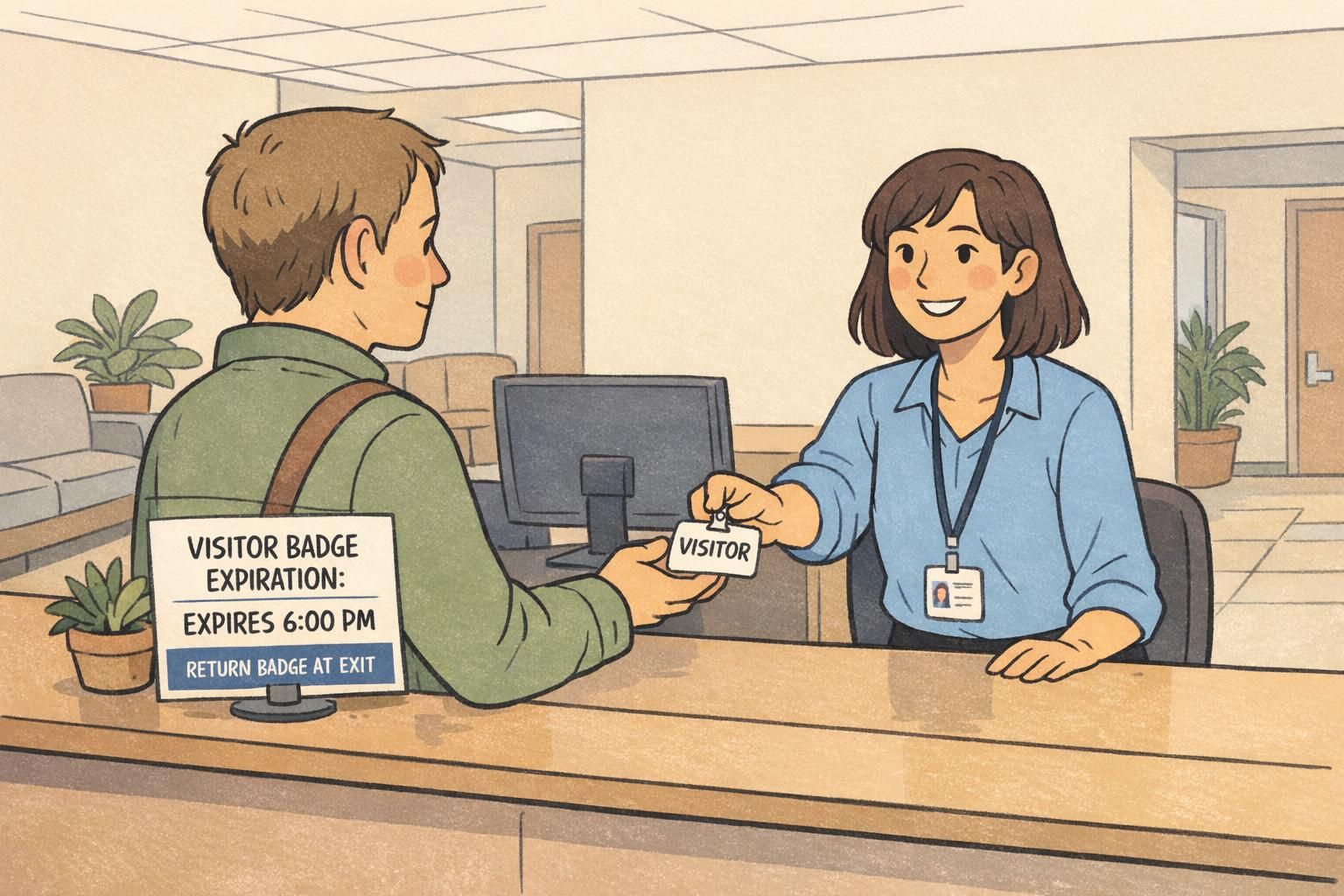
Visitor badge expiration is one of the simplest ways to keep an accurate, real-time picture of who is onsite. When every guest badge has a clear end point—whether that’s a time, a date, or a specific meeting end—staff don’t have to guess whether someone is still authorized to be in the building.
Expiration also makes check-out smoother. If guests know their badge is only valid for today (or until a stated time), they’re more likely to stop at reception, return the badge, and wrap up their visit without confusion. That reduces awkward “Are you supposed to be here?” interactions and helps reception and security stay consistent.
- Reduces accidental re-entry by preventing a badge from being treated as “still good” the next day
- Speeds up end-of-visit check-out when the return expectation is tied to the expiration window
- Supports clearer visitor logs because badges align with a specific visit timeframe
- Gives staff a simple, objective rule to reference: “This badge is valid until 6:00 PM.”
A good expiration rule doesn’t need to feel strict. When it’s clearly printed and calmly explained, it’s simply part of a well-run guest experience.
Common Expiration Setups: End of Day, Hours-from-Issue, or Scheduled End Time
Most workplaces and venues rely on a small set of expiration patterns. The best choice depends on how predictable visits are, whether your hours are consistent, and how often guests arrive at the front desk outside the “usual” times.
- End of day: Badges expire at a fixed time (for example, 6:00 PM). This is easy to explain and works well for offices with standard hours.
- Hours-from-issue: Badges expire a set duration after check-in (such as 4, 8, or 12 hours). This fits sites with staggered arrivals, shifts, or variable schedules.
- Scheduled end time: Badges expire at the end of a meeting, interview block, tour, or event session. This works well when visits are appointment-driven.
Whatever pattern you choose, pair it with simple, minimal-access permissions when possible (for example: lobby, meeting rooms, and escorted areas). Keeping permissions narrow makes the rule easier to enforce without turning check-in into a complicated process.
End-of-day expiration is usually the simplest because it’s a single, consistent rule. If guests arrive at many different times, hours-from-issue may feel more “fair” while still being easy to communicate.
Yes. For example, you can use end-of-day for typical visitors and scheduled end times for events or after-hours appointments—just make sure the badge clearly shows the correct rule for that specific visit.
Hard vs. Soft Expiration: What Changes at Doors, Desks, and Checkpoints
Expiration can mean two slightly different things in practice. Defining them upfront helps staff respond consistently when a guest presents a badge after the allowed time.
- Hard expiration: The credential stops working in an electronic access control system at a set time. Doors, turnstiles, or gates won’t unlock once the badge is expired.
- Soft expiration: Staff treat the badge as invalid based on policy, even if it still physically exists and could be shown at a desk or checkpoint.
Many organizations use both: hard expiration for doors (when badges interact with readers) and soft expiration as a human backstop at reception or security posts. This combination keeps the rule enforceable even if a guest tries to re-enter by showing an old badge rather than using a reader.
Time-based validity and activity logging are common features in physical access control programs, which is why hard expiration can be a clean way to align “who should be here” with what the system allows in real time (source).
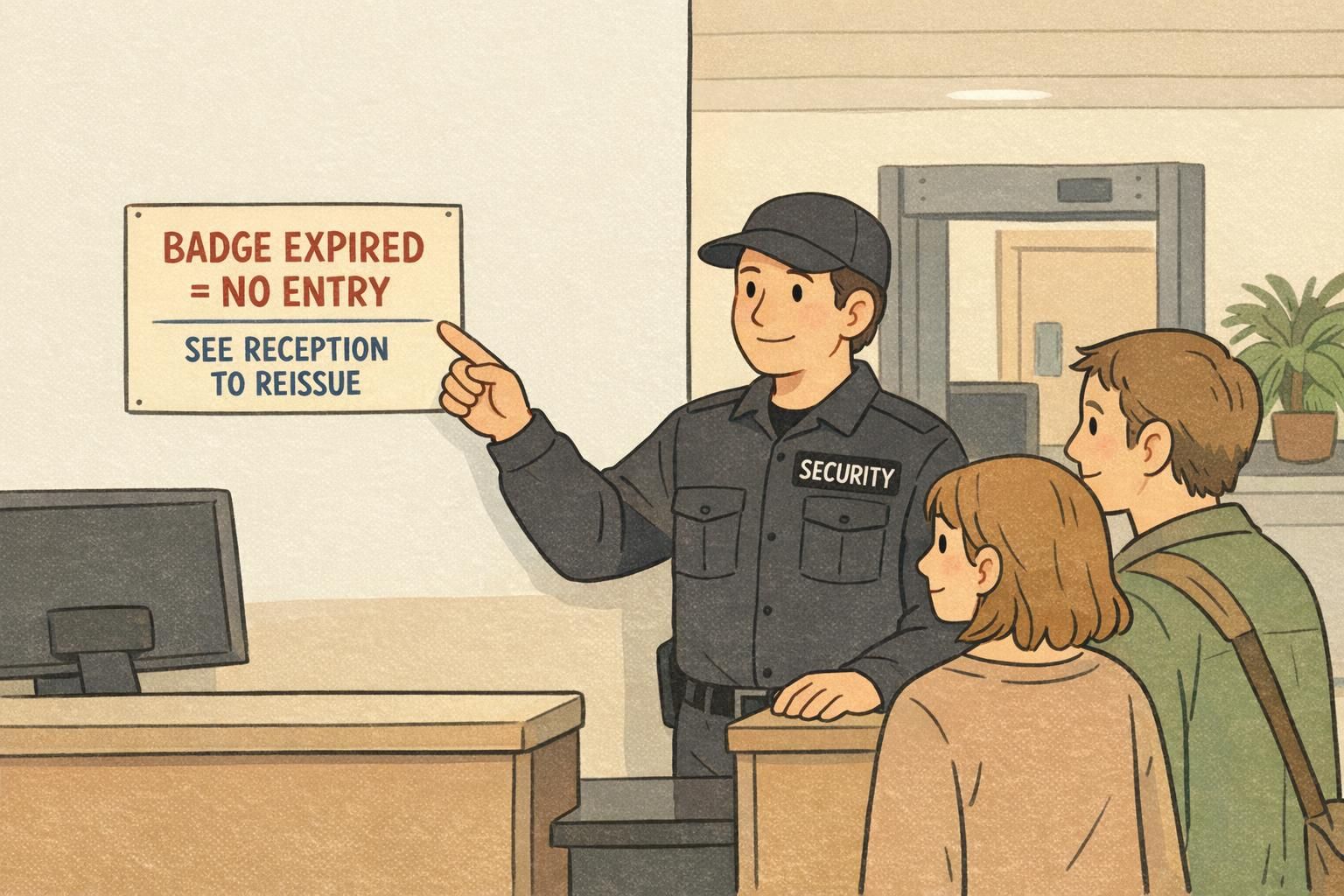
Define a single response for expired badges: where guests should go (reception), what staff should do (confirm host), and whether a new badge must be issued.
Temporary Badge Policy Rules That Guests Understand (and Staff Can Enforce)
A temporary badge policy works best when it’s short, friendly, and specific. Guests shouldn’t have to interpret what “expires” means in your building; your policy can spell out exactly what is expected and what happens if plans change.
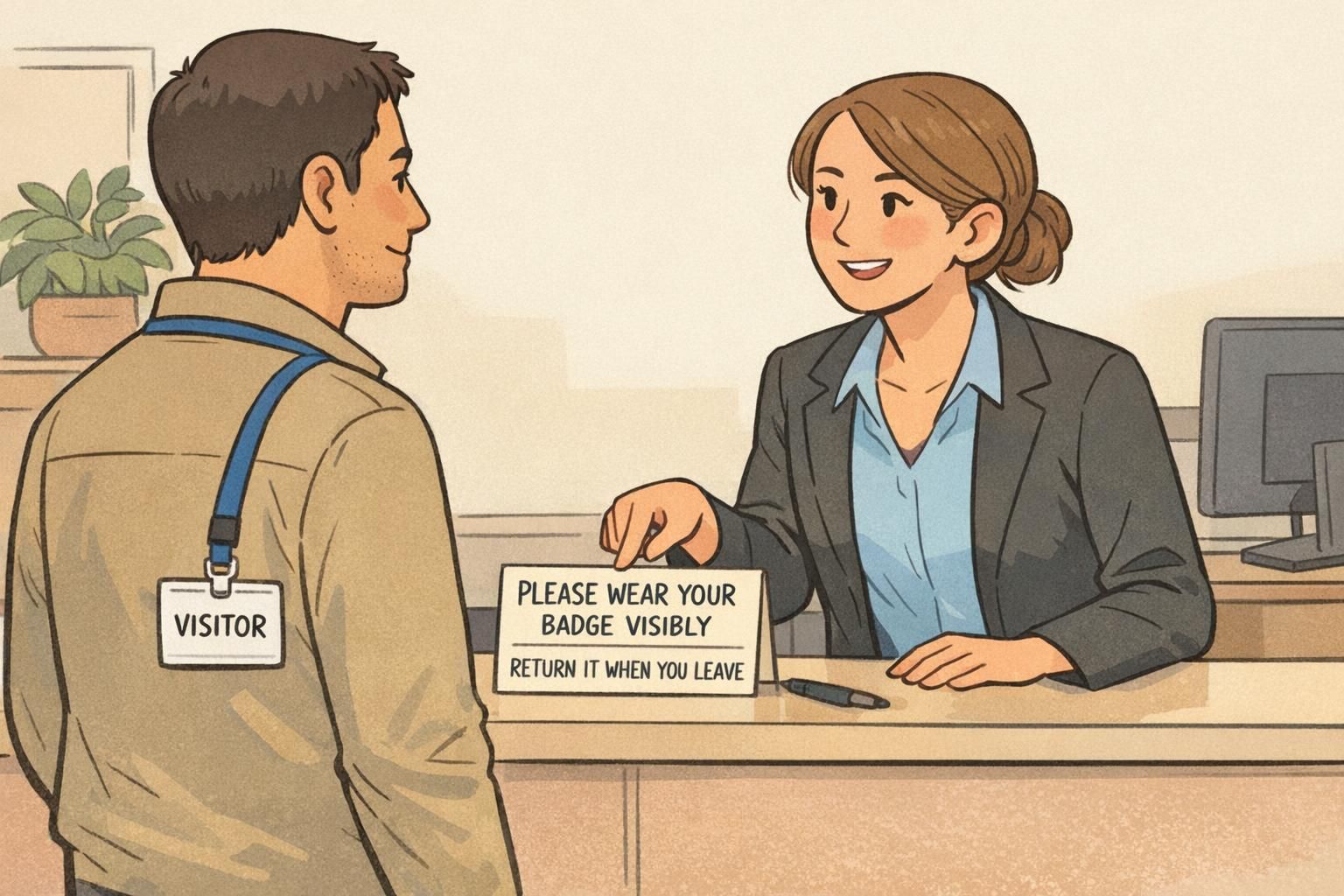
- Wear the badge visibly at all times while onsite.
- Badge is valid only for the approved date/time window printed on it.
- Badges are non-transferable (only the registered guest may use it).
- Return the badge when exiting the facility.
Include one simple step for changes: if a meeting runs late or a guest needs to stay longer, extensions should happen through reception/security approval (often by confirming the host), not by reusing the same badge tomorrow or “just keeping it.” This avoids confusion and keeps everyone aligned on who is authorized to be onsite.
“When we explain the badge rules in one sentence at check-in—wear it, it expires at a specific time, and return it on the way out—guests rarely push back. They just follow the routine.” – Facilities Coordinator
Not usually. A simple explanation is enough: the badge is time-limited and must be returned. Most guests accept clear rules when they’re communicated calmly and consistently.
Treat it as expired and direct them to reception. Confirm identity and host, then issue a new badge tied to the new visit window.
Badge Return Procedures: Desk Hand-Off, Drop Box, and After-Hours Options
Badge return is where strong policies often fall apart—mostly because the return step is easy to skip. The best return process is the one guests can’t miss: a natural stop on the way out, clearly marked, with minimal effort required.
- Desk hand-off: Collect badges at the reception desk during normal business hours. This is the most reliable option when guests must pass the front desk to exit.
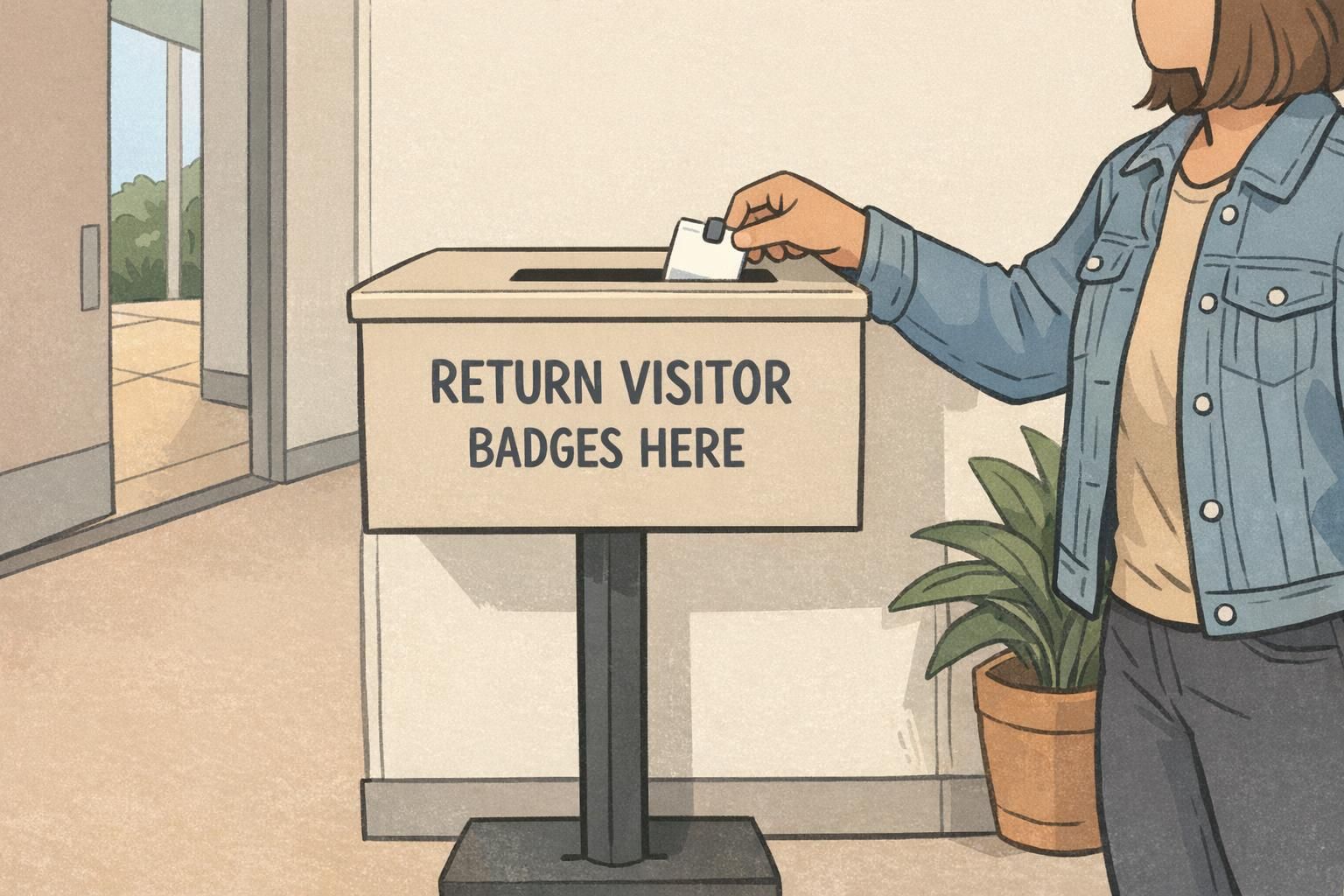
- Drop box at the exit: Use a clearly labeled slot-style drop box where guests can return badges in seconds without waiting.
- Guard post / after-hours: If guests may leave after reception closes, define a consistent after-hours return location (for example, a security desk).
Decide whether badges may leave the premises. Many organizations prohibit that and deactivate badges that are taken off-site, because an unreturned badge creates uncertainty about where it might be used or displayed later.
- If a badge is lost: Record it as lost, deactivate it if applicable, and re-issue only after confirming identity.
- If a badge isn’t returned: Follow your internal process (for example, notify the host and flag the visit record) and treat the badge as invalid going forward.
Make returns frictionless: one obvious return location, one sentence of instructions at check-in, and consistent reminders on the way out.
Signage Text You Can Copy: Entry, Elevators, and Exit Reminders
Good signs reduce repeated conversations and prevent misunderstandings. The most effective signage is short, placed where people naturally pause, and consistent across the building (so guests see the same rule more than once).
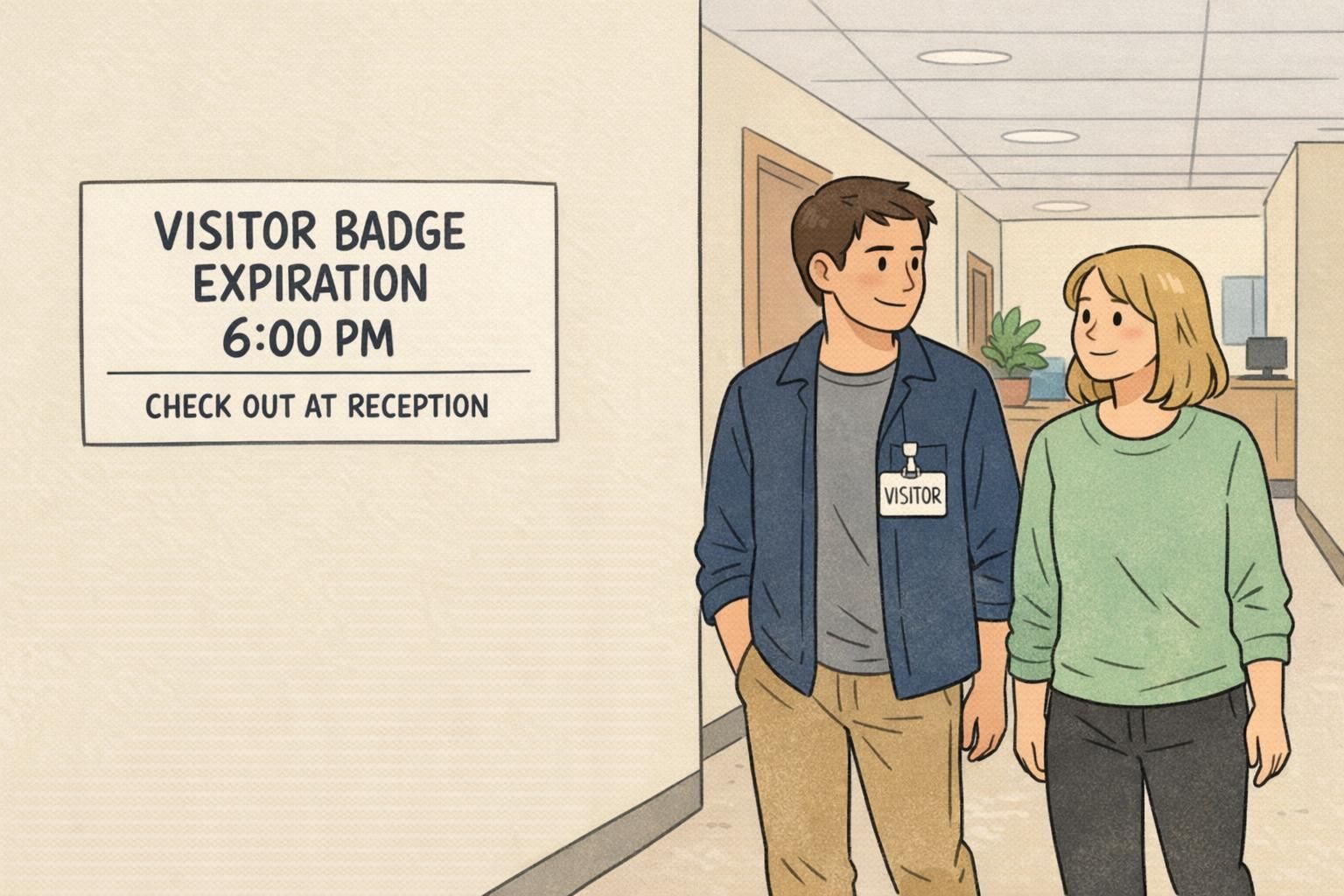
- Lobby / check-in sign: “VISITOR BADGES EXPIRE AT 6:00 PM. PLEASE RETURN BADGE AT RECEPTION WHEN LEAVING.”
- Elevator / hallway reminder: “VISITOR BADGE EXPIRES AT 6:00 PM. KEEP BADGE VISIBLE.”
- Exit sign: “STOP: RETURN VISITOR BADGE HERE BEFORE EXIT.”
- After-hours exit sign: “LEAVING AFTER HOURS? RETURN VISITOR BADGE TO SECURITY.”
If you use different badge types (paper passes for quick check-ins, plastic cards for controlled doors, or event badges for scheduled programs), keep the message the same even when the format changes: what time it expires, what “expired” means onsite, and where the badge return happens.
Friendly Staff Scripts: Check-In, Extension Requests, and End-of-Visit Prompts
The simplest way to get consistent compliance is to give staff a calm, repeatable script. When everyone says the same thing, guests learn the routine quickly—and the rules feel like a normal part of visiting, not a personal confrontation.
- Check-in: “Here’s your visitor badge—please wear it visibly, and return it to reception when you leave today.”
- If a guest asks to keep the badge: “Thanks—these are return-on-exit badges. You can drop it at reception or the return box by the exit.”
- Extension request: “I can help—let’s confirm your host and update your end time so your badge stays valid.”
- End-of-visit prompt: “Thanks for coming—may I please collect your badge before you go?”
Keep it routine and policy-based: thank them for visiting, explain that all temporary badges are collected, and point to the nearest return spot. A calm tone and consistent wording usually defuse the moment.
Acknowledge the plan and redirect: tomorrow’s visit will get a new badge at check-in. This keeps the visitor log and expiration rules aligned with each specific visit.
Design Tips for Easy Compliance: Visible Expiration, Color Cues, and Durable Materials
Design does a lot of the “enforcement” work for you. If a badge clearly shows when it expires, staff can confirm validity at a glance—and guests are less likely to assume they can reuse it.
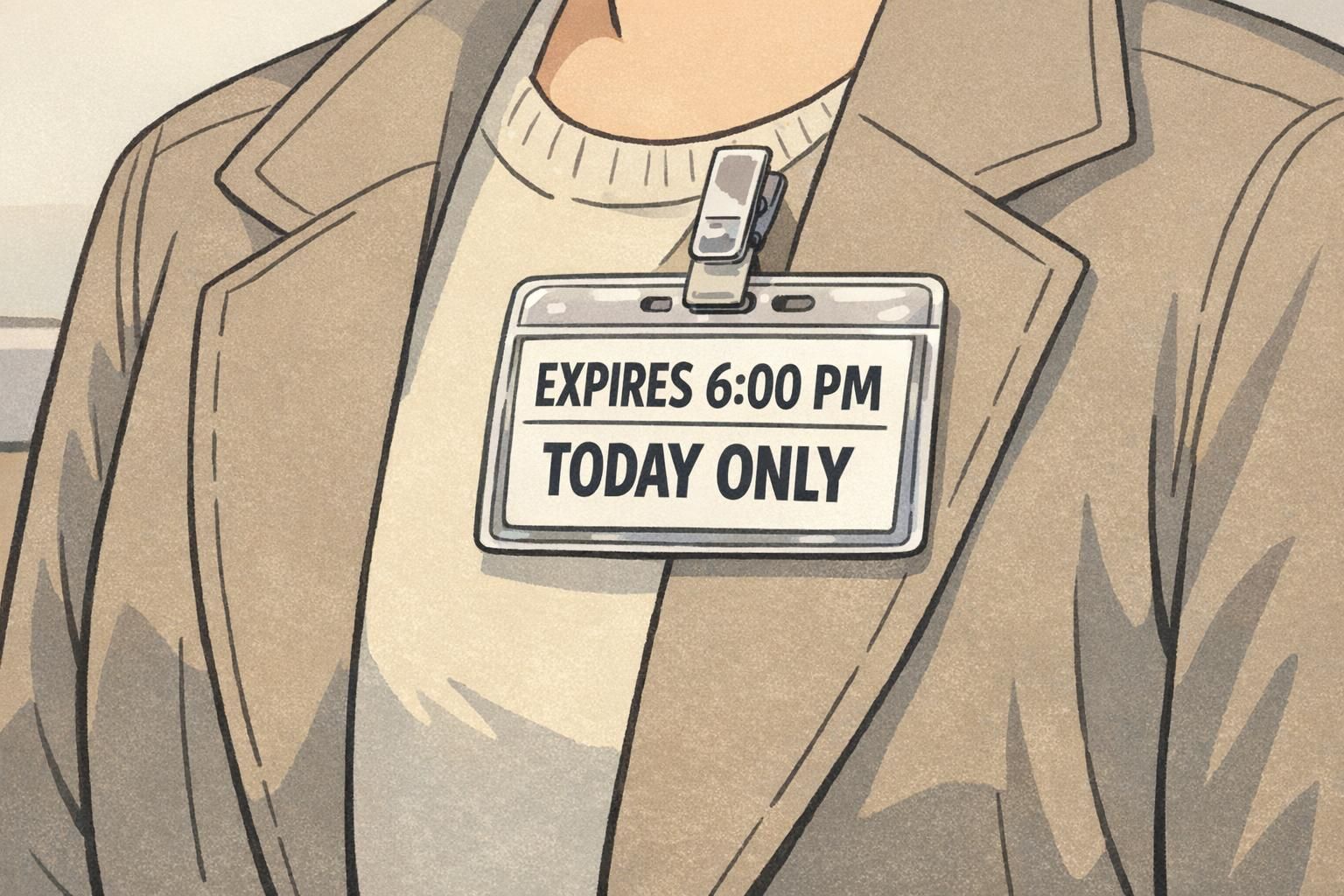
- Make expiration obvious: Use a large “EXPIRES” field with a bold time and date, positioned consistently on every badge.
- Use clear language: “TODAY ONLY” or “VALID UNTIL 6:00 PM” helps guests interpret the rule quickly.
- Consider color cues: Daily color-coded badges can help busy lobbies and event check-ins spot out-of-date credentials instantly.
- Discourage reuse without confrontation: Time-expiring labels can make it visibly clear when a badge is no longer valid.
- Choose durable holders: Clips, lanyards, and sturdy holders keep badges visible and reduce loss during the visit.
If staff can read the expiration in one second, you reduce debates. If guests can see it all day, you reduce “I didn’t realize it expired” moments.
Products That Support Expiration and Returns (Visitor Badges, Holders, and Event Formats)
The right badge format can make expiration and returns easier to manage because it supports the workflow you’re trying to create. For quick, high-volume check-ins, paper visitor passes can be fast to issue and easy to collect. For facilities that use door readers or want tighter time control, plastic cards can be paired with your access approach so badges become inactive at the right time. For scheduled programs, event badges can display a clear end time and keep attendees aligned with the session window.
Whichever format you use, consistency matters: keep the expiration field and return instruction in the same location on every template, so staff can point to it and guests learn where to look. Holders and clips also help reduce loss by keeping badges secure and visible, which supports both the expiration rule and the badge return step.
If you’re standardizing templates across teams or adjusting formats for different visitor types, BadgeZoo’s visitor badges and holders can support clear layouts that consistently display expiration and return instructions.
A strong visitor process is built from small, repeatable cues: a clear expiration field, a visible badge, and an easy return path that guests can’t miss.