Front Desk Security: How Visitor and Host Badges Build Trust at Reception
Why front desk security starts with visible identification
Front desk security works best when the reception team doesn’t have to guess. In a busy lobby, people arrive with different purposes—meetings, interviews, deliveries, maintenance requests—and the difference between “welcome” and “wait, who are you here for?” often comes down to one thing: visible identification.
When everyone wears the right badge in the right way, the reception area feels calmer and more professional. Staff can quickly recognize coworkers. Visitors can see who to approach. And everyone benefits from a consistent, polite check-in expectation that doesn’t depend on a receptionist’s memory or split-second judgment.
A clear badge system turns first impressions into a predictable routine: check in, get identified, go where you’re allowed to go, and check out.
The trust problem at reception: uncertainty slows everything down
Reception is a constant mix of unfamiliar faces and quick decisions. A visitor may be expected—or they may have arrived early. A contractor might be authorized today, but not tomorrow. A delivery driver may need to hand off a package in the lobby, or they may be asked to go to a loading area. Without a clear identification standard, these scenarios blur together.
That uncertainty slows everything down. Staff may hesitate because they don’t want to appear rude, and employees passing through may not know whether to greet, escort, or challenge someone they don’t recognize. Over time, inconsistency erodes trust: visitors aren’t sure what the rules are, and employees aren’t sure when they’re expected to speak up.
- Visitors feel more at ease when the process is clearly defined and applied consistently.
- Reception staff move faster when they can identify roles at a glance.
- Employees are more likely to help (or appropriately question) when badges make expectations obvious.
A simple visual system: instantly separate visitors from staff
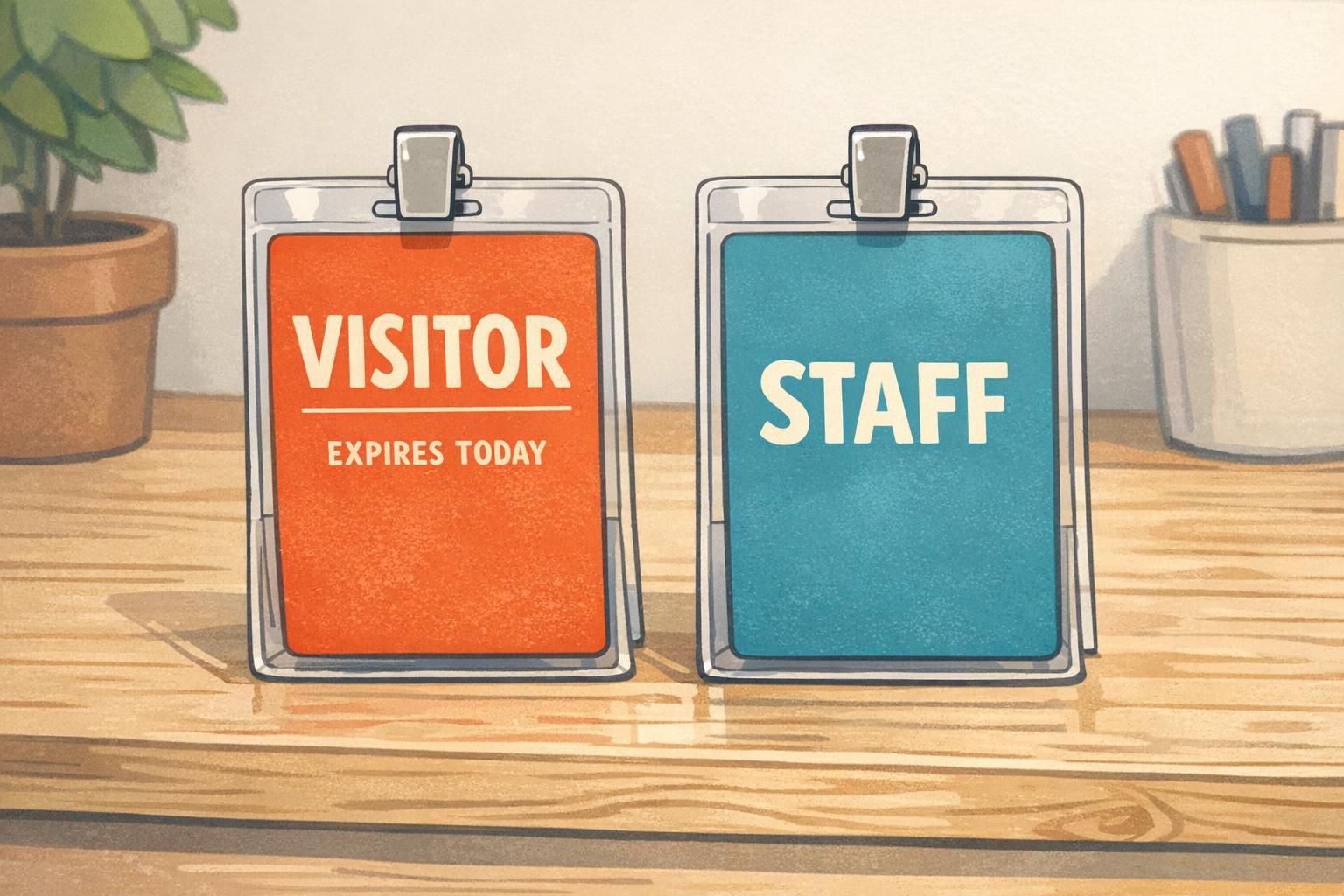
A strong badge program doesn’t require complicated rules. It requires a simple visual system that answers “visitor vs staff” from several feet away. If people must walk right up to read tiny print, you’ve lost the main benefit: fast, low-friction recognition.
Most workplaces succeed by standardizing just a few visual differences and repeating them everywhere: at reception, in hallways, and in shared spaces. The key is consistency—once people learn the visual language, they stop thinking about it and simply follow it.
- Color: use a distinct background color for visitor badges that is never used for staff.
- Orientation: for example, vertical for visitors and horizontal for staff (or vice versa), used consistently.
- Role label: a large, plain-language label such as “VISITOR” or “STAFF” that is readable at a glance.
- Wear location: above the waist and front-facing so the badge is visible during normal movement.
Visitor badges that communicate: who, where, and when
Visitor badges are most effective when they communicate the essentials without overexplaining. At minimum, a person should be able to look at the badge and understand who the visitor is (or how they should be addressed), who they’re here to see, and whether the badge is still valid.
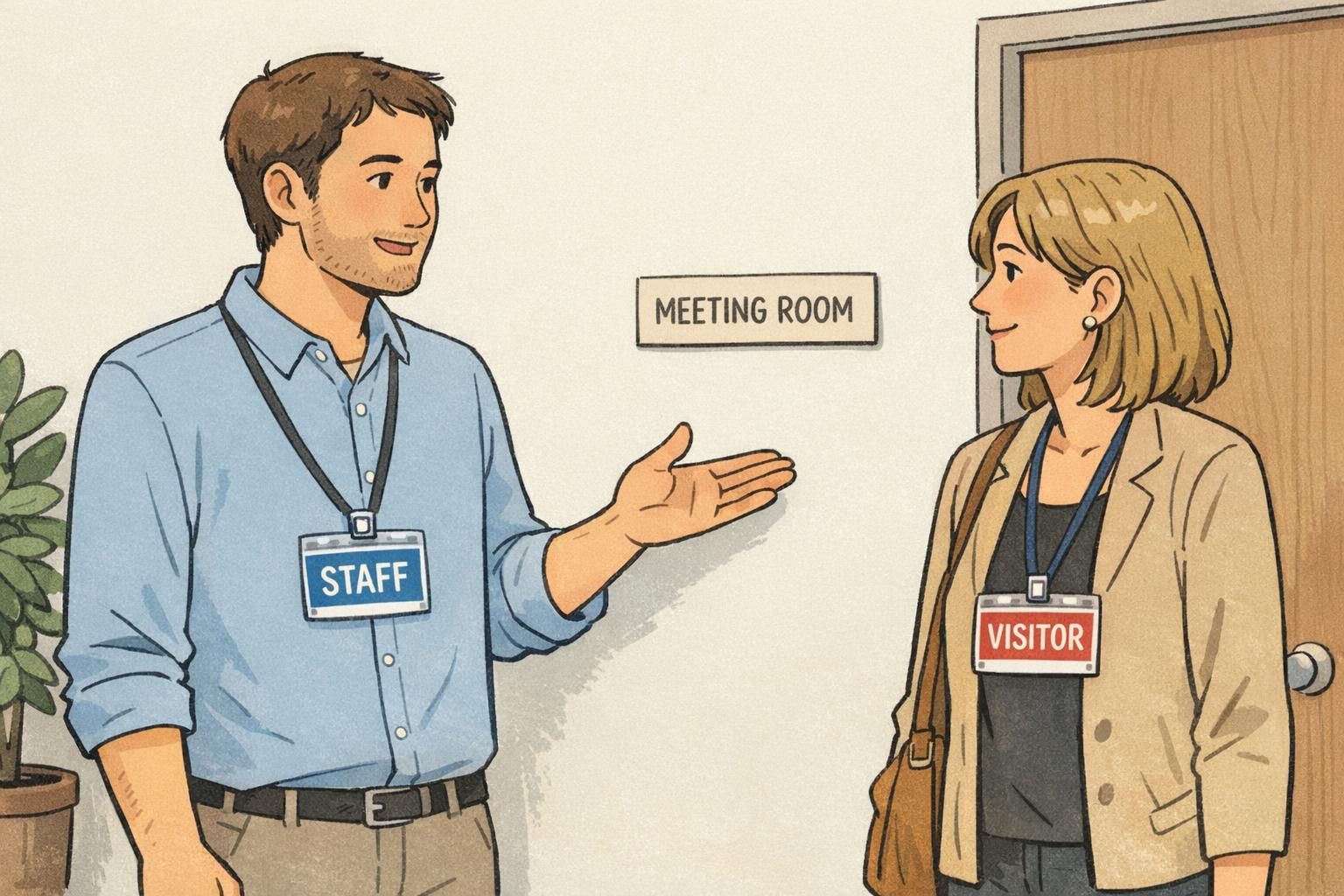
A clear visitor badge supports smooth interactions beyond the front desk. If a visitor is walking to a meeting room, an employee nearby can quickly help them find the right place—or redirect them back to reception if they seem lost—without needing an awkward interrogation.
- Visitor name: often first name plus last initial for readability and modest privacy.
- Host name and/or department: helps employees escort or direct the visitor appropriately.
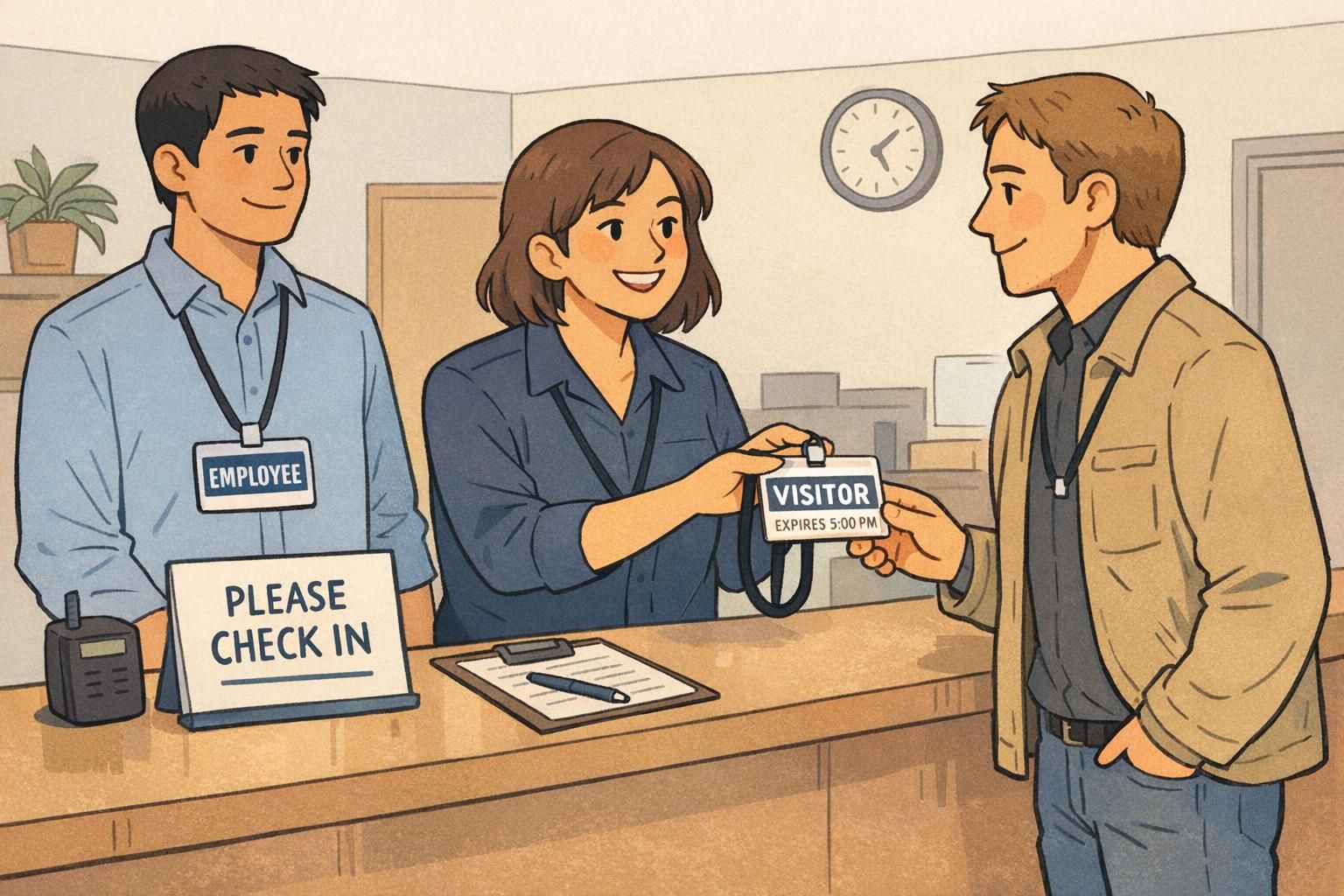
- Expiration: a clear date or time (for example, “EXPIRES 5:00 PM” or “EXPIRES TODAY”).
- Visible rule when needed: “Escort Required” can set expectations without confrontation.
For privacy, avoid printing sensitive personal details on visitor badges. If you need additional data for accountability, keep it in your check-in records rather than on the badge itself.
Host and staff badges: consistent display, clear responsibility
Visitor identification is only half of the trust equation. Host and staff badges matter because they help visitors confidently identify the right person to ask for help. They also reinforce a basic workplace norm: people in non-public areas should be identifiable and accountable.
Durable staff ID cards that are easy to read—and worn consistently on the upper body—reduce friction throughout the day. When employees reliably display their IDs, it becomes normal (and easier) for coworkers to notice when someone is unbadged or wearing the wrong type of badge in a restricted area.
“When employees wear their IDs consistently, visitors stop looking lost. They can immediately tell who’s responsible for helping them—and staff feel more comfortable stepping in when something seems off.” – Facilities Coordinator
Guest check in flow: a repeatable front desk routine
A reliable guest check in process feels fair and professional because it’s repeatable. Visitors can sense when expectations are clear and consistently applied. Staff benefit because the front desk isn’t reinventing the process for every arrival.
The goal is not to make reception feel rigid. It’s to make it predictable—so the team can be welcoming while still maintaining clear boundaries.
- Greet the guest and confirm the purpose of the visit.
- Verify identity as appropriate for your site (based on your internal policy).
- Log the visit (name, host, time in, and any required notes).
- Print or issue the correct visitor badge and confirm badge display expectations.
- Confirm where the visitor can go and whether an escort is required.
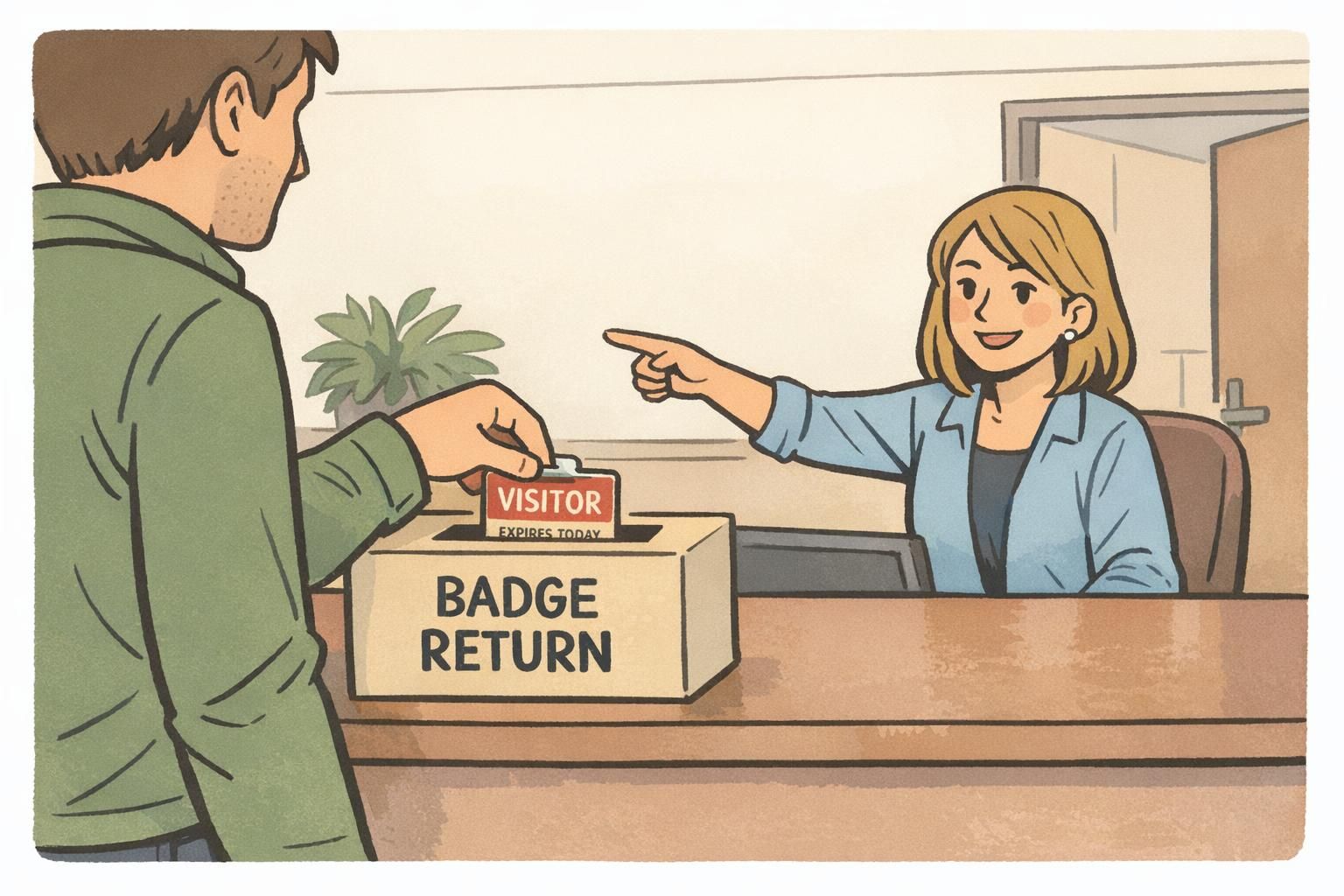
- At departure, complete a sign-out step and collect or dispose of the badge to reduce reuse.
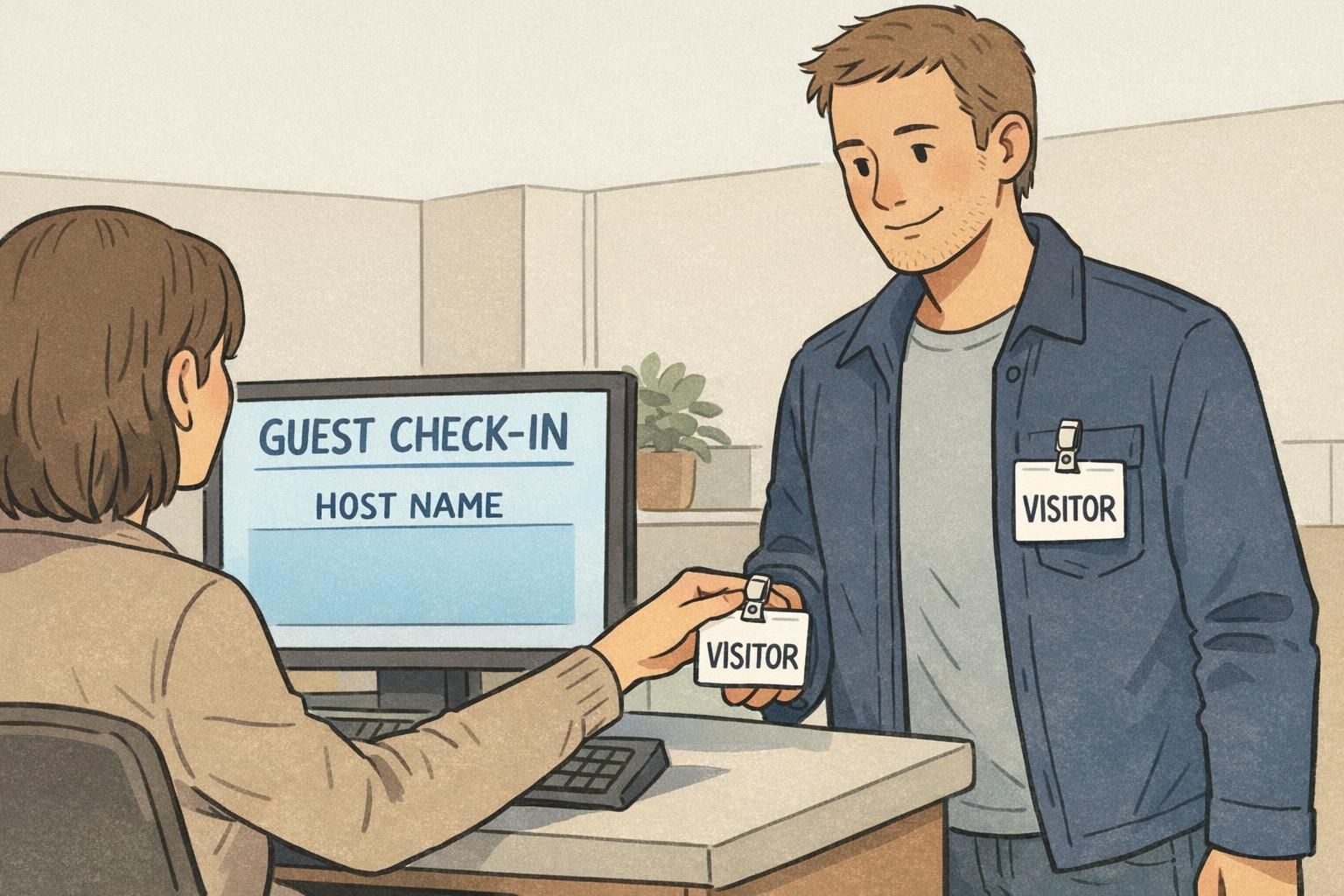
If the visitor will be past reception or interacting with staff, a badge usually reduces confusion. For quick lobby-only deliveries, some workplaces still issue badges while others use a designated drop-off process—what matters is consistency.
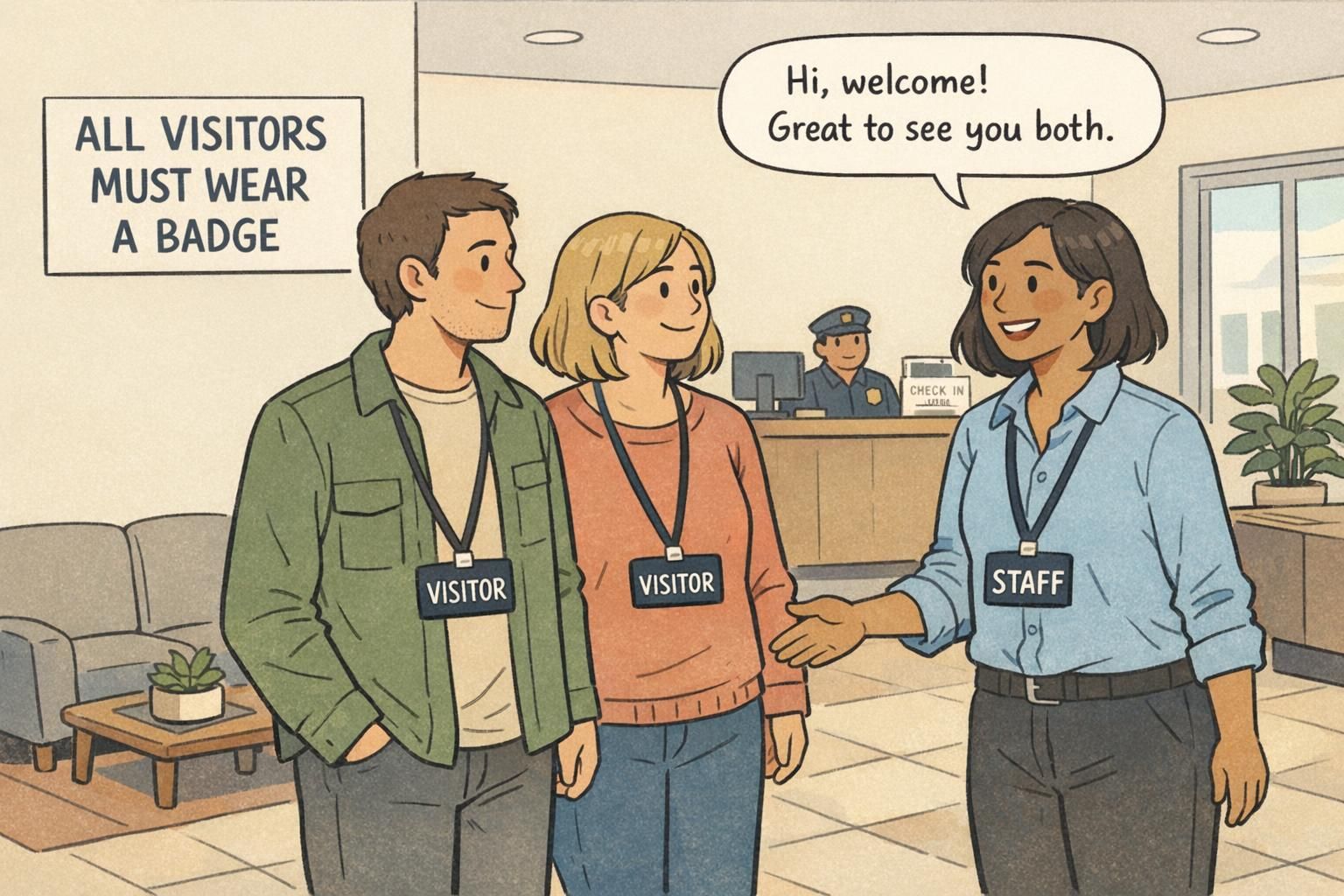
Badge programs work best when visitors keep badges visible in non-public areas so employees can provide help or redirect them as needed.
Badge display rules that make the system work
Even the best badge design fails if people don’t wear it correctly. A few simple display rules make the entire system more reliable—especially during busy periods when staff can’t double-check every person moving through the building.
Keep the standards easy to explain and easy to follow. If a rule requires frequent exceptions, it won’t stick. The goal is to reduce uncertainty, not add complexity.
- Wear badges above the waist so they’re visible in normal conversation.
- Keep badges front-facing and readable (not flipped or tucked away).
- Specify acceptable wear methods: lanyard, strap clip, or a badge holder that stays upright.
- Require badges to be visible in non-public areas (and clarify where public vs non-public begins).
- Add friendly signage at reception so visitors know expectations before they step forward.
Right-size security and privacy for your environment
Not every workplace needs the same level of formality. A small office may do well with simple paper visitor badges that expire at the end of the day. A hospital, lab, or other controlled environment may need photo visitor badges, stricter escort rules, and more structured authorization steps.
What stays consistent is the purpose of the program: a practical way to support authentication (confirming identity), authorization (confirming where someone is allowed to go), and accountability (knowing who was on-site and when). Differentiated badges and visible display are straightforward tools within a broader physical access control approach (source).
Privacy matters, too. Collect only what you need for accountability, store it securely, and keep it only as long as necessary for your operations. The badge itself should stay focused on what people need in the moment—clear identification and clear expectations—without broadcasting unnecessary personal details.
A good badge program is “right-sized”: it supports safety and smooth operations while respecting visitors by minimizing exposed personal data.
Products that support a clear visitor vs host system
Once you’ve defined your visual system and your guest check in routine, the right supplies make it easier to maintain consistency. The best choices depend on traffic volume and how long badges need to last.
- Disposable visitor badges: practical for short visits and end-of-day expiration workflows.
- Durable staff ID cards: designed for daily wear and repeated handling.
- Consistent holders, clips, and lanyards: help keep badges upright, visible, and front-facing.
If you’re standardizing reception identification, you can start with custom visitor badges for front desks and match the design to your visual rules (color, role label, and expiration). Keeping the layout consistent is often more important than adding more fields.
Use a large role label (VISITOR vs STAFF) plus one consistent visual cue like a unique color. The goal is recognition from several feet away.
A sign-out step with badge return or disposal helps reduce reuse and keeps your check-in process complete and consistent.