
Make the hotel name badge part of the uniform standard
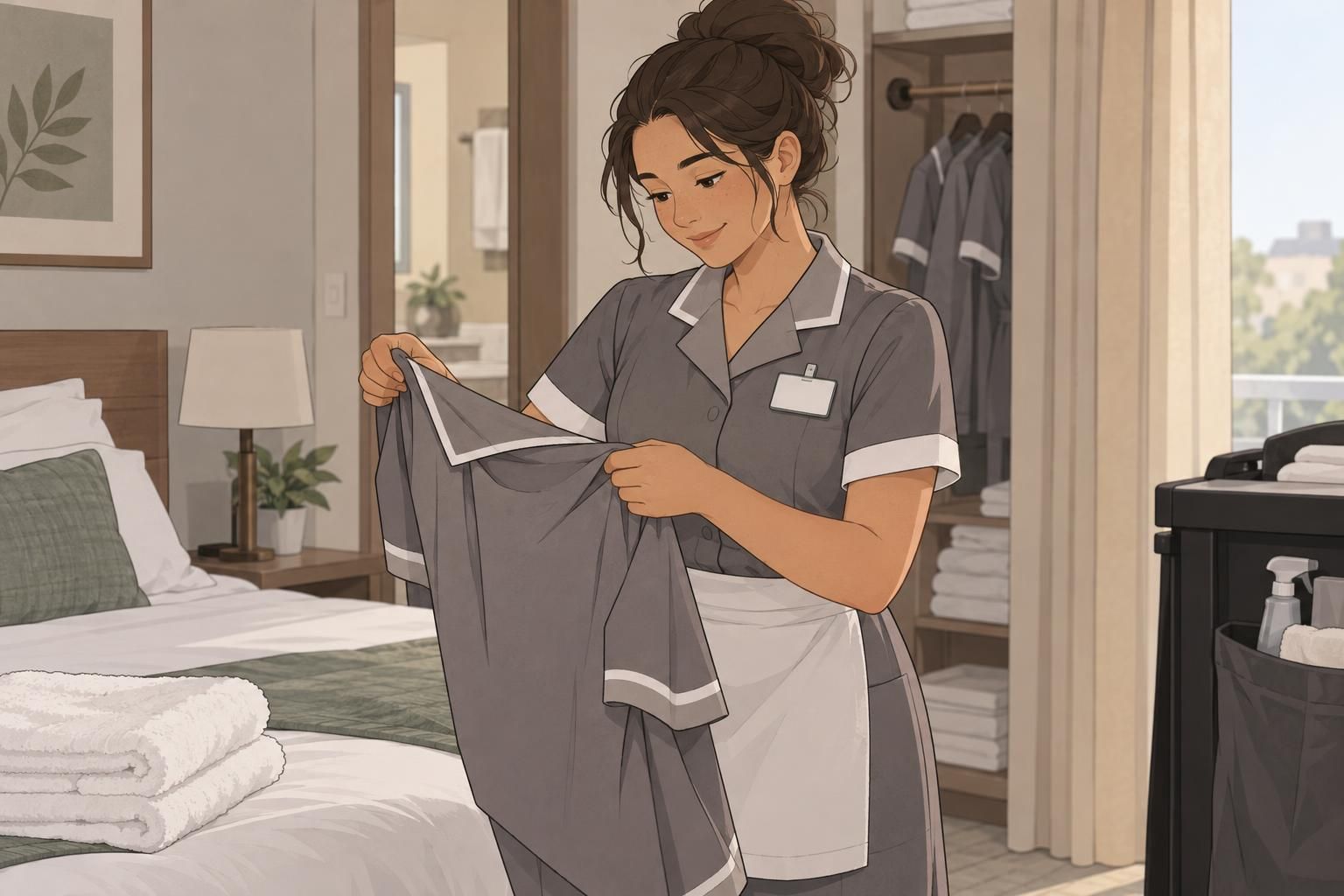
A hotel name badge belongs in the uniform specification alongside shirts, jackets, aprons, and other approved pieces. It helps guests identify the person assisting them while giving staff a consistent, professional appearance. Rather than treating badges as a finishing touch, consider their design, placement, and attachment when reviewing the complete uniform.
Start with one approved design framework for employees who wear badges. The name should occupy a clear, prominent position, with the hotel logo and any necessary role details arranged around it. Departments may need different information, but those differences should still look like part of the same identification system.
For example, front-desk and housekeeping employees may wear different garments while using the same name layout and visual style. Their attachments can differ when the fabric requires it. The goal is a coherent appearance that works in practice, not an identical setup that fits one uniform well and another poorly.
Standardize the visible result: a readable name, a consistent design, and a badge that sits neatly on the approved uniform.
Set readability standards for hospitality name tags
Readable hospitality name tags make identification easier during everyday conversations. Choose high-contrast text and a simple typeface, then give the name enough space to stand apart from the surrounding information. Decorative lettering or a crowded layout can make an otherwise attractive badge harder to use.
Keep the hotel logo recognizable without letting it dominate the name. If a role title or department is included, make the distinction between the name and supporting details obvious. Check both short and long names in the proposed layout so the design does not depend on every employee having the same amount of text.
- Use strong contrast between lettering and the badge background.
- Choose a simple typeface that remains clear in the finished size.
- Consider a matte or low-glare finish to reduce distracting reflections.
- Leave space around the name instead of filling every available area.
- Review samples under the lighting staff encounter during guest interactions.
Assess the badge while it is being worn, not only as a design on a screen. Readability, finish, and garment placement work together. A clear layout has less practical value if the badge tilts away from the guest or disappears beneath a jacket.

Standardize badge placement across uniform styles
Choose a consistent upper-chest location and make it part of the uniform guidance. A shared placement standard helps employees wear badges neatly and gives guests a predictable place to look. Confirm the position across the approved wardrobe rather than assuming one location works with every garment.
Test the hotel name badge with shirts, jackets, aprons, scarves, and any other uniform pieces that could cover or shift it. Check the complete outfit, including layers worn together. A badge positioned correctly on a shirt may become hidden when the employee adds an approved jacket or apron.
- Check that the badge remains visible with the complete uniform.
- Confirm that it sits straight and flat without pulling the fabric out of shape.
- Look for interference from lapels, pockets, apron edges, or scarves.
- Have the employee move naturally and confirm that the badge stays neatly positioned.
Where garments require a placement adjustment, document it clearly. A simple reference for each uniform style is more useful than leaving employees to guess. Keep any variation focused on maintaining visibility and a consistent overall appearance.
Compare magnetic and pin fasteners
The attachment should suit the garment as well as the employee. Magnetic fasteners can help avoid puncturing shirts and jackets, making them worth considering when preserving the fabric is a priority. Still, test the complete badge and fastener on the actual uniform to confirm that it stays aligned and holds appropriately.
Pin fasteners may provide a secure option for heavier fabrics. Before approving them, check how the pin attaches and whether the garment supports the badge without bunching or sagging. Neither attachment should be selected solely because it works well on a different department’s uniform.
Confirm that magnetic fasteners are appropriate for each employee’s circumstances, and provide a suitable alternative when needed. The uniform specification can allow more than one approved attachment while keeping the visible badge design consistent. This preserves a shared standard without requiring every employee to use the same fastening method.
Compare fasteners on the garments staff actually wear. Fabric compatibility, secure positioning, and individual suitability matter more than choosing one attachment for every situation.

Choose durable badge materials and formats
A hotel name badge should remain readable and presentable through everyday wear. Consider the moisture, routine cleaning, and handling associated with each role when reviewing materials and finishes. Appearance matters, but the badge also needs to retain its practical function throughout regular use.
Evaluate the badge format together with its attachment. A combination that sits comfortably on a structured jacket may behave differently on lighter workwear. Check that the badge does not distort the garment and that its finish supports the same readability standards used elsewhere in the uniform specification.
For frequently laundered uniforms, establish how badges should be removed, stored, and reattached. Follow the applicable care guidance rather than assuming a badge or fastener can remain on the garment during laundering. Keeping garment care and badge care coordinated helps staff maintain both parts of the uniform.
Keep badge details consistent and privacy-conscious
Choose an approved name format, such as a first name or a first name with a last initial. Apply it consistently so employees do not have to make individual decisions about what personal information to display. The format should support identification while remaining aligned with the hotel’s privacy-conscious approach.
Include a role title or department marker only when it helps hotel operations or guest understanding. Supporting details should earn their place in the layout: if they make the name harder to read without adding useful information, simplify the design.
If hospitality name tags use color bands or language designations, define their meaning and keep them accurate. Use the same visual treatment for the same designation across departments. Review these details when an employee’s role or approved badge information changes, rather than allowing outdated information to remain in circulation.
Support guest service with accessible introductions
Badges provide useful visible identification, but guests with visual impairments may not be able to see or read them. Accessible guest service combines a clear badge with a spoken introduction. Encourage employees to give their name and function when beginning to assist a guest.
An introduction can be brief and natural: “Hello, I’m Jordan from the front desk. How can I help?” Naming both the person and their function gives the guest useful context without requiring them to read the uniform. This complements the badge rather than replacing it.
The American Foundation for the Blind’s hotel and motel accessibility checklist supports introducing staff by name and function when assisting guests who may not be able to see their identification: source.
Include this practice in the same guidance that covers badge visibility and presentation. Staff can maintain readable identification while making introductions part of their everyday service approach. Together, these habits support guests with different ways of accessing information.

Create a practical badge specification and upkeep routine
Bring the decisions together in a practical badge specification that employees and uniform coordinators can follow. Keep it clear enough to use when selecting new badges, preparing uniforms, or checking existing identification. A useful document explains both the approved appearance and how to maintain it.
- Design: approved layout, typeface, contrast, logo treatment, and finish.
- Information: name format and permitted role, department, or language details.
- Placement: upper-chest position and any documented garment-specific adjustments.
- Attachment: approved fasteners and a process for checking individual suitability.
- Durability and care: expected wear conditions, cleaning guidance, and laundering arrangements.
- Inspection: checks for readability, accurate details, secure attachment, and visible placement.
Build a brief badge check into uniform preparation. Confirm that the name remains clear, the information is current, and the attachment holds the badge neatly. Address damaged, unreadable, or unsuitable badges through the hotel’s replacement process.
Use the same specification when reviewing name badge options from BadgeZoo. Comparing options against documented requirements keeps attention on readability, garment compatibility, and durability. A well-maintained hotel name badge then becomes a dependable part of the uniform and a practical support for guest service.