Why event name tags help people connect
Good event name tag etiquette starts with a simple idea: a tag is an invitation to connect, not just a label. When someone can read a name without interrupting a conversation, introductions become easier. Attendees have a helpful reminder when they meet again, and hosts have a straightforward way to welcome people personally.
Think about arriving at a gathering where you know only one person. A clear name tag gives you a starting point when that person steps away. You can introduce yourself to someone nearby without first having to ask their name across a busy room. The tag supports the exchange, while a friendly greeting does the human work.
Putting event name tag etiquette into practice
Treat the information on a badge as an opening rather than a complete introduction. Greet the person, introduce yourself, and let them decide how much more to share. If you forget a name, a quick glance is useful; there is no need to make forgetting it the focus of the conversation.
The best name tag helps people spend less effort figuring out who someone is and more attention on what that person is saying.

Make names easy to read and comfortable to use
Start by asking attendees which name they want displayed. Use that name rather than assuming the name on a registration record is the one they use in conversation. Give people an easy opportunity to check spelling and request a correction. A welcoming introduction begins with respecting how someone chooses to be addressed.
When pronunciation is uncertain, ask politely and follow the person's lead. A brief “How do you pronounce your name?” is more considerate than repeatedly guessing. Keep the exchange natural, without turning an unfamiliar name into a discussion the attendee did not invite.
In the layout, the attendee's name should be the first thing another person notices. Use large, readable type with strong contrast against the background. Keep logos, decorative elements, and event information smaller and secondary. If everything competes for attention, the name becomes harder to find.
- Give the preferred name the strongest visual emphasis.
- Choose clear lettering rather than decorative type that takes effort to read.
- Leave enough space around the name so other details do not crowd it.
- Review a sample at a normal conversational distance before preparing the full set.
Add affiliations and conversation starters
A useful networking name tag answers one or two questions beyond “What is your name?” Depending on the gathering, an organization, department, or role can help attendees understand what they have in common. Keep that information clear and brief so it supports the name rather than competing with it.
For example, a badge showing “Maya” with “North Studio” beneath it gives another attendee a natural opening: “What do you do at North Studio?” At an internal workshop, a department may be more useful than an organization everyone already shares. Choose the detail that helps this particular group start talking.
For a mixer or discussion-based workshop, an optional interest or topic can provide another opening. Someone might choose “Interested in design” or “Ask me about gardening.” Make these additions genuinely optional, and avoid sensitive or unnecessary personal details. A networking name tag should make conversation easier without requiring people to share more than they want.

Choose a clear, comfortable way to wear the tag
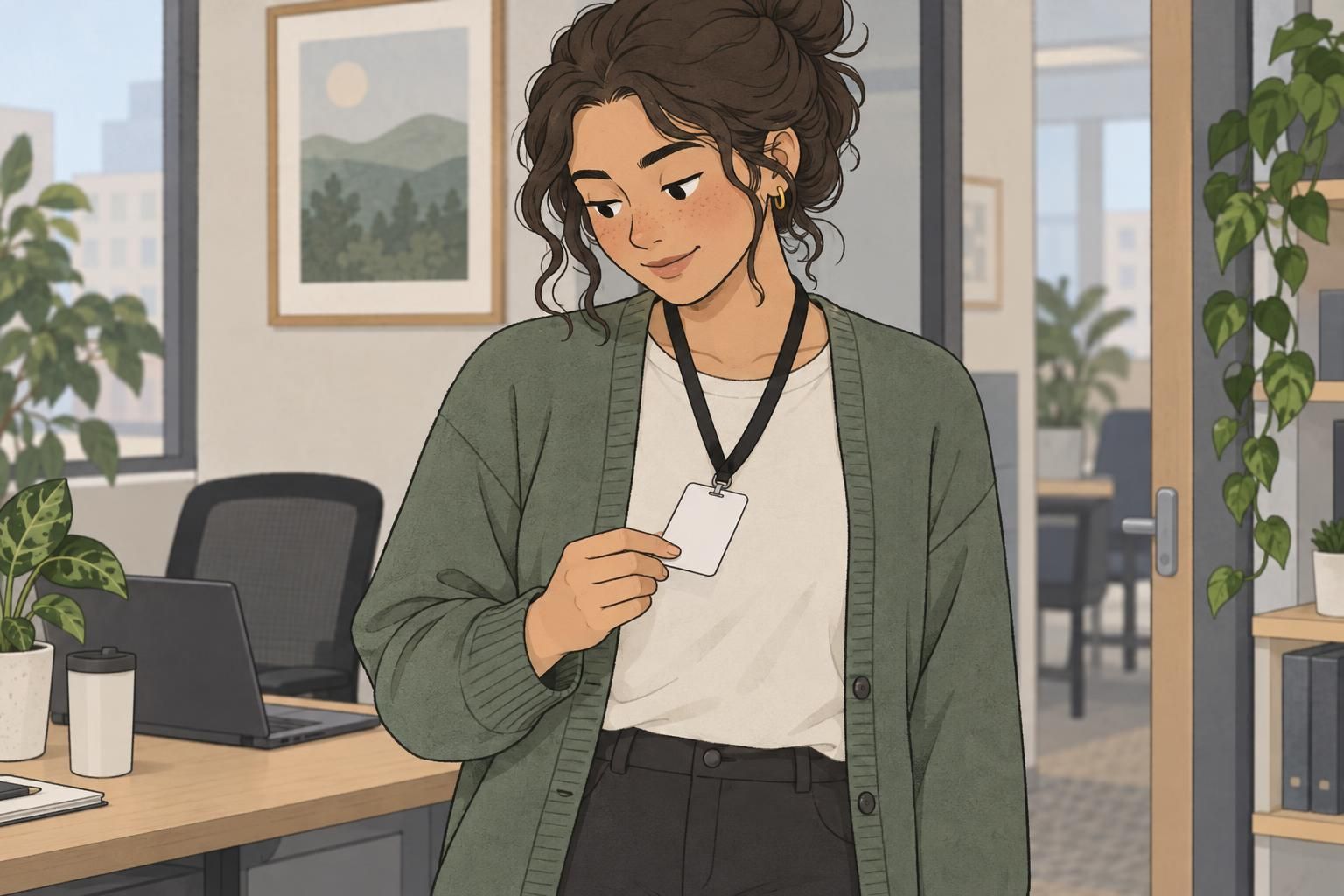
Recommend wearing the tag high on the chest, upright and unobstructed. A name that is hidden by a jacket, turned backward, or hanging too low is less useful during an introduction. A high position on either side can work; the goal is easy reading, not enforcing one placement rule for every attendee.
Offer secure, comfortable attachment options such as clips or holders. If lanyards are available, provide an alternative for people who prefer not to wear one. Likewise, do not assume everyone is comfortable attaching an adhesive tag to their clothing. A choice of attachments helps attendees keep their identification visible in a way that works for them.
Good event name tag etiquette also includes respecting personal space. If a badge has flipped or become covered, mention it politely rather than reaching to adjust it yourself. Ask before helping. A simple “Your tag has turned around” lets the wearer decide what to do.

Match the event badge to the gathering
The right amount of information depends on what people need to do at the event. A small social gathering may need only a first name. A professional networking event may benefit from a name and affiliation. A setting with different attendee roles or access arrangements may call for a durable event badge with those details clearly included.
- Small social gathering: emphasize a preferred first name and keep the layout simple.
- Networking event: add a useful organization, department, or role beneath the name.
- Workshop: consider an optional discussion interest when it supports the activity.
- Event with role or access distinctions: include the necessary details while keeping the attendee's name prominent.
Keep the basic design consistent across the gathering so attendees know where to look for names and supporting information. Consistency does not require crowding every badge with every possible detail. Include what serves the event, and leave out information that adds little to identification or conversation.
Make name badge tips inclusive and practical
Accessibility belongs in the planning process, not on a last-minute checklist at registration. Ask about identification-related access and comfort needs while there is still time to respond. These name badge tips are most useful when organizers can offer choices rather than expecting every attendee to use the same format.
Plan for large-print options, strong contrast, readable type, and different attachment choices. Keep the process for requesting an alternative straightforward and respectful. Considering accessibility needs early helps guide decisions about readable, comfortable identification options; see this source for relevant accessibility context.
Do not assume a preference from someone's appearance. Ask what works, listen to the answer, and offer the available alternatives without making the request a public discussion. A larger name, a different holder, or another attachment option can preserve the purpose of the badge while better supporting the person wearing it.
Plan the standard badge carefully, but leave room for individual needs. Clear identification and attendee comfort should support each other.
Prepare for pickup, replacements, and event-day introductions
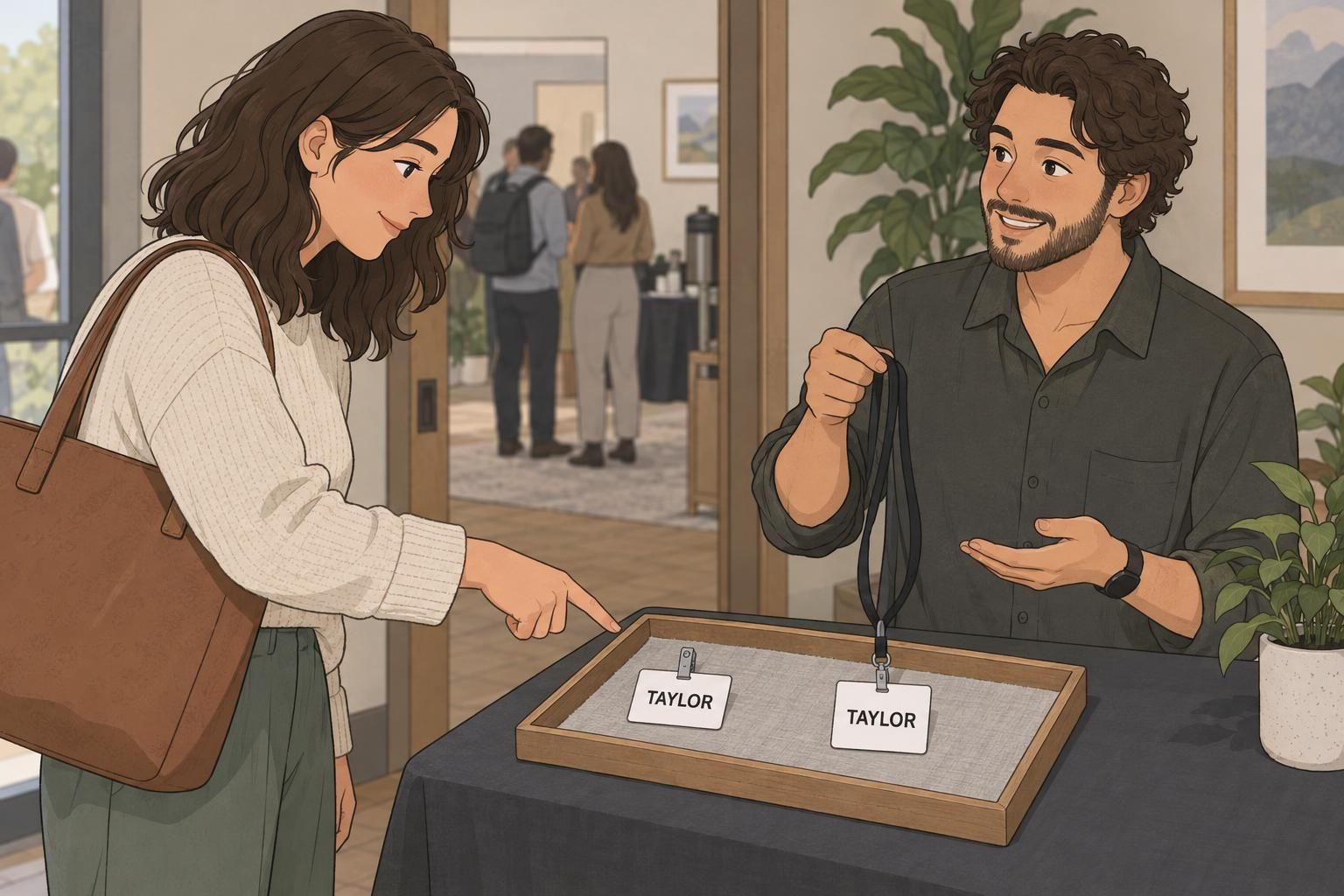
Make badge pickup easy to find and easy to understand. Arrange tags alphabetically using a clear sorting method; first-name order often suits networking events where preferred names lead the introductions. Tell hosts how the badges are organized so they can help without searching through every tag.
Keep spare tags and attachment supplies available for missing, damaged, or corrected badges. Handle replacements matter-of-factly. An attendee should not have to spend the start of the event explaining a spelling correction or worrying about a lost tag when a simple replacement will restore clear identification.
Hosts can turn preparation into connection by making introductions. Use the names people have chosen, add relevant context, and give both attendees room to speak. “Maya, this is Jordan. You both mentioned an interest in design” creates an opening without making either person responsible for carrying the whole exchange.
At the end of the gathering, provide a collection point or a secure disposal option for tags attendees do not want to keep. From pickup to departure, event name tag etiquette works best when the practical details stay simple and the attention stays on people.