
Why construction site ID needs to stay visible
A construction site ID helps workers, visitors, and site teams recognize who is present and connect that person with the right access procedures. But a badge cannot do its job well if it sits beneath a jacket, turns backward, or hangs where nobody can easily see it. The goal is straightforward: keep identification visible while making sure the badge, holder, and attachment work with required personal protective equipment, or PPE.
Visibility matters at more than one distance. A supervisor may need to recognize a worker’s role from several steps away, while a person checking entry may need to inspect a photo or credential closely. A useful setup supports both situations without asking workers to rearrange protective clothing every time someone needs to identify them.
Start with the site’s rules, the work being performed, and the equipment workers wear. An upper-chest holder may be practical for one task, while another task needs a different approved attachment. Treat badge placement as part of the workwear setup rather than an afterthought.

Vest-mounted IDs and the hard hat badge question
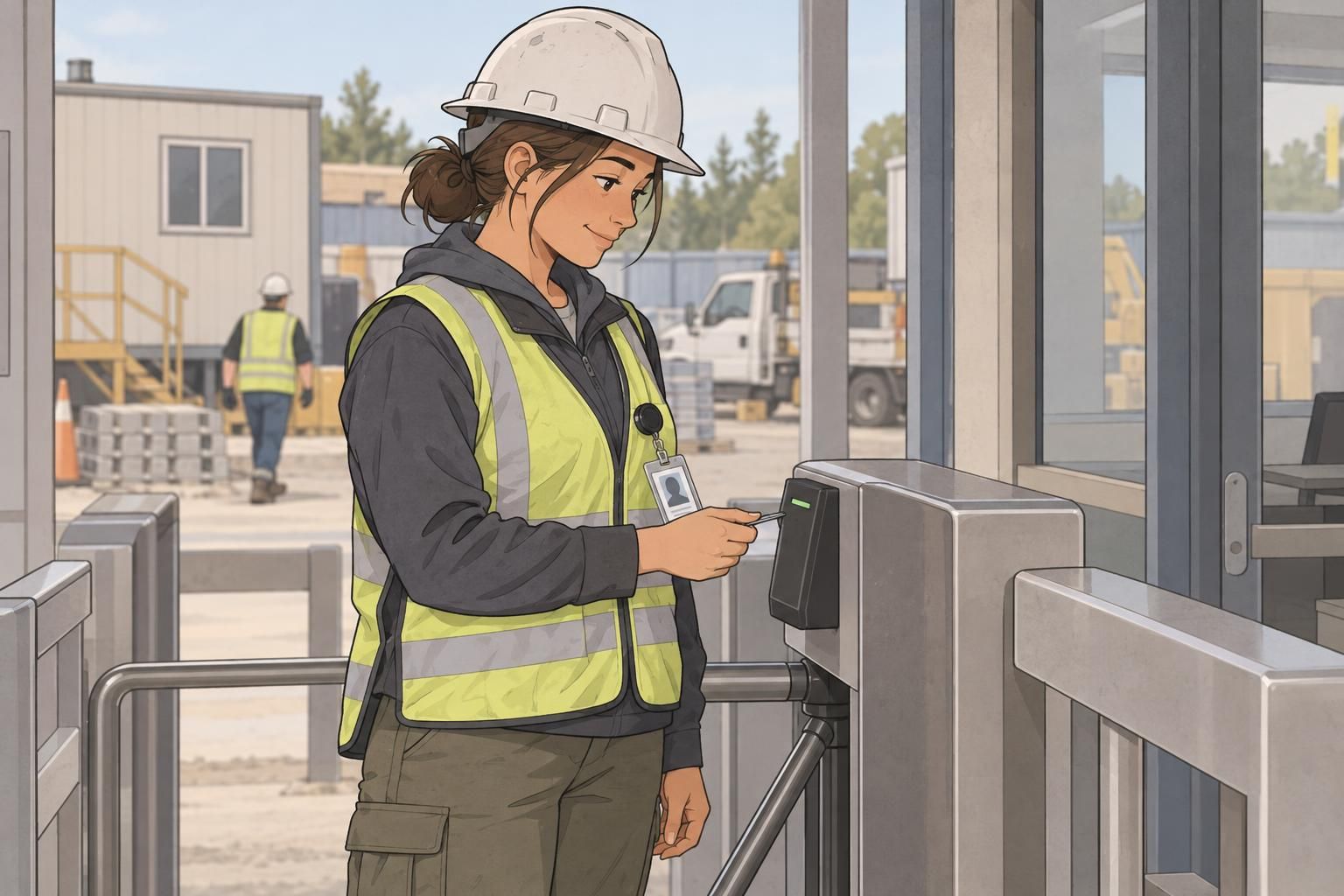
A clear holder clipped upright to the upper chest of a high-visibility vest or jacket is often a practical starting point. It places the badge in a familiar viewing area and can keep the photo and main identification facing outward. Choose a position that leaves reflective striping and other safety features unobstructed, and check that the holder stays reasonably stable as the worker moves.
A hard hat badge raises a different question: does the helmet manufacturer specifically approve that attachment? A helmet is protective equipment, not simply another mounting surface. Do not assume that a clip, holder, adhesive, or other attachment is suitable because it appears to fit. Only use a helmet attachment when it is specifically approved by the helmet manufacturer and permitted by the site.
Site-specific contractor guidance illustrates why identification and PPE should be considered together. The project guidance in this source calls for visible identification and approved hard hats. Individual project rules vary, so use the applicable site requirements rather than treating one project’s guidance as universal. Check any proposed helmet attachment against manufacturer guidance as well.
Keep the distinction clear: a requirement to wear visible identification does not, by itself, authorize attaching a badge to a hard hat.
Using reels, clips, and lanyards around equipment
A retractable reel clipped above the waist can keep a badge accessible for an access check while reducing loose, dangling material when the badge is not in use. Position it so the badge rests visibly against the garment, and extend the cord only as needed. The cord and holder still need to remain clear of nearby equipment.
A direct clip may suit workers who mainly need to display identification rather than present it repeatedly to a reader. Short breakaway lanyards are another option where site conditions and rules allow them. However, a breakaway feature is not permission to wear a lanyard around every machine or task. Placement and suitability still need to be checked.
- Check the resting position: the badge should face outward rather than hang backward or disappear behind clothing.
- Keep attachments away from snag points and moving machinery.
- Check that the holder, clip, or reel does not interfere with a harness or other PPE.
- Review the setup during normal reaching, bending, and access-reader use, not only while standing still.
For construction site ID, the best attachment is the one that supports the actual task. A reel can make credential presentation convenient, but convenience should not override the site’s assessment of snag hazards or PPE interference.
Designing a PPE compatible ID for distance visibility
A PPE compatible ID needs both a readable design and a suitable display position. Start with strong contrast between text and background, clear lettering, and a simple information hierarchy. Give the most useful identification details room to stand out instead of giving every field equal visual weight.
Think about what someone needs to recognize at each viewing distance. A role or company identifier may need to be noticeable from several steps away; a name, photo, or credential detail may be checked closer up. Do not expect small print to serve as distance identification. Select a badge size and layout suited to the site’s viewing needs without creating an awkward or obstructive attachment.
Review the finished badge in its holder and on the intended garment. Check whether the holder hides any information, whether the badge stays upright, and whether surrounding clothing makes the design harder to distinguish. Keep the whole setup in plain view without covering reflective striping, fall-protection hardware, or other safety features.
Test visibility in context: have someone view the worn badge from the distances used for routine recognition and close-up checks. Adjust the layout or approved placement if important information is difficult to see.
Keeping badges visible over changing workwear
A badge that is well positioned on a vest can disappear when a worker adds rainwear or a winter jacket. Changing layers should prompt a quick visibility check. When site rules allow it, move the holder to an approved position on the outermost garment so identification remains visible.
The new placement needs the same review as the original one. Check that the attachment is secure, the badge faces outward, and reflective details and harness hardware remain clear. Do not assume that a pocket or fastening point on one jacket is equivalent to the approved location on a vest.
Clear site guidance makes these adjustments easier. Identify approved placements for common workwear combinations and provide alternatives when the usual location is unavailable. Workers and visitors should know whom to ask if a garment change leaves no suitable display point. The aim is consistent, visible identification across changing conditions, not improvisation around required PPE.

Connect badge display with site access procedures
Visible identification is most useful when it connects to a clear issuance and authorization process. At orientation, explain what the credential identifies, how access is checked, and where the badge should be worn. Make sure workers and visitors understand any limits attached to their authorization rather than assuming that possession of a badge permits entry everywhere.
Display and access serve related but different purposes. A visible badge helps people recognize the wearer; access procedures determine whether that person may enter a particular area. Keep those procedures aligned, especially when assignments, roles, or visitor arrangements change.
- Issue credentials with the correct identity and current authorization.
- Explain approved badge placements and attachment options during orientation.
- Keep credential information current when an assignment or access permission changes.
- Provide a clear process for reporting a lost, damaged, or unreadable badge.
- Return or deactivate credentials when the assignment ends, following the site’s procedures.

Choose an identification setup that fits the site
Choosing a construction site ID setup means balancing visibility, access needs, and PPE compatibility. Garment-mounted holders are often practical for clear display. Reels can help when a credential must be presented to a reader. Clips and short breakaway lanyards may suit some conditions, while a hard hat badge requires specific manufacturer approval and site acceptance.
When reviewing BadgeZoo identification products, begin with the badge format and information workers need to display, then match the holder and attachment to approved site placements. No single combination suits every jobsite or task. A readable badge is most effective when its mounting method supports the work around it.
Before adopting a setup, check it with the required workwear, typical outer layers, and relevant access procedures. Confirm that people can recognize the identification at useful distances and inspect it closely when needed. A clear, current credential in an approved, visible position gives site teams a practical foundation for everyday identification.