
Why school badge safety rules matter
School badge safety starts with clear, everyday habits: wearing identification where it can be seen, using it only as intended, and knowing whom to ask for help. For students, staff, families, and visitors, consistent rules make school routines easier to understand and follow.
Visible badges support quick recognition by helping people distinguish students, staff members, and checked-in visitors. They also give staff a practical starting point when someone needs directions or appears to be outside an expected area. However, identification works alongside supervision, visitor procedures, and the school’s broader safety plan—not in place of them.
The most useful rules are easy to explain and realistic during a busy school day. Families should know what students are expected to wear, staff should understand approved exceptions, and visitors should receive clear instructions when they arrive.
Set clear ID policy rules for everyday wear
A school’s ID policy should answer practical questions before confusion arises. Who needs identification? Where should it be displayed? What happens when a student arrives without it? Put these answers in plain language so families and staff can follow the same routine.
- Identify who must wear a badge, including any differences for students, staff, and visitors.
- Specify an approved, visible location rather than leaving badges hidden in pockets or bags.
- Explain where to report a forgotten, damaged, or lost badge and how to obtain temporary identification.
- Describe approved exceptions and who can authorize an alternative attachment or storage arrangement.
- State that badges must not be shared, altered, or used by anyone other than the assigned holder.
Keep expectations consistent without ignoring activity-specific needs. A student following an approved gym procedure should not receive conflicting instructions from another adult. Staff should know how to recognize authorized exceptions and help students return to normal badge wear afterward.

Choose student lanyards and attachments with safety in mind
Student lanyards can keep identification visible during ordinary classroom and hallway routines when school procedures allow them. Attachment choices should also account for the activities students take part in, rather than assuming one method suits every setting.
Breakaway designs are intended to release when pulled and can help address snagging concerns. Follow manufacturer guidance for the specific lanyard, including how its release feature is used. Do not tie, tape, or otherwise modify a breakaway connection in a way that could interfere with its intended function.
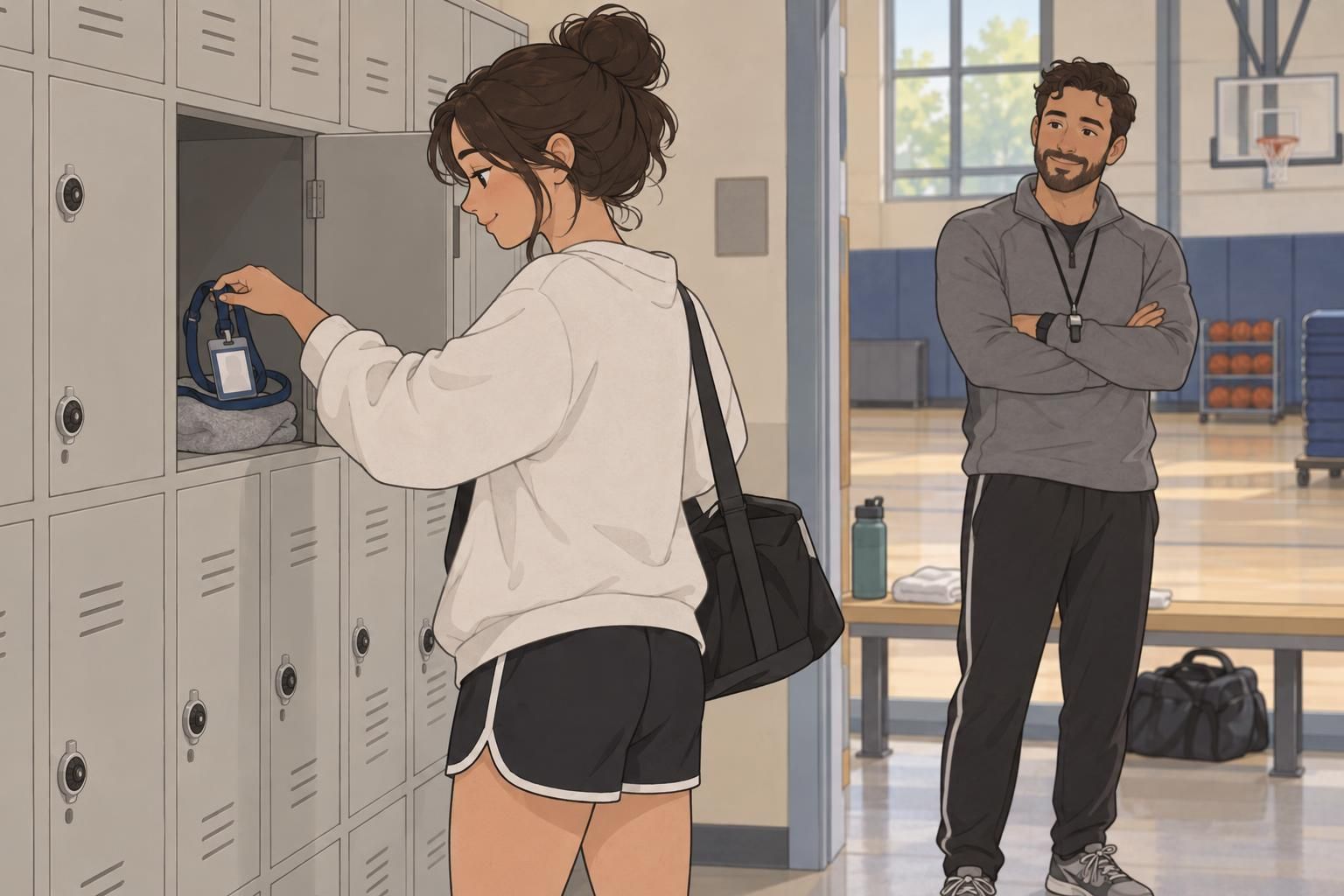
Athletics, labs, performances, and other activities may call for removing a hanging lanyard or using an approved alternative. Teachers and activity leaders should explain the arrangement before the activity begins: whether students should use another attachment, secure the badge, or store it temporarily. Follow school procedures rather than improvising a solution.
A breakaway lanyard does not make hanging identification suitable for every activity. Use the attachment or storage method approved for the task.
Wear, handle, and store badges properly
Demonstrate proper wear instead of relying only on written instructions. Show students and staff how to position a badge so it remains visible and readable. Names and photographs should not be hidden by clothing, decorative items, or a badge turned inward.
Keep barcodes and electronic components unobstructed and avoid changes that could affect their use. Stickers, extra holes, or other alterations can interfere with the badge’s intended layout or function. When a badge becomes damaged or difficult to read, follow the school’s replacement process.
- Before an activity, follow the teacher’s instructions for securing or removing identification.
- Place removed badges and lanyards together in the school-approved storage location.
- After the activity, retrieve the badge and resume normal wear when instructed.
- Never loan a badge to a friend, classmate, colleague, or visitor.
A consistent storage-and-return routine supports school badge safety without making identification an obstacle to participation. Younger students may need reminders and a demonstration until the routine becomes familiar.
Use a clear visitor check-in and escort process
Visitor identification should be part of a clear arrival-to-departure process. Direct families and other guests to the designated entrance and school office, where they can sign in, explain the reason for their visit, and receive temporary identification according to school procedures.
At check-in, explain where the visitor may go and whether an escort is required. A visitor badge should not be treated as permission to enter every classroom, hallway, or staff area. Reception staff should make the approved destination and any movement restrictions clear before the visitor leaves the office.
- Arrive through the designated visitor entrance and report to the office.
- Complete the school’s check-in process and wear temporary identification visibly.
- Follow the approved route, destination, and escort instructions.
- Return to the designated sign-out location and return the badge or have it deactivated as required.
Parents who visit often should follow the same established process unless the school has explicitly approved a different arrangement. Familiarity does not replace check-in.
Protect personal information and respond to missing badges
A readable badge does not need to display every detail about its holder. Include only the information needed for identification and the badge’s intended school use. Home addresses, medical details, and other unnecessary personal information should not appear on the visible layout.
Families and staff should also know exactly how to report a missing badge. Make the reporting contact easy to find, and encourage prompt reporting rather than waiting to see whether the badge turns up. The school can then arrange replacement or temporary identification and deactivate electronic access where applicable.
What should a student do if a badge is missing before school?
Tell a parent or caregiver and follow the school’s reporting process. On arrival, go to the designated staff member or office for instructions and temporary identification if needed. Do not borrow someone else’s badge.
What if a missing badge is found after a replacement is issued?
Give it to the designated school staff member. Do not assume the old badge can be used again; the school should confirm its status and explain what to do with it.

Teach students and staff what to do when something seems wrong
Explain the badge categories people are likely to see, such as student, staff, and visitor identification. If the school uses colors or other visual distinctions, teach their meaning in simple terms. The aim is to help people notice when something needs staff attention—not to turn students into security personnel.
Students who notice an unbadged or unfamiliar person should tell a teacher, office staff member, or administrator. They should not approach the person to demand identification, challenge their explanation, or try to block their movement.
Staff should follow the school’s reporting and response procedures rather than improvise a confrontation or physically stop someone. An unfamiliar face or missing badge calls for the established response, not an assumption about the person’s intentions. If the situation is urgent, follow the school’s emergency procedures.
Review badge procedures as part of the wider safety plan
School badge safety needs regular review as routines, activities, and access needs change. Revisit badge colors, access permissions, visitor steps, staff training, and approved activity-specific exceptions. Check that the written ID policy matches what students, families, and staff are actually being told.
RAND provides broader context on school safety practices, including identification measures, in this source. The important distinction is that visible identification supports recognition, but does not by itself confirm authorization. Badges belong alongside supervision, access controls, visitor procedures, and established emergency responses.
Use reviews to resolve everyday confusion: a visitor unsure where to sign out, a student without an approved place to store a lanyard, or staff receiving conflicting instructions. Clear answers make procedures more usable. The goal is a dependable routine in which everyone knows how to wear identification, when an alternative is needed, and where to turn for help.