

Real-world examples of how badges and ID systems are used across workplaces, schools, healthcare, and organizations. These articles focus on practical use, role clarity, and day-to-day identification challenges.

Badge Color Psychology for Badges: What Your Palette Communicates
iggy2026-04-22T22:29:44+00:00Why Badge Color Psychology Matters in Everyday Identification Badge color psychology isn’t about making a badge look “nice.” It’s about making identification work in the real world—where people are walking, talking, multitasking, and making quick judgments. In seconds, a color choice can help someone feel oriented (“I know who to ask”), reassured (“this person belongs here”), or warned (“restricted role—pay attention”). In workplaces, schools, healthcare environments, and events, color is one of the fastest cues the brain can process. Done well, it...

New Hire Badge Day-One Checklist for a Polished Onboarding Experience
iggy2026-02-13T16:21:32+00:00Why a New Hire Badge on Day One Sets the Tone A new hire badge issued on day one does more than display a name—it’s an immediate signal that the employee is expected, recognized, and ready to participate. When someone walks in and can be clearly identified, introductions become easier, coworkers feel more comfortable offering help, and the new employee can start building confidence right away. That visibility also supports basic workplace clarity: who someone is, what team they’re on, and (when...

QR Code Badge Implementation Mistakes: Sizing, Placement, Contrast, and Testing
iggy2026-02-03T21:54:58+00:00Why QR Code Badge Scans Fail More Often Than They Should A QR code badge is supposed to remove friction: one quick scan at check-in, a fast door access confirmation, or a simple way to pull up a profile or training record. In the real world, though, badge scanning happens in moving lines, mixed lighting, and on many different phone cameras. Small design and production decisions can turn a “tap to scan” moment into repeated attempts and a growing queue. Most QR...
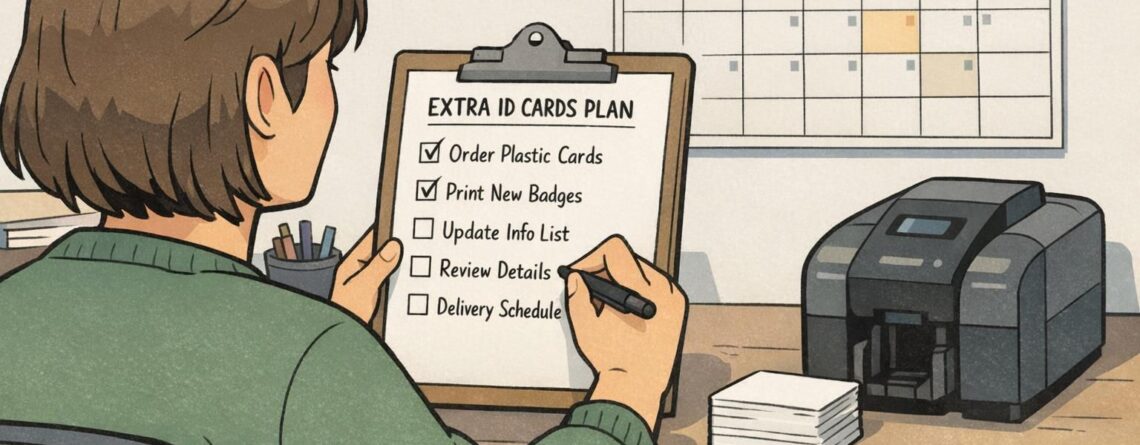
Extra ID Cards: How Many Spare Badges to Order (Without Overbuying)
iggy2026-02-01T12:58:14+00:00Why extra ID cards matter (and when they save the day) Extra ID cards are one of those small, behind-the-scenes supplies that keep a workplace running smoothly. When a new hire starts sooner than expected, a badge goes missing, or someone changes departments, having a ready-to-issue ID helps you avoid awkward gaps in identification and access workflows. A small buffer also supports consistent workplace identification policies. Whether your environment includes visitors, patients, students, or customers, clear identification helps people quickly recognize who’s...

Contractor ID Badge vs Employee Badges: Labeling Without Confusion
iggy2026-01-24T12:57:03+00:00Why a Contractor ID Badge Helps Prevent Mix-Ups A contractor ID badge does one job extremely well: it removes uncertainty in the first few seconds of an interaction. In a busy workplace—especially one with rotating vendors, project-based crews, or short-term support teams—people make quick decisions at doors, reception desks, and shared work areas. Clear labeling helps those decisions stay accurate and consistent. When a contractor is visibly identified, staff and security don’t have to guess whether someone is an employee, a visitor,...

Where to Wear ID Badge: Chest, Belt, or Pocket Placement That Works
iggy2026-01-23T21:57:55+00:00Why where to wear ID badge affects recognition and scanning Deciding where to wear ID badge is more than a comfort choice. Placement affects how quickly people can recognize you, how consistently your information stays readable, and how reliably your badge can be scanned at doors, check-in desks, and secure areas. If your ID sits in the same visible spot every day, coworkers and visitors learn where to look. If it swings, flips, or gets covered by a jacket, hair, or bag...
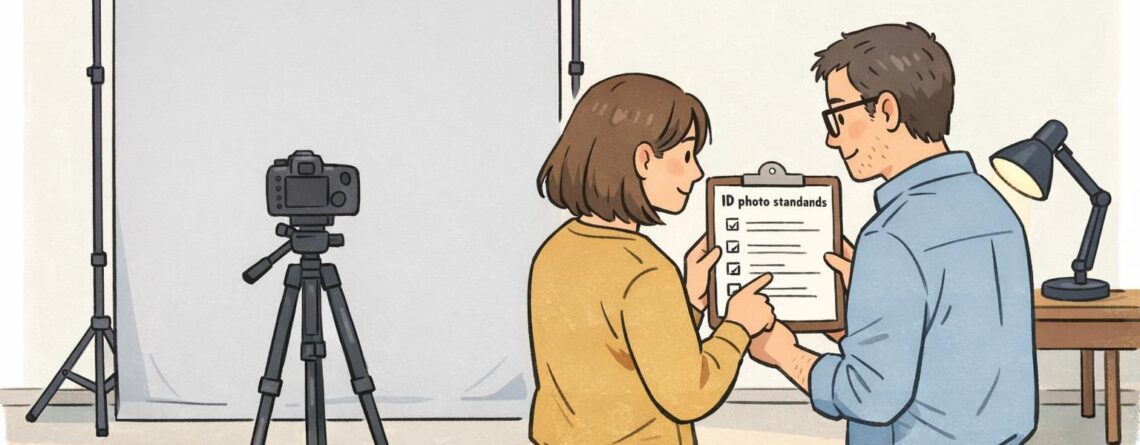
ID Photo Standards for IDs: A Simple Guide for Consistency
iggy2026-01-21T13:01:39+00:00Why Consistent ID Photos Matter Across a Team When everyone’s badge photo looks like it belongs to the same system—similar lighting, similar crop, similar background—identification becomes faster and more reliable. Strong ID photo standards aren’t about making people look identical; they’re about removing avoidable differences (like harsh shadows or distracting backgrounds) that make quick recognition harder. In day-to-day work, a clear photo supports simple moments: greeting a new coworker by name, verifying access at a controlled door, or matching a face to...
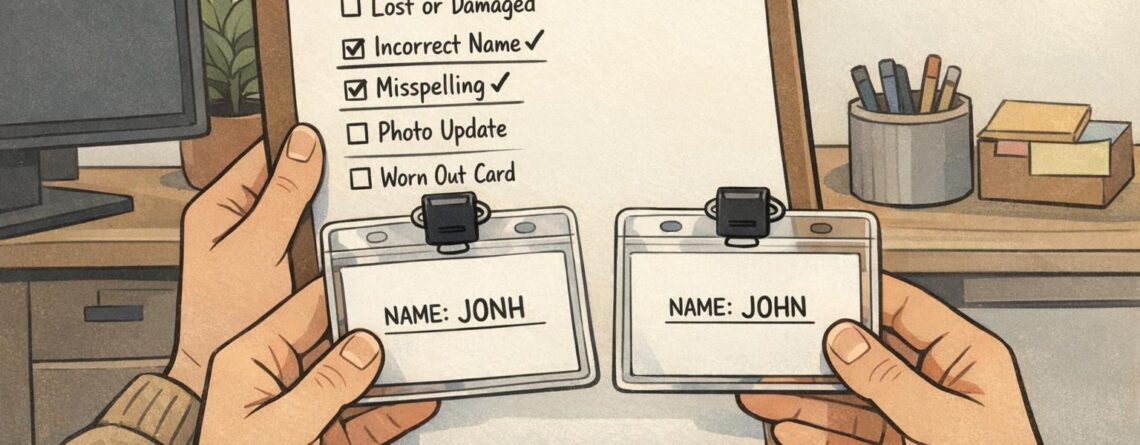
Replace ID Badge vs Reprint: When to Fix Typos, Photos, and Wear
iggy2026-01-20T12:57:05+00:00Replace ID Badge or Reprint? A Quick Decision Framework When an employee, student, or contractor brings an ID back with a problem, the fastest fix isn’t always the best fix. The goal is consistent identification that’s easy to verify at a glance, works with your workflows, and doesn’t create security loose ends. A simple way to decide is to separate “print-side issues” from “credential issues.” If the underlying person/record is the same and the problem is how the card looks (a typo,...

Badge Sharing Risks: Why “Just This Once” Undermines Access Control and Accountability
iggy2026-01-19T21:55:12+00:00Why badge sharing feels harmless (and why it isn’t) Badge sharing usually starts with good intentions: someone forgot their ID, a line is building, a teammate is juggling bags, or a contractor is standing there while everyone waits. In that moment, lending a badge can feel like a simple courtesy—“just this once.” But badge sharing changes what your identification system is for. A badge isn’t just a piece of plastic; it’s a credential that connects a person to permissions, spaces, and an...
