Preferred Name Badge and Pronouns: Building Respectful Practices at Work and in Healthcare
Why a Preferred Name Badge Supports Respectful Communication
A preferred name badge is a simple, visible tool that helps people get someone’s name right the first time. That matters in any organization—because repeated corrections can be uncomfortable—and it’s especially important in high-traffic settings like healthcare, where patients and staff interact quickly across shifts, departments, and roles.
When a badge shows the name a person uses day to day, conversations start on the right note: a greeting at the front desk, a handoff in a hallway, or an introduction at a team huddle. The goal isn’t to collect extra personal details; it’s to support clarity, reduce friction, and make respectful communication the default behavior.
Badges work best as a clarity tool when the practice is opt-in, applied consistently across teams, and supported by light training on how to use (and not overuse) what’s printed.
- Fewer awkward moments: less back-and-forth about names in everyday interactions
- Better teamwork: colleagues can address one another correctly across departments and shifts
- Stronger patient experience: respectful address helps build trust quickly in clinical and front-desk settings
- More professional introductions: especially helpful for contractors, students, volunteers, and rotating staff
Opt-In Fields: What to Ask For (and What Not to Require)
The most workable approach is straightforward: offer a few optional fields that employees can choose to display, and clearly label those fields as opt-in. This protects comfort and privacy while still giving people an easy way to share information that helps others address them respectfully.
Common opt-in fields include a preferred name (sometimes called “name used” or “display name”), pronouns, and—when it’s useful—name pronunciation. Importantly, pronouns should not be required. A “leave blank” option should be normal and penalty-free, with no guessing or auto-filling behind the scenes.
- Preferred name (opt-in display field): what the person wants colleagues, patients, and guests to use
- Pronouns (optional): only printed if the person chooses to share them
- Name pronunciation (optional): especially helpful in customer-facing roles or larger organizations
- Role/department (as needed): useful for wayfinding and routing questions appropriately
It’s common for HR or credentialing to keep legal names in secure systems while badges display the employee-chosen name used for daily interactions.
To make the policy work across roles, treat everyone’s badge process the same way—employees, contractors, students, volunteers, and rotating staff. If someone is short-term or shifts between locations, opt-in fields still help reduce repeated introductions and miscommunication.
No. Pronouns are best treated as optional. People should be able to leave the field blank without needing to explain why.
Keep legal names in secure HR/credentialing systems. For daily communication, a badge can display the person’s preferred name, while still meeting internal record-keeping needs.

Placement and Readability: Designing Pronoun Name Tag Layouts People Can Actually Use
A pronoun name tag is only helpful if people can read it quickly and reliably. The most common design mistake is treating all text the same size. In real-world conversations—at a reception counter, in a hallway, or during a quick introduction—people scan for the name first.
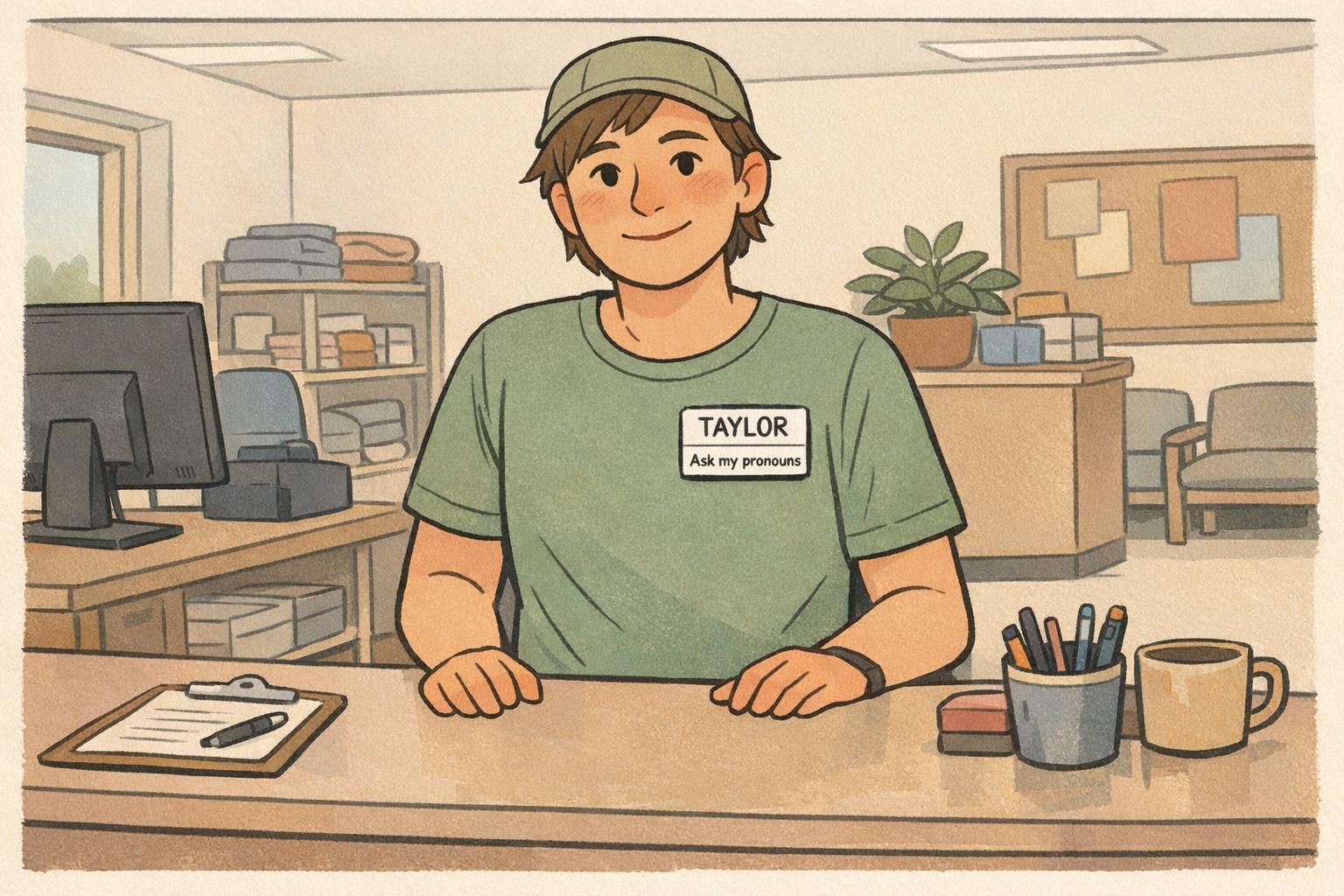
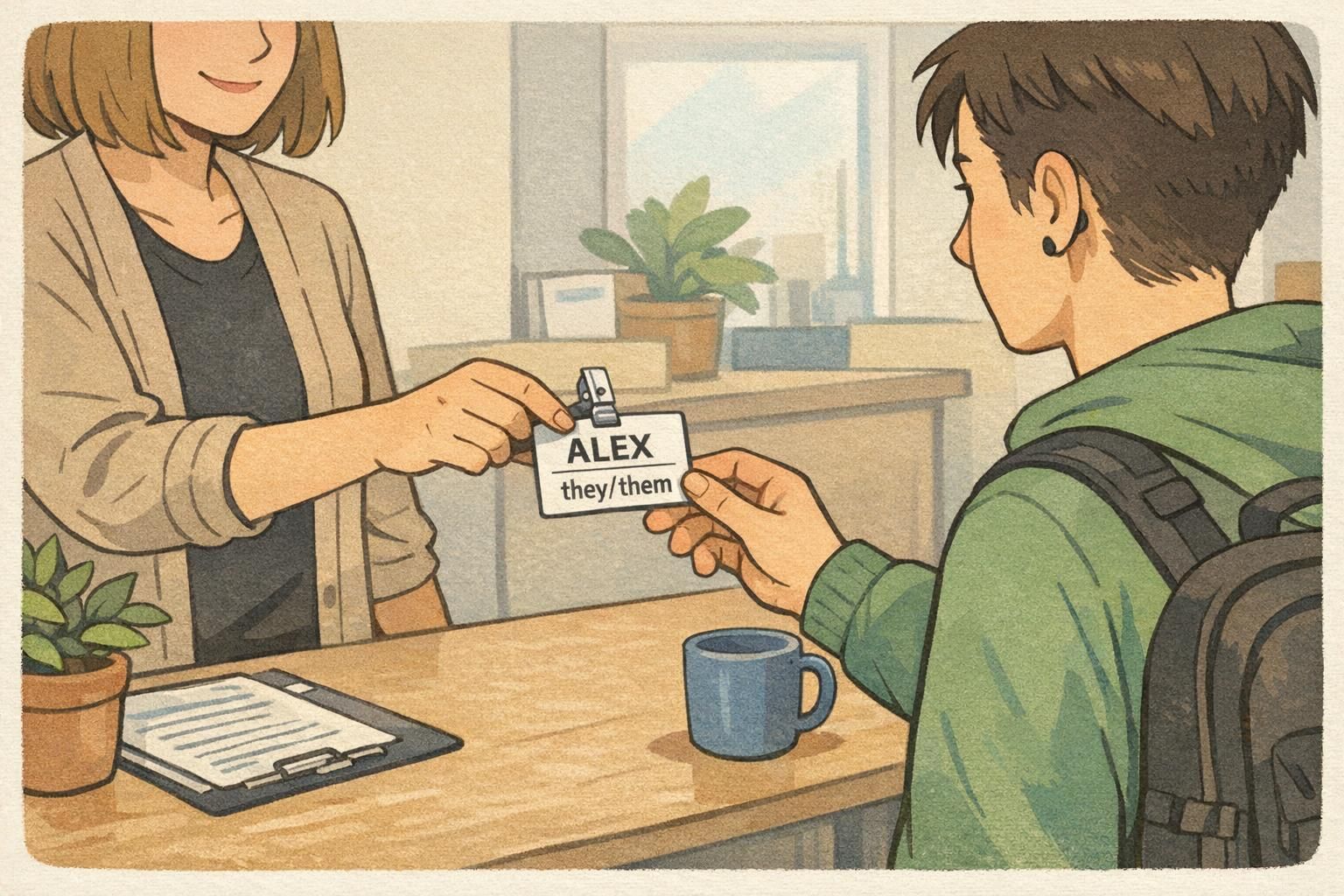
A practical layout uses clear hierarchy: the preferred name is the largest element, pronouns are smaller but still legible, and role/department appears only if it won’t clutter the design. Consistent placement matters too. When everyone’s badge follows the same structure, coworkers and visitors learn where to look without staring or searching.
- Line 1 (largest): preferred name
- Line 2 (smaller): pronouns (if provided)
- Optional line 3 (smallest): role/department (only when helpful for the setting)
- Consistent position: keep pronouns in the same place on every badge to reduce scanning time
Legibility is part of respect. High contrast, simple fonts, and uncluttered layouts reduce the chance of mistakes in fast-moving environments.
Different environments may call for different formats or sizes, but the same logic applies. A small reusable tag at a community center still benefits from a large name line. A larger event badge still needs a clear hierarchy so the important information is obvious at a glance.
Respectful Defaults: What to Print When Someone Doesn’t Opt In
Respectful defaults are about not “filling in the blanks” for someone. If pronouns aren’t provided, don’t guess. If a person doesn’t want a preferred name displayed, don’t substitute a nickname or a system-generated option. The badge should reflect what the wearer chose to share—no more and no less.
This is also where consistent policy reduces confusion. For example, an organization can choose to print preferred name prominently when provided, and optionally include a second line for credentials or an initial when policy requires it. The key is transparency: employees should know what will appear before printing.
- If pronouns are blank: print nothing in the pronoun field (no guessing, no defaults)
- If preferred name is blank: use the standard name field the organization already uses for badges
- If a custom pronoun is offered: print it exactly as provided, including capitalization
- Avoid forced “standard options only” if a custom field is part of your program expectations
“The best badge programs make it easy to share, easy to decline, and easy to change—without anyone having to justify personal details.”
Workflows That Reduce Errors: Data Collection, Approvals, and Reprints
Most badge problems aren’t philosophical—they’re operational. Misspellings, inconsistent capitalization, and outdated information happen when processes are unclear or when it’s hard to request an update. A simple workflow keeps badges accurate while protecting employee comfort.
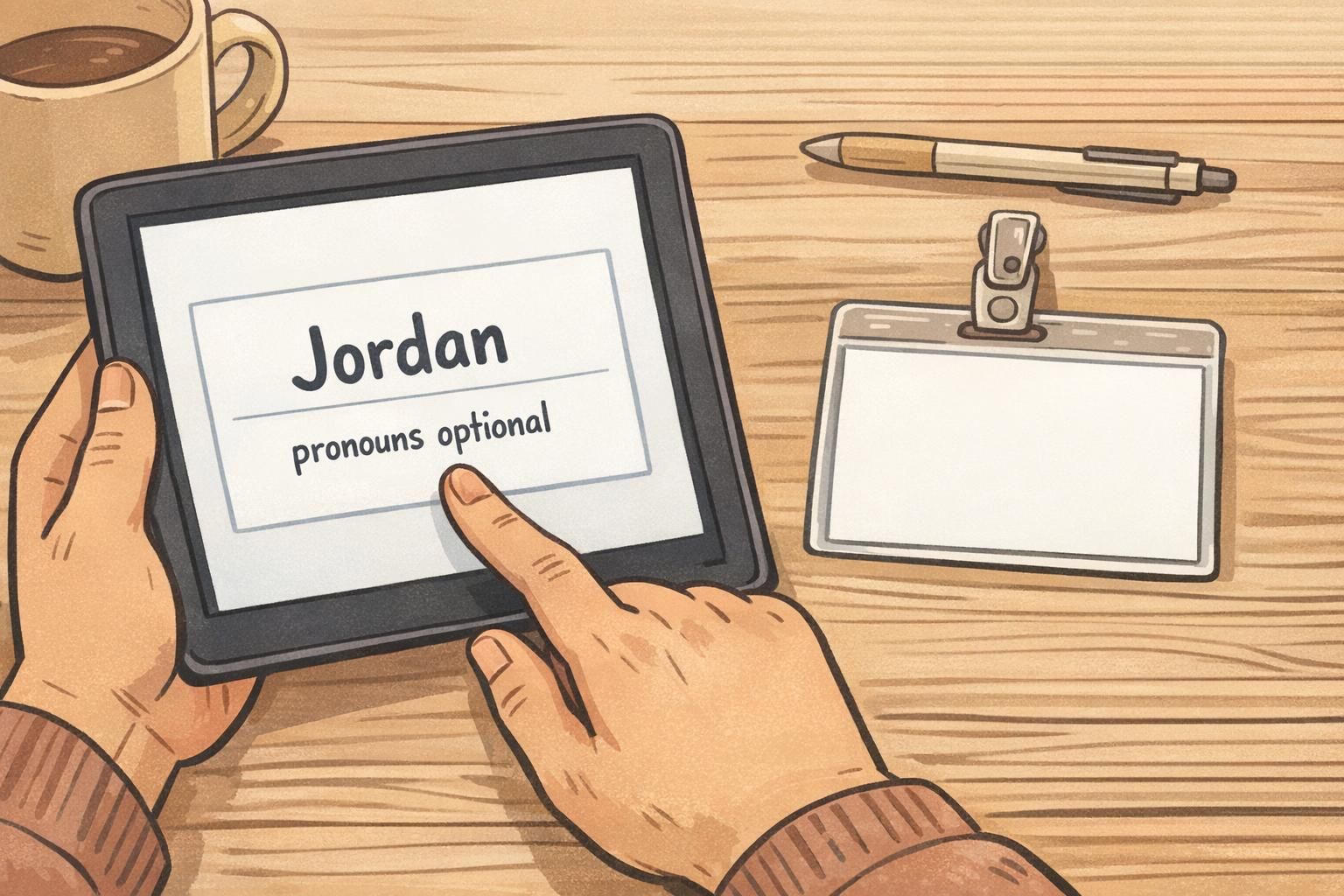
Start with secure collection of opt-in fields during onboarding (or via a secure form for existing staff). Confirm spelling and capitalization, then offer a quick preview before printing. The preview step is one of the easiest ways to prevent avoidable reprints and awkward corrections later.
- Collect: preferred name and pronouns as opt-in fields (plus pronunciation if offered)
- Confirm: spelling, capitalization, and spacing (including hyphens or accents when used)
- Preview: let the employee approve what will be printed before production
- Print: use a standardized template so layout stays consistent across departments
- Reprint: provide a low-friction request path with clear turnaround expectations
A reprint policy is part of an inclusive workplace: people should be able to update a preferred name or pronouns without drawing attention or needing to explain the change.
For organizations that print at scale, even small standardizations help: one request form, one approval step, and one consistent template. When the process is predictable, departments are more likely to use it correctly—and badges stay accurate over time.
Training and Everyday Etiquette: Asking, Using, and Correcting
Badges are most effective when they’re paired with basic etiquette. The goal is a calm, normal interaction: ask politely when needed, use what’s shared, and correct mistakes quickly without making the moment bigger than it has to be.
In healthcare and other high-traffic environments, visible identifiers can reduce repeated misgendering or deadnaming—especially when staff are trained to look for and use the information appropriately. Evidence and discussion in clinical contexts also emphasize that identifiers work best as part of a broader communication practice rather than a standalone fix (source).
- Polite questions: “What name would you like on your badge?” and “What pronouns do you use, if you’d like to share?”
- Use what’s visible: if someone lists pronouns, use them; if not, don’t press
- Quick correction: “Sorry—he/him.” Then continue the conversation
- Keep it professional: avoid turning introductions into an interview about identity
- Model it in leadership: managers and preceptors set the tone for everyday usage
“Thanks for correcting me—I’ve got it now.”
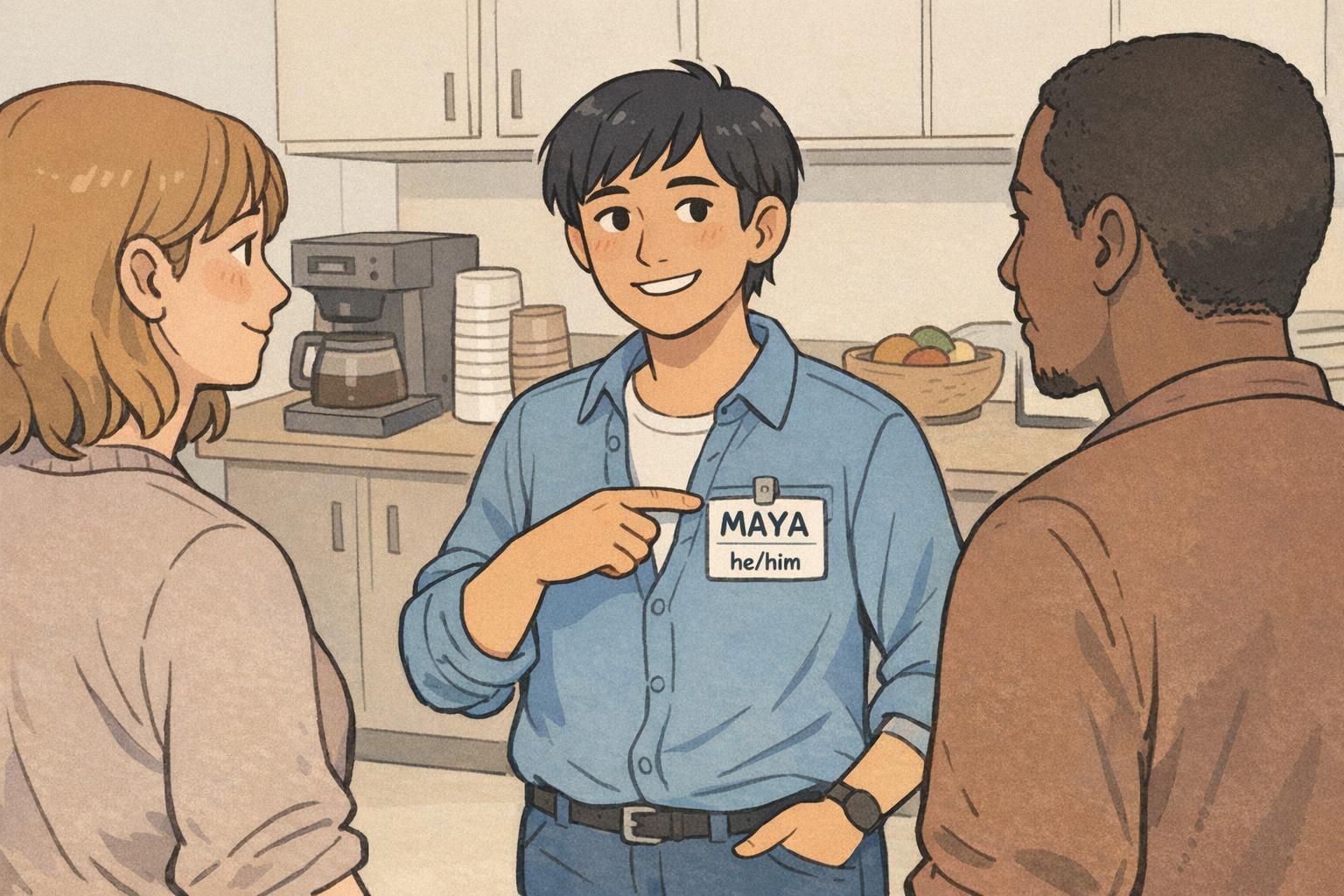
Choosing the Right Badge Format for Your Setting (Name Tags, ID Cards, and Events)
Choosing the right format helps you balance visibility, privacy, and operational needs. A consistent layout can travel across formats, but the best option depends on how long the badge is used, whether access control is involved, and how public-facing the role is.
For short-term gatherings, adhesive event badges are fast and practical. For front-of-house roles, reusable name tags are easy to update and work well with consistent placement rules. For secure environments, photo ID cards can support access control while still displaying a preferred name and (optionally) pronouns—when the wearer chooses.
- Adhesive event badges: best for conferences, trainings, and short-term visitors; easy to offer opt-in pronouns at check-in
- Reusable name tags: strong choice for daily customer service and reception; simple to reprint when changes are requested
- Photo ID cards: best for security and access control; can display preferred name prominently while keeping other records in secure systems
- Wear options: lanyards and clips can improve visibility; placement should keep the name readable during normal tasks
If privacy is a concern, consider where information is most visible: a front-facing name tag is easier to read than a chest-pocket card, but also more public. Opt-in fields help keep control with the wearer.
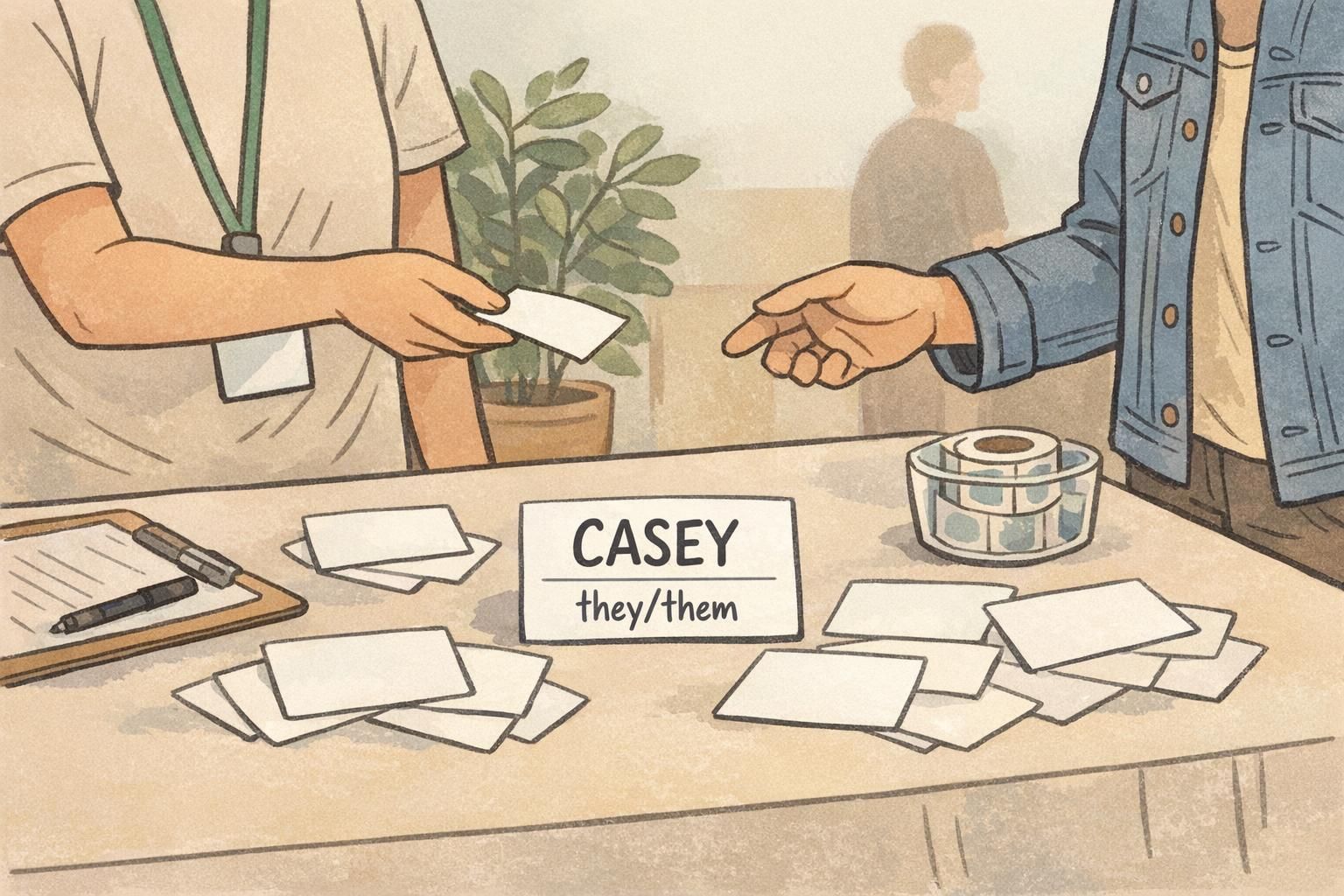
Product Options to Support Inclusive Badge Programs
Once your policy and layout are clear, the easiest way to keep things consistent is to standardize a few templates (for example: front desk, clinical, admin, volunteer) while keeping the opt-in fields the same. That way, the program scales as teams grow and as people move between departments.
Durability and readability matter for everyday wear. A clean template, a legible font, and an attachment style that works with uniforms and comfort needs will keep the badge useful over time. Many organizations also benefit from a simple reprint path so updates can be made quickly and quietly.
If you’re exploring formats and templates, BadgeZoo offers custom name tags and ID badges that can be aligned to a consistent layout and reprint process.
- Use consistent templates by role while keeping preferred name and pronouns opt-in everywhere
- Choose attachment styles that match the environment (comfort, uniforms, and daily movement)
- Plan for changes with a straightforward reprint workflow so badges stay accurate
- Keep designs uncluttered so the preferred name remains the most readable element