Eco Friendly Lanyards: 9 Practical Badge Program Ideas That Still Look Sharp
Why eco friendly lanyards are a smart starting point for greener ID programs
Eco friendly lanyards are one of the simplest ways to make a badge program greener without asking people to change how they carry and show an ID. They’re highly visible, used every day (or all event long), and often replaced more than necessary—so a smarter choice here can reduce waste quickly while keeping identification clear and professional.
The most useful way to think about “eco-friendly” is as a set of practical decisions you can control: choosing materials that hold up, designing for reuse, and planning what happens at the end of life. In real workplaces and events, sustainability doesn’t mean fragile or “natural-looking.” It means durable, legible, safe, and easy to manage—so you don’t end up ordering rush replacements or reprinting badges because hardware failed.
A greener ID program is usually built from small operational upgrades: longer-lasting components, fewer emergency reprints, and a simple return-and-reuse process.
- Material choice: What the strap and hardware are made from, and how they wear over time
- Reuse: Whether the lanyard and holder can be collected, cleaned, and reissued
- End-of-life: Whether parts can be separated (strap vs. clip) and routed appropriately
- Professional performance: The badge stays readable, scannable, and secure during daily use
Pick materials that last: balancing sustainability, durability, and print clarity
If you want a badge program to be greener without sacrificing a sharp look, durability is your best friend. A lanyard that stays comfortable and presentable through daily friction, cleaning, outdoor heat, and constant scanning reduces the need for replacements—often a bigger environmental win than switching materials but replacing twice as often.
When comparing options, focus on how the strap and the print will look after weeks (or days) of wear. Some materials resist abrasion and keep color better. Others are softer but show pilling or fade faster. The “best” choice depends on whether the lanyard is worn 8–12 hours a day, exposed to cleaners, or used outdoors.
- Abrasion resistance: Will edges fray or fuzz from rubbing against clothing, bags, and desks?
- Colorfastness: Will brand colors stay consistent after sun exposure or repeated use?
- Water and cleaner tolerance: Will it look worn after wipe-downs or hand washing?
- Comfort and weight: Wider straps can feel premium but may be warm or bulky for some roles
- Print clarity: Some weaves and imprint methods keep logos crisper over time
A longer-lasting lanyard-and-holder combo can be an eco win because it reduces reorders, reprints, and the operational hassle of replacing damaged parts.
Both. The strap takes abrasion and cleaning, while the hardware takes stress from pulling, twisting, and frequent attachment. A durable strap paired with weak clips still leads to replacements (and frustration).
Indirectly, yes. When lanyards and holders fail, badges get bent, scratched, or reprinted. Stable holders help keep barcodes and QR codes flat and readable for scanners.
Eco friendly lanyards options that still look premium
You can absolutely keep a premium, consistent look while choosing eco friendly lanyards. The goal is to pair a responsible material with a construction and imprint method that holds branding crisp—especially at front desks, schools, healthcare settings, and conference check-in.
A few design choices make a big difference in perceived quality. Wider lanyards often feel more substantial; tighter weaves can look cleaner; and imprint methods vary in how well they resist wear. If your team needs a polished, uniform appearance, build a “default spec” so replacements match the originals.
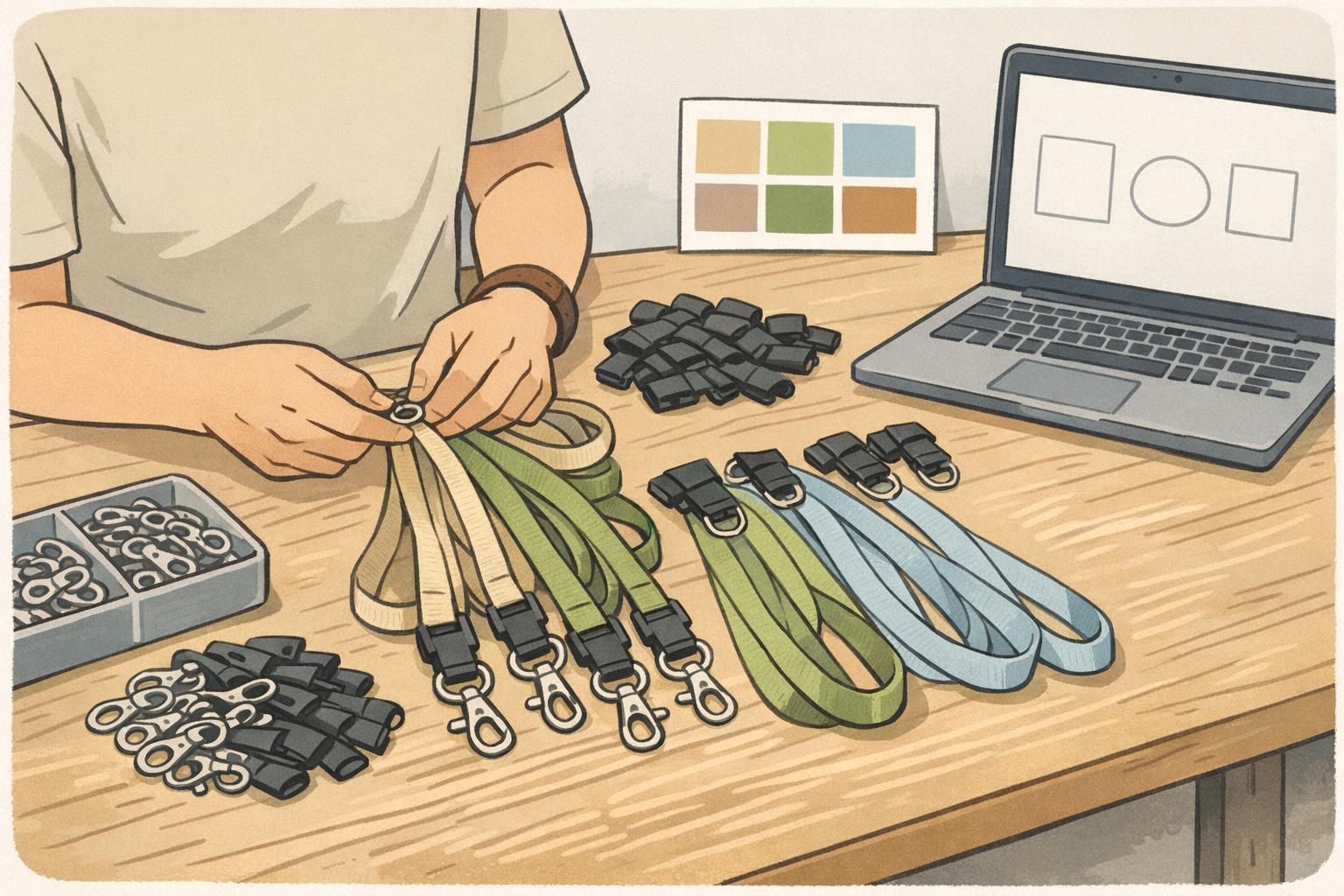
- Recycled polyester (often listed as rPET): A common choice for a clean, consistent look with reliable color and good durability
- Heathered or textured looks: Subtle multi-tone fabric can hide minor wear and keep lanyards looking newer longer
- Darker base colors with tone-on-tone logos: Helps reduce the appearance of scuffs while still looking branded
- Right width for the job: Narrower for lightweight comfort, wider for a premium feel and better logo visibility
- Hardware choices that match your environment: swivel hooks for easy badge orientation, and breakaway safety for workplaces that require it
“The most sustainable lanyard is the one that still looks good after months of wear—because people keep using it instead of replacing it.” – Facilities Coordinator
Sustainable badges that stay rigid, readable, and scannable
Sustainable badges don’t have to look homemade or feel flimsy. In practice, a “more sustainable” badge program usually comes from choosing appropriate substrates, avoiding unnecessary thickness where it doesn’t add value, and designing layouts that reduce mistakes and reprints—while keeping photos, names, and scan targets sharp.
If you rely on QR codes or barcodes for access control, time tracking, attendance, or lead capture, scannability must stay non-negotiable. The biggest waste driver in many programs isn’t the material—it’s reprints caused by misaligned codes, low-contrast layouts, or last-minute edits that slip past proofing.
- Keep scan zones simple: Give QR codes and barcodes enough quiet space around them so scanners don’t struggle
- Use high contrast where it matters: Dark code on light background is often the most reliable
- Standardize templates: Lock logo placement, margins, photo box size, and code location to reduce errors
- Reduce ink coverage strategically: Use clean backgrounds and avoid heavy full-bleed designs if they don’t add clarity
- Protect the badge: A clear holder can prevent scratches and edge wear that can interfere with scanning
Waste drops when your badge layout is standardized and proofed well—because fewer badges end up in the trash due to avoidable errors.
Recycled badge materials: where they help most (and what to ask suppliers)
Recycled badge materials can show up in multiple parts of an ID program: lanyard fabric, badge holders, and some card stocks or inserts. Where they help most is often the highest-volume items—like event lanyards or visitor holders—especially when you pair recycled content with a reuse plan.
When you’re comparing quotes, ask questions that connect sustainability to performance. Recycled content is a meaningful lever, but it needs to come with consistent appearance, predictable durability, and print quality that won’t create rework.
- What is the recycled content percentage (and is it post-consumer, post-industrial, or a blend)?
- How consistent is color from batch to batch, especially for branded colors?
- What durability should we expect (fraying, stretching, clip pull strength, holder cracking)?
- How does the material affect imprint sharpness and long-term readability?
- What lead times should we expect for repeat orders of the same spec?
- Can we pilot a small run to confirm look-and-feel before a full rollout?
A small pilot run is one of the most practical ways to confirm that recycled content still meets your standards for comfort, clarity, and a professional look.
Set up a return-and-reuse flow: collection bins, check-out, and reissue
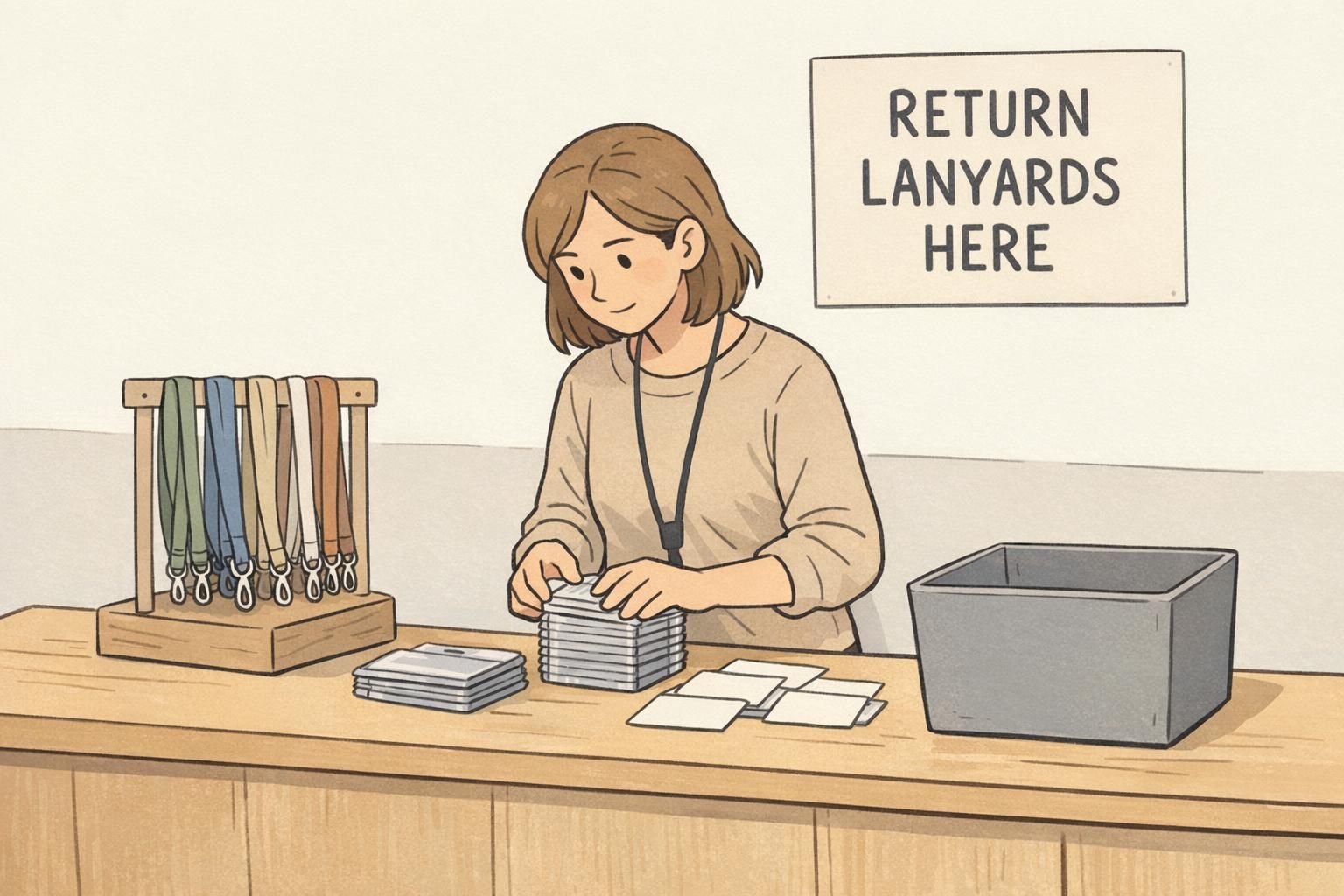
The fastest way to reduce badge-program waste is to make returns effortless. If people have to hunt for where to drop a lanyard, or they’re unsure whether it’s “allowed” to return it, you’ll lose a surprising percentage to desk drawers and hotel rooms. A simple, visible return-and-reuse flow keeps costs and waste down while maintaining a consistent, polished look for the next person.
This is also where behavioral design helps. When you make the sustainable action the easy, recognized action—clear signage, convenient bin placement, and quick staff prompts—participation improves. Research on recognition and incentive systems suggests that “badge-like” feedback can influence engagement in sustainability efforts at a high level; you can use that insight to shape return behaviors without overcomplicating your program (source).
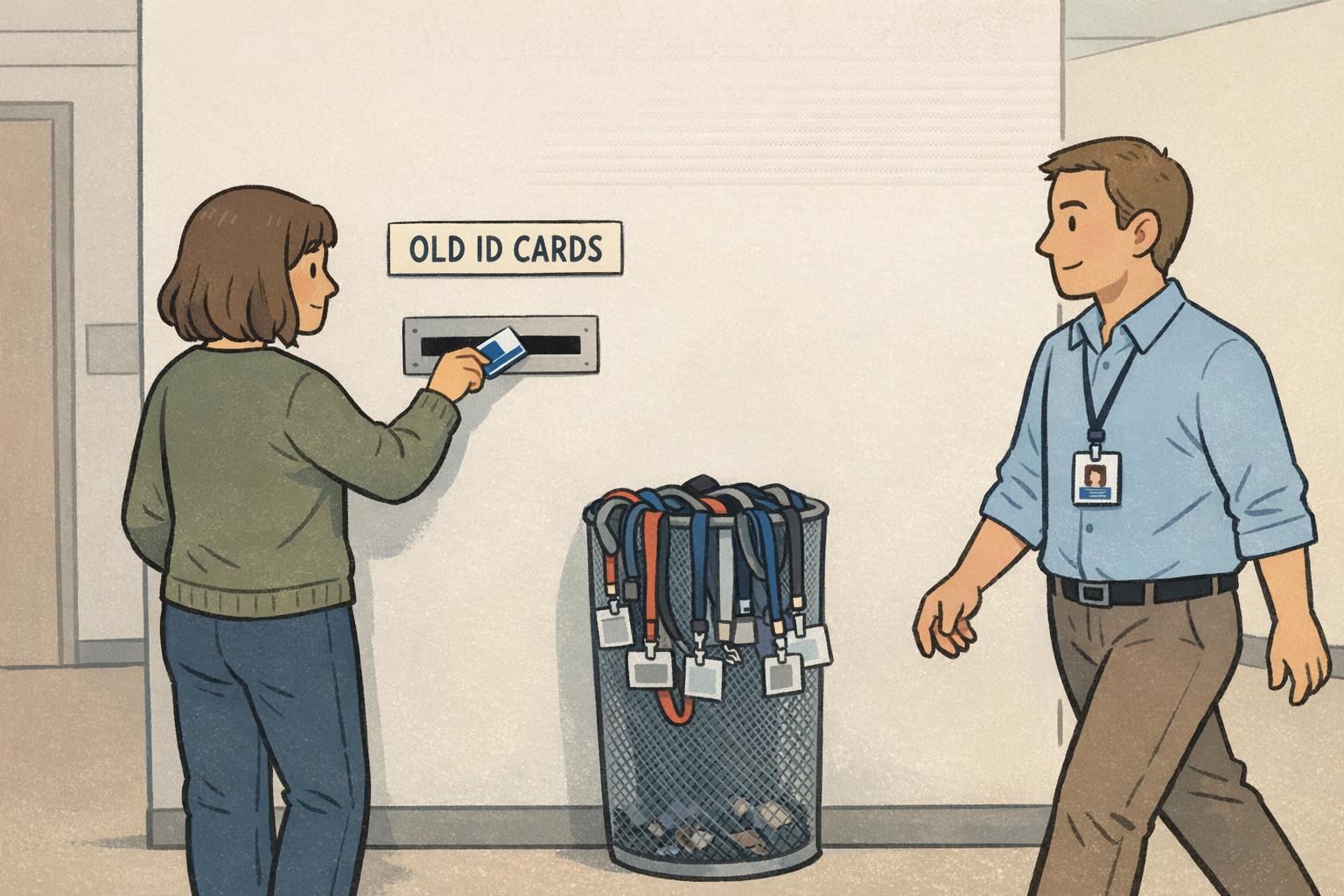
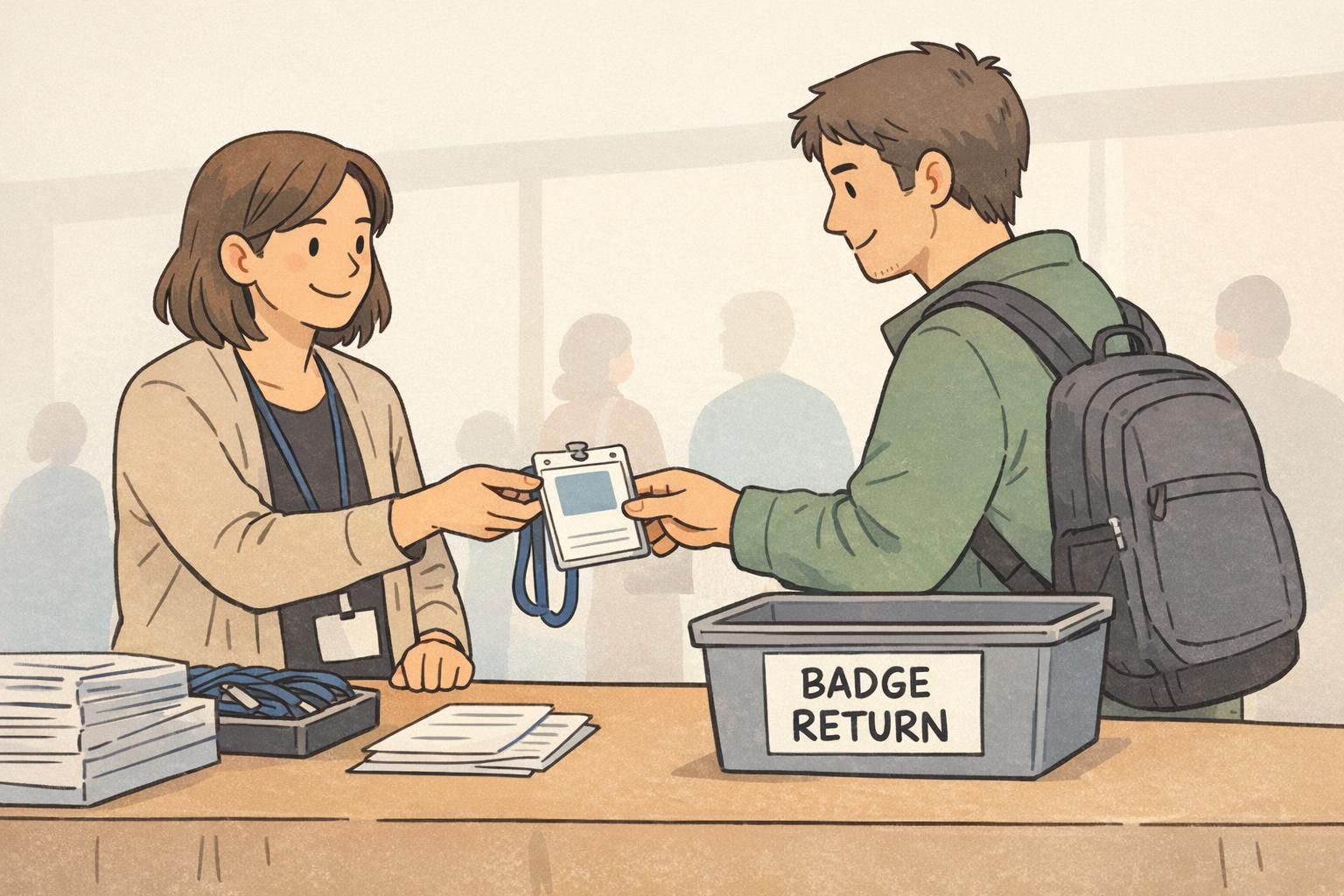
- Place bins where people already exit: near doors, elevators, or check-out stations
- Label clearly: one bin for lanyards and holders; a separate slot or bin for old cards if applicable
- Add a quick script for staff: “Please drop your lanyard in the return bin on your way out—thank you.”
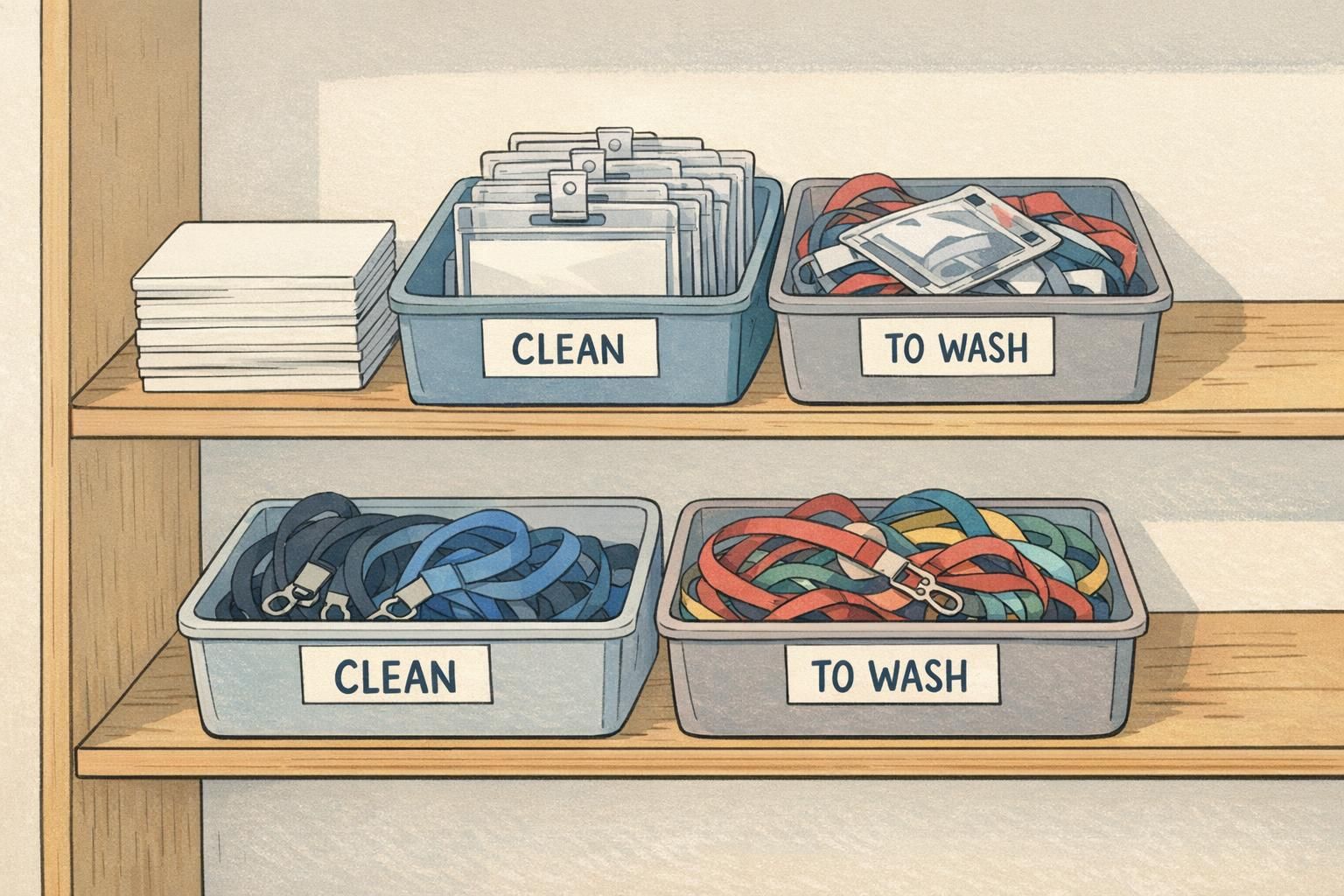
- Sort returns into two paths: “ready to reissue” vs. “needs cleaning/repair”
- Use low-friction return options for remote teams: include a return envelope or a simple mail-back step when equipment is issued
For cleaning, follow what your material and hardware can handle. Many programs do well with gentle soap-and-water cleaning for straps and a quick wipe-down for holders, then air-drying before re-kitting. The key is consistency: a basic, repeatable process keeps reissued items looking intentional—not like leftovers.
Design for less waste: modular systems, standardized sizes, and fewer reprints
A badge program gets greener when it’s designed to change without forcing reorders. Modular systems—like reusable holders with replaceable inserts—let you update names, roles, or event access without throwing away the entire setup. Standard sizes across departments also reduce the odds of buying “one-off” holders that can’t be reused.
Standardization is also what keeps identification looking sharp. When every department improvises its own template, you end up with inconsistent photos, tiny names, off-brand colors, and scanning issues that drive reprints. A few simple rules can cut waste and improve day-to-day clarity at the same time.
- Standardize badge size and orientation (portrait vs. landscape) so holders and lanyards work across teams
- Use role-based design elements that don’t change often (colors, icons) instead of printing long titles that change frequently
- Set brand rules: logo placement, minimum font sizes, photo requirements, and code location
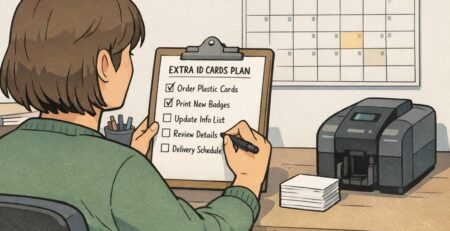
- Create a simple proof workflow: requester submits, one reviewer checks, then print
- Keep a small buffer of blank inserts or pre-approved templates for urgent changes to avoid rushed misprints
If your program is modular and standardized, you’ll replace individual components instead of rebuilding the entire badge kit.
Eco-friendly event badges: multi-day durability and easy sorting after the show
Events create a perfect storm for waste: last-minute registrations, sponsor branding, weather exposure, and constant badge checks. The most practical way to cut event waste is to plan for multi-day durability and fast post-show sorting—so more items can be used again without looking worn-out.
Start by matching the badge setup to real conditions. Outdoor lines, backpacks, food spills, and repeated scanning can destroy unprotected badges quickly. A sturdy badge stock or insert paired with a clear holder helps keep credentials rigid, readable, and presentable through day three (and beyond).
- Use protective holders for multi-day events to reduce creasing, smudging, and tearing
- Choose lanyards that resist fraying so they still look professional on the final day
- Color-code attendee categories (e.g., staff, vendor, attendee) to reduce the need for extra paper inserts
- Plan a sorting station after the show: separate lanyards, holders, and badge inserts
- Design sponsor branding to fit within a consistent template so last-minute swaps don’t trigger full redesigns
If it’s easy to sort and assess condition right after an event, reuse becomes realistic instead of aspirational.
Bring it all together with BadgeZoo: coordinated IDs, holders, and lanyards that reduce waste
A coordinated badge program is easier to reuse, easier to reissue, and easier to keep looking sharp. When lanyards, holders, and badges are specified as a system (instead of purchased ad hoc), you can standardize sizes, reduce replacements, and train staff on one consistent process.
- A lanyard spec you can repeat: consistent width, color, and hardware so replacements match
- Reusable holders: chosen for the badge size you use most often
- Badge/ID layout templates: standardized photo area, name size, and scan zone for reliable readability
- Optional role identifiers: simple add-ons (like color coding) that reduce redesign needs
If you’re exploring recycled options as part of that system, you can review eco friendly lanyards and align them with holders and badge formats that fit how your team actually works. The most important step is documenting your program rules—materials, return steps, and print templates—so sustainability is repeatable across new hires, visitors, and future events.

The sharpest, greenest programs are the ones that run smoothly: standardized templates, durable components, and a return-and-reuse routine people can follow without thinking.