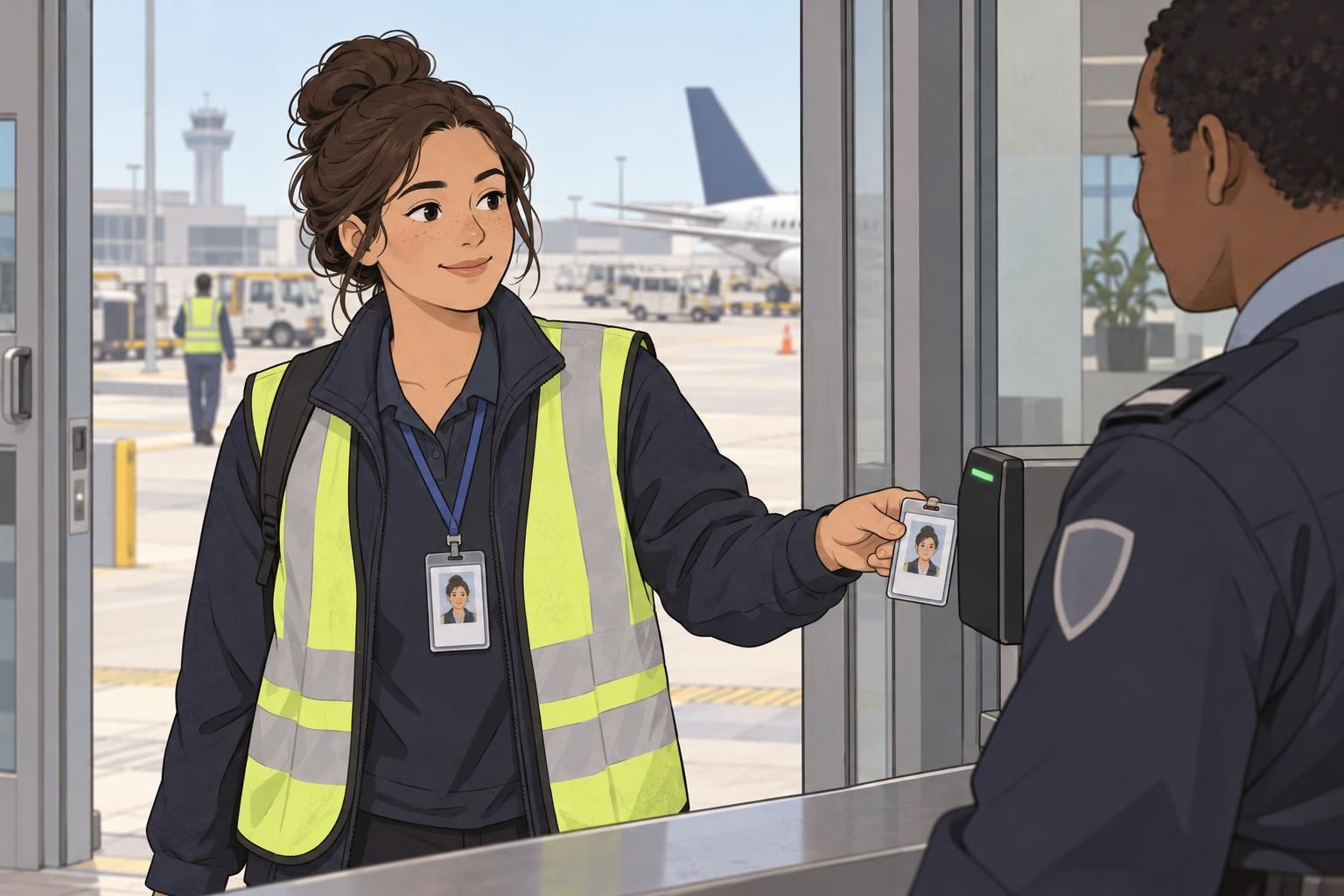
Why Badge Solutions Matter in Large Organizations
Badge solutions for organizations become more than a convenience once a team spans multiple departments, floors, shifts, or locations. When people can quickly identify who’s who—employees, contractors, visitors, and on-site partners—day-to-day work moves faster and feels more organized. Just as importantly, clear identification supports common workplace security practices by helping teams spot the right person in the right place and route questions to the right role.
In enterprise environments, the real challenge is consistency at scale. A badge program that works for one office can become confusing across a campus, a hospital network, or a multi-warehouse operation unless the organization standardizes what information appears on badges, how badges are worn, and how replacements are handled. A scalable approach reduces friction for new hires and visitors and helps frontline teams—like reception, security, and facilities—make confident decisions at a glance.
For large teams, the best badge programs balance clarity (easy to read), durability (built for daily wear), and governance (consistent templates and rules across locations).
Badge Solutions for Organizations: Common Use Cases by Department
Large organizations rarely have a single “badge need.” HR focuses on onboarding and identity accuracy. Security focuses on checkpoints and access validation. IT and help desks need quick verification when issuing equipment or resetting accounts. Facilities teams may need badges that work with safety gear and remain visible around tools and machinery. Front desks and event staff need fast, temporary issuance for visitors and contractors.
Mapping badge solutions for organizations by department helps leaders avoid one-size-fits-all designs that slow people down. Instead, you can standardize the core badge fields (like name and photo) while allowing specific variations—such as a visitor expiration date or a special access indicator for labs, warehouses, or data centers.
- HR onboarding: employee photo IDs, consistent naming conventions, and streamlined replacement workflows
- Security checkpoints: scannable elements (barcode/QR code), strong photo clarity, and visible access cues when appropriate
- IT/service desks: fast visual verification plus an ID number or scannable code for ticketing and device assignment
- Facilities & operations: badges that remain readable when paired with safety PPE; clear rules on placement and wear
- Front desk & visitor management: temporary visitor badges with date/time, destination/host, and role (visitor/vendor/contractor)
A simple “use-case map” (employees, contractors, visitors, and special-access roles) makes it much easier to decide what data is required on each badge type—and what should be kept off the badge for simplicity.
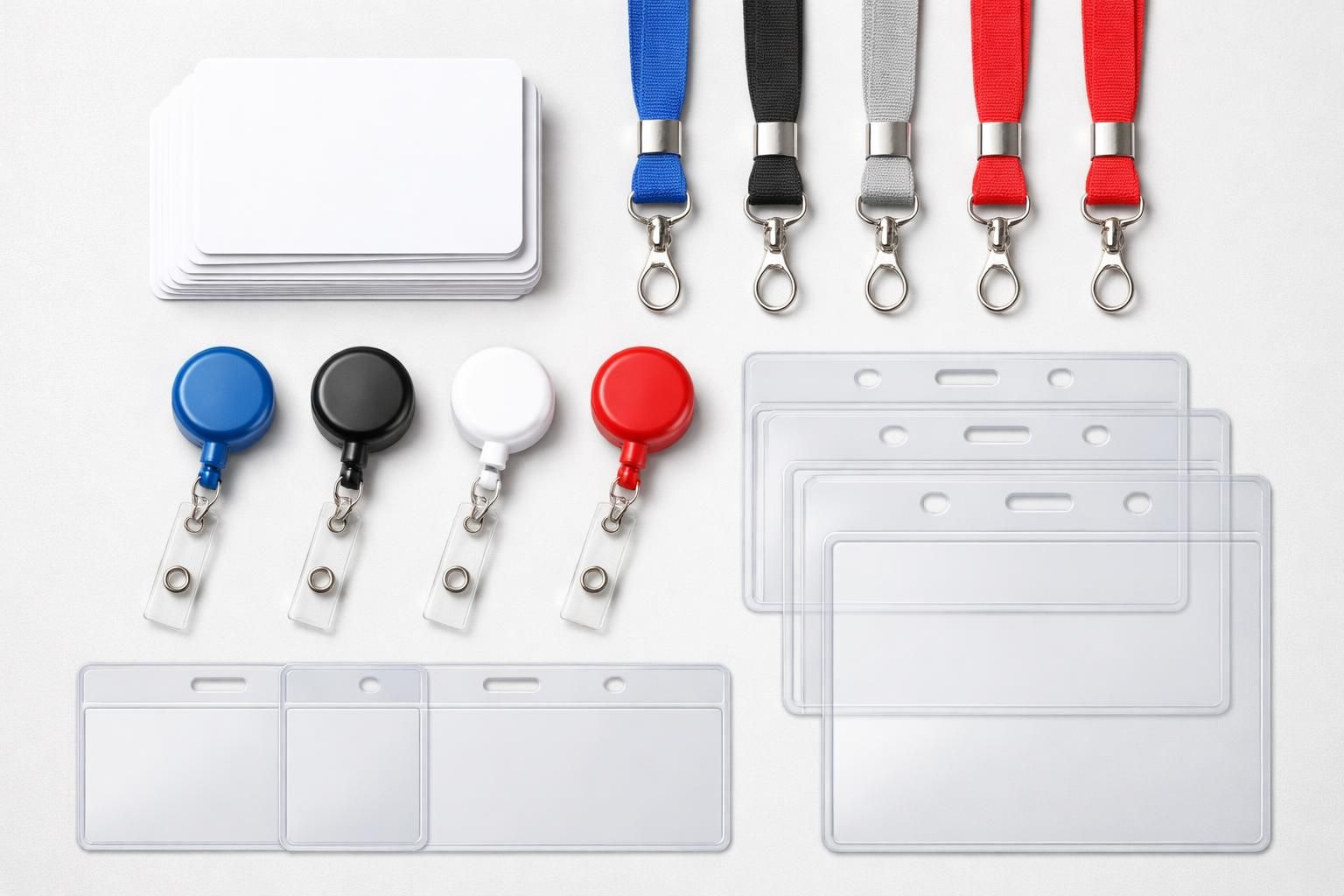
Physical ID Programs at Scale: Materials, Print Methods, and Workflows
When you’re issuing IDs for hundreds or thousands of people, success often comes down to operational details: durability, print consistency, and reprint speed. Many organizations standardize on photo ID cards paired with a scannable element—commonly a barcode or QR code—so the badge supports both visual recognition and fast lookups where needed.
At scale, the most effective programs are built around repeatable workflows. That usually means a central badge template (so every location prints the same layout), defined data fields (so names and departments display consistently), and an approval process (so changes don’t introduce confusion). A predictable replacement path also matters—lost badges happen, and the goal is to restore identification quickly without making the process burdensome.
- Standardize templates: one primary layout with controlled variations for employee, contractor, and visitor badges
- Control data fields: decide what is mandatory (photo, name) vs. optional (title, pronouns, department)
- Plan for reprints: document how replacements are requested, verified, and issued
- Align with branding: consistent logos/colors can help legitimacy, while keeping the badge clean and readable
- Use consistent accessories: a well-matched holder and attachment method improves everyday wear and scanning
"In large facilities, the badge program isn’t just a print job—it’s an operating system. Consistency is what keeps it from turning into guesswork." – Operations Lead
Employee Badges for Teams: Designing for Clarity, Roles, and Safety
Employee badges for teams work best when they prioritize fast recognition. In a busy workplace, people glance at an ID for one to two seconds—so the essentials must be easy to see: a clear photo, a readable name, and just enough role context to reduce misroutes (for example, department or a simple role label).
Design is also where organizations decide how to communicate roles without overloading the badge. Color coding can help in large campuses or multi-shift operations—such as different colors by site, shift, or access level—while still looking professional. Many organizations also make thoughtful choices about whether to include titles, pronouns, languages spoken, or emergency information depending on the environment and job function.
- Make names readable from a respectful distance (larger font, high contrast)
- Use a high-quality headshot style (consistent lighting, face-forward framing)
- Add role cues carefully (department, team, or simple access indicator)
- Include scannable elements only when needed for workflows (check-in, equipment, access validation)
- Set a consistent wearing standard (position and orientation) so badges stay visible and scannable
Good badge design reduces everyday friction: fewer misdirected questions, faster introductions, and smoother collaboration across departments.

Supporting Products That Improve Usability: Badge Holders, Lanyards, and Badge Buddies
In large teams, the badge itself is only part of the system. Consistent accessories improve compliance and usability because they make badges easier to wear, keep visible, and protect from daily damage. Common choices include breakaway lanyards (often preferred for safety), retractable reels (helpful for frequent scanning), and rigid or clear holders (to protect cards and keep layouts readable).
Badge buddies are a practical way to add role or access cues without reprinting the primary ID card. That can be especially useful when responsibilities rotate—charge nurse shifts, floor wardens, incident response roles, visiting clinicians, seasonal staff leads, or temporary project assignments. Instead of changing the main card, teams can insert or swap a buddy behind it while keeping the employee’s core identification consistent.
Organizations that standardize how badges are worn—such as on the torso and front-facing—tend to get better results from both visual recognition and scanning workflows. It also helps visitors and new hires quickly understand the local norm.
- Lanyards: helpful for visibility and everyday wear; consider breakaway options for safety policies
- Badge reels: useful when scanning frequently at doors, time clocks, or shared equipment
- Holders: protect the card and keep it legible; support consistent orientation
- Badge buddies: add clear role labels (e.g., STAFF, VISITOR, VENDOR) or temporary access cues without reissuing the main ID
If you’re exploring buddy-style role indicators, BadgeZoo offers badge buddy inserts for role identification that can help teams keep roles clear while maintaining a consistent base ID format.
Digital Credentials for Enterprise Recognition: Open Badges as a Baseline
Many organizations complement physical IDs with digital credentials—especially for distributed teams and large training programs. Digital credentials can recognize training completion, role readiness, certifications, and skill progression, giving employees a portable way to show what they’ve learned and what they’re approved to do.
A common standards-based approach is Open Badges. Open Badges are portable, verifiable digital credentials with embedded metadata—such as the issuer, criteria, evidence, and dates—so others can validate what the credential represents. For large organizations evaluating options, standards-based credentials can support interoperability and reduce dependence on a single platform over time (source).
In practice, digital credentials and physical IDs can work together. Physical IDs support on-site recognition and local processes. Digital credentials support enterprise recognition across departments and locations, helping managers understand who is trained for which tasks and making internal mobility easier to manage.
Digital credentials work best when they are tied to clear criteria and governance—so employees and managers can trust what each badge or credential actually signals.
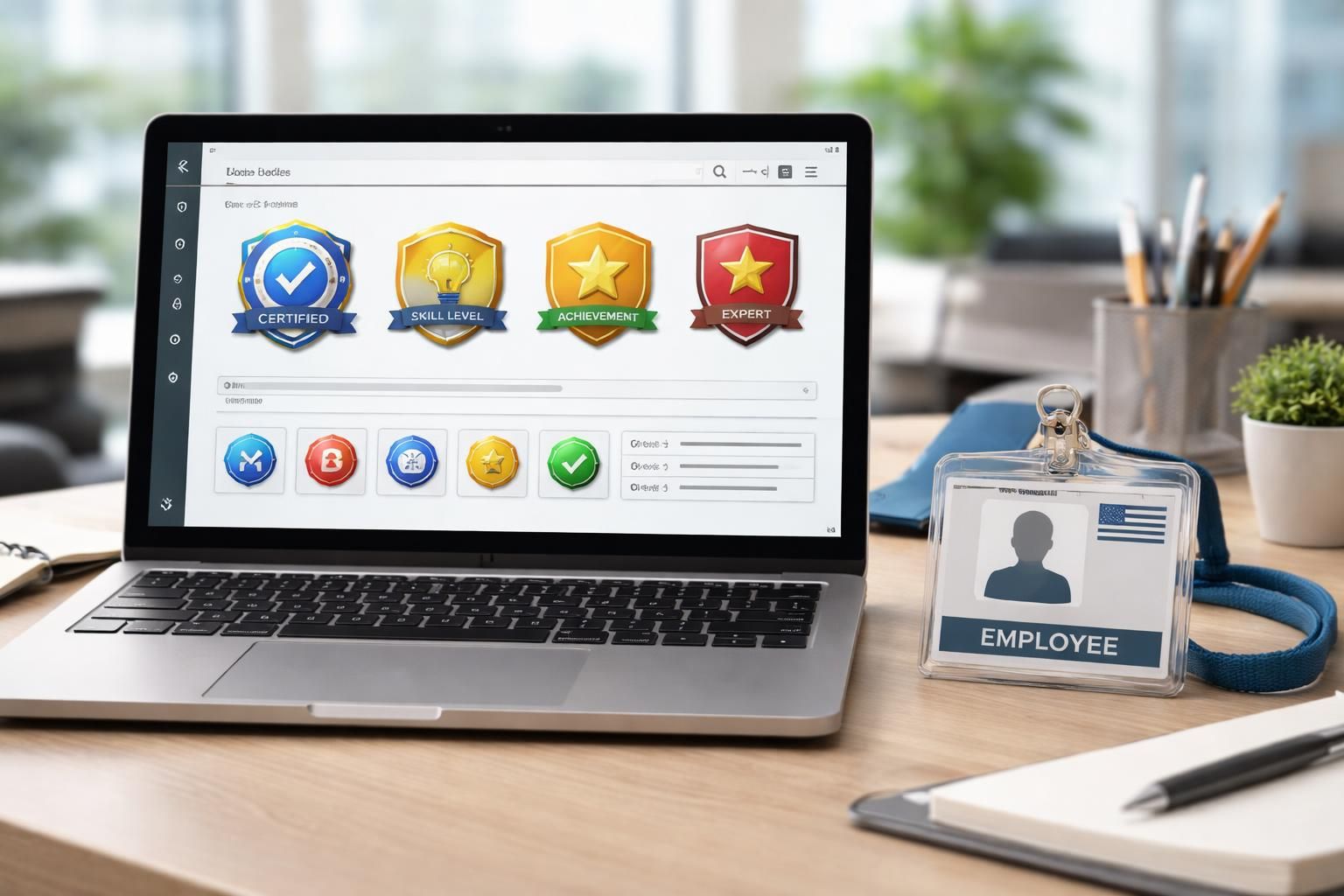
Advanced Options: Blockchain Verification and Analytics-Enhanced Badge Systems
Some organizations explore advanced verification methods when credentials must be validated over a long period, shared across external partners, or protected against tampering. In these situations, tamper-evident approaches—including blockchain-backed verification—may be evaluated as part of a broader credential strategy.
Others connect badge issuance and credentialing to analytics dashboards to understand adoption and outcomes—such as training pathway completion, skill coverage across teams, or program participation. This can be helpful where HR, learning and development, compliance, and reporting needs overlap.
These options tend to be most valuable when paired with strong governance. That includes clear privacy controls, careful decisions about what data is stored (and where), and an integration plan with systems employees already use.
- Use blockchain-style verification when long-term, third-party validation is a priority
- Use analytics when you need visibility into adoption, completion rates, and coverage across locations
- Prioritize privacy and data minimization: store and display only what is needed for the use case
- Plan integrations early (identity management, HR systems, learning platforms) to avoid manual rework

Selecting Organizational ID Badges: A Practical Checklist for Scale
Choosing organizational ID badges for a large team is often less about the badge itself and more about the system around it. Leaders typically get the best long-term results when they evaluate scalability, integration, verification, and governance together—so the program remains consistent as the organization grows or reorganizes.
- Scalability: can you issue high volumes and handle frequent reprints without delays?
- Consistency: are templates and data fields standardized across regions and business units?
- Integration: can the badge program align with SSO, HRIS/LMS syncing, or directory services where applicable?
- Verification: do you have secure printing practices and a way to confirm identity during issuance and replacement?
- Visitor and contractor handling: are temporary badge rules clear, including expiration and sponsor/host information?
- Employee experience: is it simple to get a badge, replace it, and understand how it should be worn?
A scalable program is one people can follow without special instruction: clear templates, predictable exceptions, and an easy path for replacements.
Implementation Roadmap: From Pilot to Enterprise Rollout
Rolling out badge solutions for organizations works best as a staged program rather than a single-day switch. A thoughtful implementation helps you validate assumptions, refine templates, and set expectations before you scale across every location.
- Define objectives: clarify whether the priority is security identification, visitor flow, training recognition, role readiness, or a combination
- Pilot with a representative group: choose a subset of teams and locations that reflect real-world complexity (shifts, visitors, and multiple departments)
- Standardize templates and fields: lock in the required elements and define controlled variations
- Set issuance and reprint service levels: document turnaround expectations and verification steps for replacements
- Train the “badge touchpoints”: front desk, security, HR, and managers should know the standards and exceptions
- Scale with governance: assign ownership for template changes, role labels, and periodic reviews
- Review and improve: revisit the program on a schedule to account for growth, reorgs, and policy updates
"The strongest badge programs are the ones people don’t have to think about—everyone knows what the badge means, where it’s worn, and what to do when something changes." – Workplace Security Coordinator