
Why badge sharing feels harmless (and why it isn’t)
Badge sharing usually starts with good intentions: someone forgot their ID, a line is building, a teammate is juggling bags, or a contractor is standing there while everyone waits. In that moment, lending a badge can feel like a simple courtesy—“just this once.”
But badge sharing changes what your identification system is for. A badge isn’t just a piece of plastic; it’s a credential that connects a person to permissions, spaces, and an access record. When a badge is loaned, the organization loses the ability to confidently answer a basic question: who actually entered?
This is why badge sharing risks are often bigger than they appear. Even a single exception can let someone bypass identity verification, create confusion in logs, and set a tone that access rules are flexible—especially when the workplace is busy.
A functional access program depends on consistency. If the badge is the “proof,” then the system only works when the person holding it is the person it was issued to.
If you’re reviewing your program, one low-friction improvement is making credentials easy to verify at a glance. For example, readable photos and clear layouts help coworkers and supervisors quickly confirm identity during daily movement—one reason many organizations choose custom photo ID cards for staff credentials.
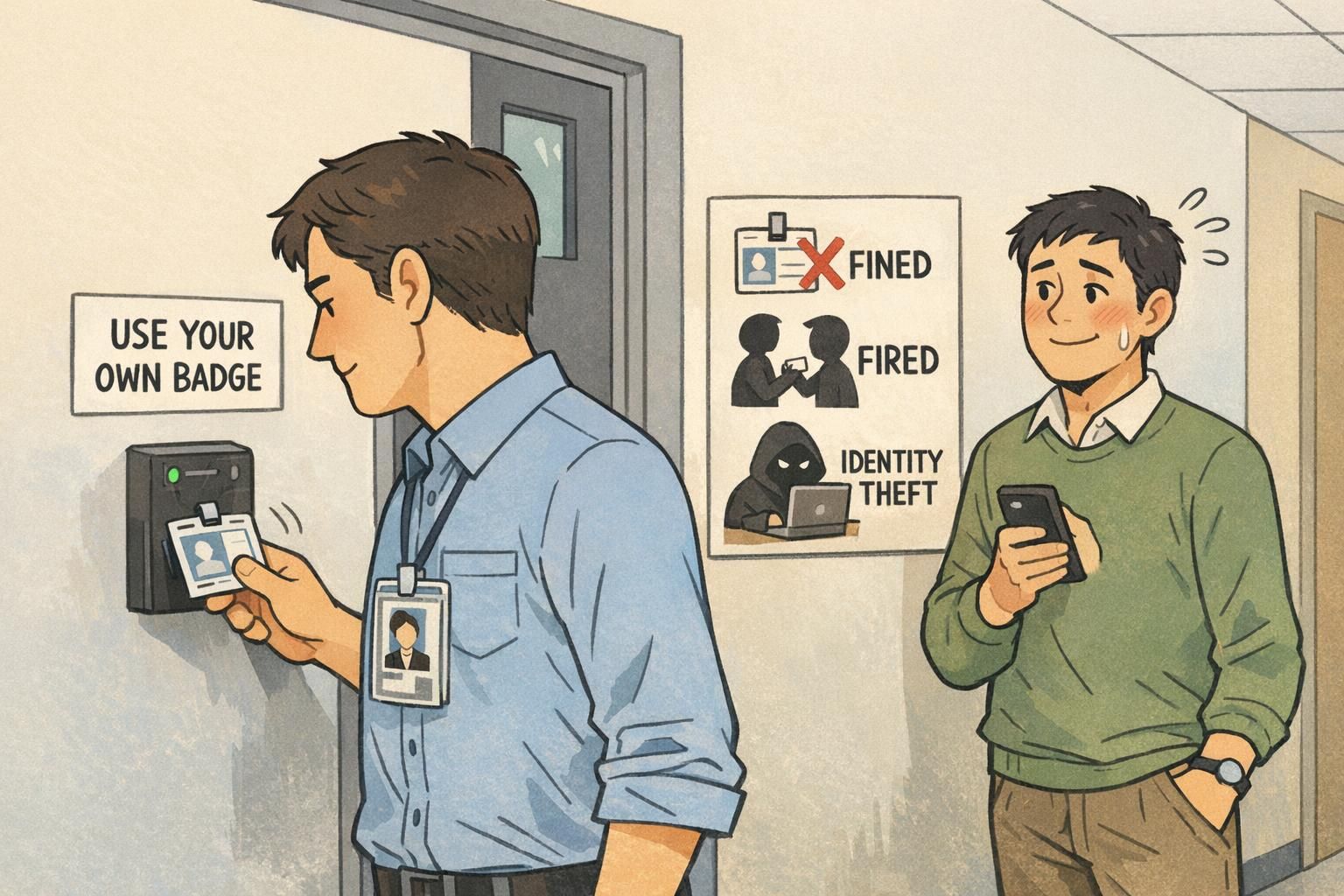
Badge sharing risks: what actually breaks when a badge is loaned
When someone uses another person’s badge, the system records the wrong identity. That’s not a technical glitch—it’s the predictable result of mixing up “credential” and “person.” The access reader sees a valid badge, but the real-world person holding it is different.
Once that happens, several practical safeguards weaken at the same time:
- Access logs become misleading. A door event looks legitimate because it matches a real employee’s credential—even if the employee wasn’t there.
- Investigations slow down. When something goes missing or a door is found propped open, the log may point to the wrong person, wasting time and creating unnecessary tension.
- Restricted areas become easier to reach. Storage rooms, inventory cages, customer data areas, and safety-sensitive zones depend on credential-to-person matching.
- People start “tailoring” rules in the moment. If lending is accepted once, others assume it’s acceptable under pressure, too.
It also creates a human problem: the person who loaned the badge may feel responsible for what happens next, even if they were only trying to help. Strong access practices protect both the organization and employees from being put in that position.
“We didn’t have a ‘bad actor’ problem—we had a ‘bad data’ problem. Once we realized our logs weren’t reliably tied to individuals, everything got harder.” – Facilities Coordinator
Access control risks and audit gaps: the accountability problem
Most access systems are built around a simple model: one person, one credential, one set of permissions. That model is what makes a log meaningful. If a door event is tied to a credential that is reliably tied to one person, the organization can respond quickly and fairly when questions come up.
Badge sharing breaks that link. It creates audit gaps—places where the system appears to provide traceability, but the traceability is only as accurate as the behavior behind it. Over time, these access control risks show up in everyday operations: more time spent untangling “who was actually there,” more uncertainty during incident response, and more difficulty separating mistakes from misconduct.
Research on access and threat-sharing practices reinforces the broader point that even small lapses can enable wider security issues and reduce traceability in practice, particularly when systems rely on consistent logging and trustworthy identity linkage (source).
Accountability isn’t about suspicion. It’s about being able to reconstruct events quickly and accurately when something goes wrong—or when you simply need clarity.
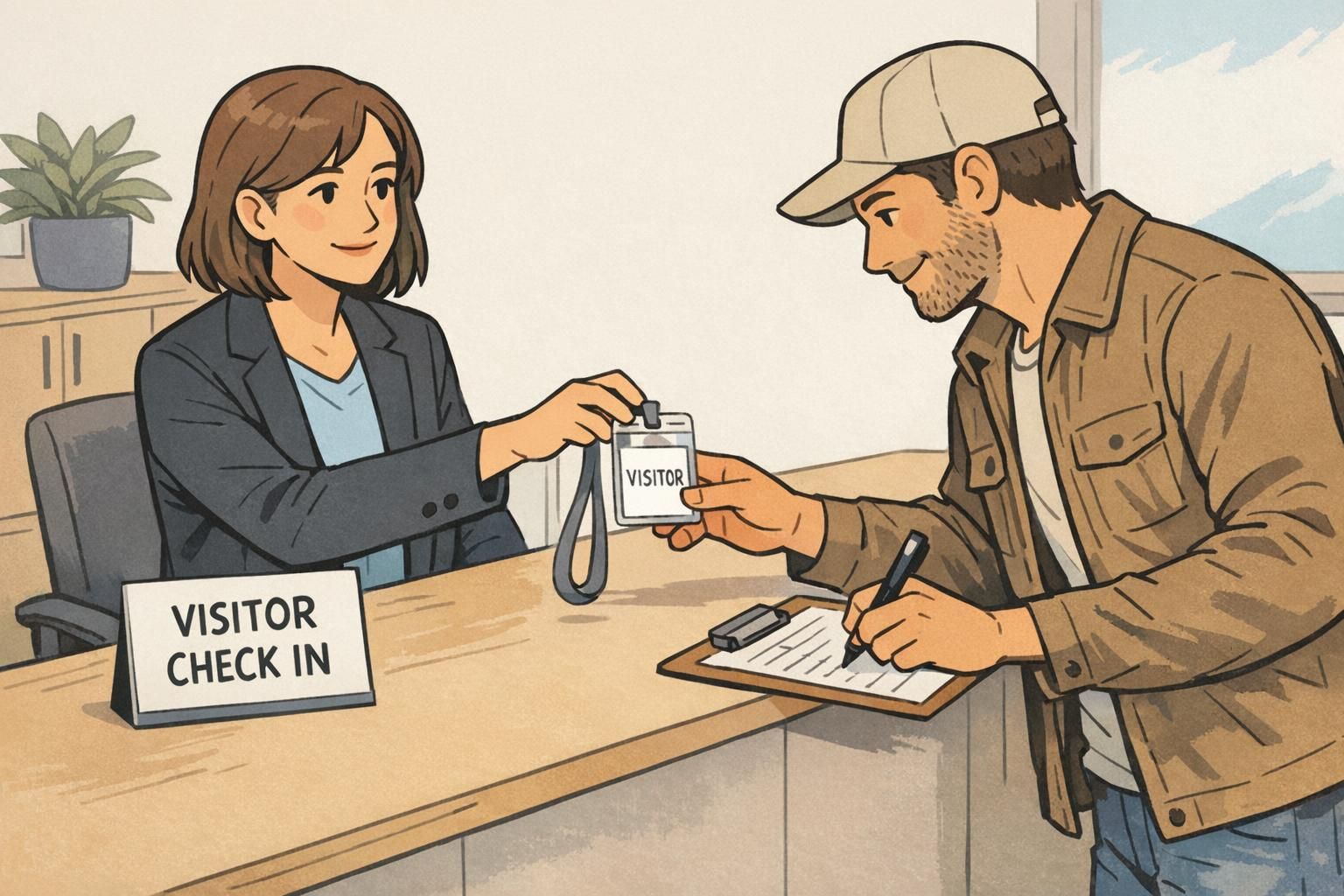
Why “just this once” turns into a pattern
Most workplaces don’t slide into inconsistent access practices because people are careless. They slide because small exceptions feel efficient—and the immediate benefit is visible, while the downside is delayed and harder to see.
The first time someone lends a badge, it sends a quiet message: the rule can be negotiated. The next time, it feels less awkward. Soon, employees begin solving access problems with favors instead of process—especially during busy shifts, event check-ins, and after-hours situations where fewer people are available to help.
This is why the first incident matters. Addressing it calmly isn’t about punishing someone for trying to be helpful. It’s about keeping access rules consistent and fair so everyone knows what to do when the same situation happens tomorrow.
- Exceptions become the “real” rule when the compliant option is slower or unclear.
- Inconsistent enforcement feels unfair, which reduces buy-in and increases repeat behavior.
- Once normalized, badge sharing is difficult to stop without frustration—so it’s better to correct early, kindly, and consistently.
“When we made it easy to get a temporary badge, the ‘Can I borrow yours?’ requests almost disappeared.” – HR Manager
Real-world situations where sharing happens (and better alternatives)
Badge sharing is rarely random. It shows up in predictable moments—usually when someone feels stuck and the fastest path seems to be borrowing a credential. The good news is that these moments can be planned for.
- New hire is waiting on a credential: Use a temporary employee badge with limited access until the permanent one is issued.
- Vendor arrives early: Route them through sign-in and issue a time-limited visitor badge rather than letting them “follow someone in.”
- Staff member steps out “for a minute”: Keep badges on the person. If someone forgets, use a supervisor-verified entry process that preserves accurate logging.
- Teammate left their badge at home: Use a fast replacement procedure or a temporary badge that expires at end of shift.
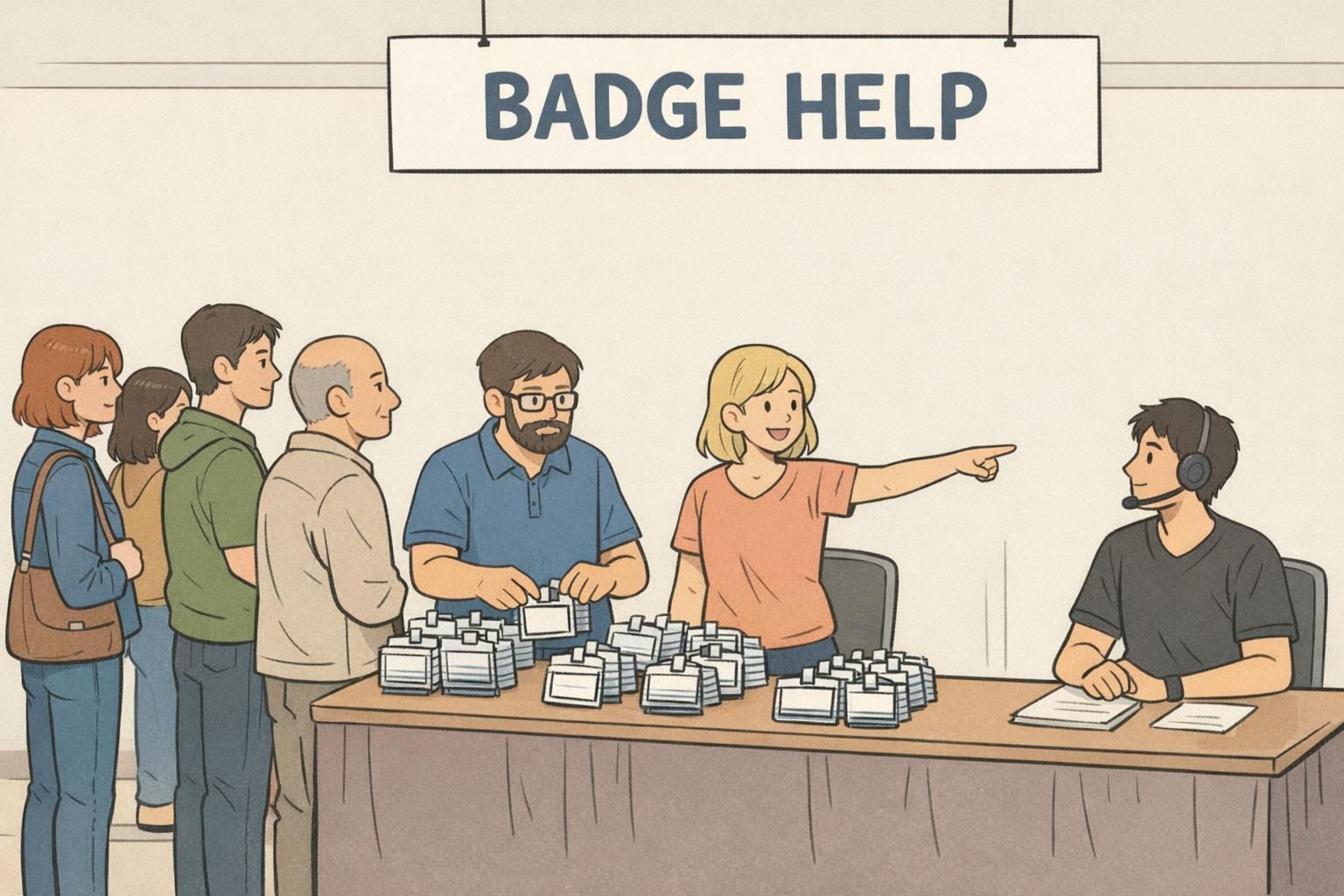
- Event check-in is backed up: Add a staffed help lane for exceptions so attendees don’t borrow badges or swap credentials.
A helpful way to evaluate alternatives is to ask: does this option keep operations moving while still connecting access to the right identity? If yes, you’re improving both security and workflow at the same time.
How managers can reinforce rules without creating friction
Many managers avoid addressing badge sharing because they don’t want to sound harsh—or because the person meant well. But the smoothest enforcement usually sounds like calm coaching: clear, consistent, and focused on what to do next.
A simple, friendly script helps remove emotion from the moment:
- “I can’t let you borrow mine, but I can help you get a temporary badge.”
- “We need the log to reflect who’s actually entering—let’s get you checked in.”
- “No worries—this happens. Let’s follow the process so you’re covered.”
The key is to make the compliant path the easiest path. If people have to hunt down a supervisor, wait too long, or feel embarrassed, they’ll look for shortcuts. If the process is quick and respectful, it becomes the norm.
Reinforcement works best when it’s also positive. Publicly thanking someone for reporting a missing badge quickly, or recognizing a team for consistent compliance, builds ID security culture without shame or blame.
What if the person is well-known and everyone recognizes them?
Recognition helps, but it doesn’t replace traceability. The point of the badge is consistent identity verification and accurate logs, especially in mixed teams, rotating shifts, or busy moments.
Is it okay to let someone “tailgate” if they work here?
It’s still a form of bypassing verification. A better approach is to have each person use their own credential so the system reflects who entered and when.
How do we correct behavior without making people defensive?
Focus on the process and the “why” (safety, clarity, fairness). Offer a clear next step—temporary badge, sign-in, supervisor verification—so the person doesn’t feel stuck.
Design and policy choices that make the right behavior easier
People are more likely to follow access rules when identification is easy to see, easy to check, and easy to replace when something goes wrong. Small design and policy choices reduce the pressure that often leads to sharing.
- Readable photo and name: Helps quick, respectful verification without awkward questioning.
- Role-based color coding or badge buddies: Supports fast visual confirmation of access level or department (especially useful in larger workplaces).
- Clear badge placement expectations: For example, worn on the outermost layer so it’s visible at entry points.
- Event readiness: Pre-printed event badges and a well-staffed check-in reduce last-minute exceptions.
- Layered verification for high-risk areas: For restricted rooms, pairing physical credentials with a second check (like a supervisor confirmation) can reduce access control risks without bogging down everyday movement.
The best programs don’t rely on perfect memory or constant policing. They use clear design and simple routines so doing the right thing feels automatic.
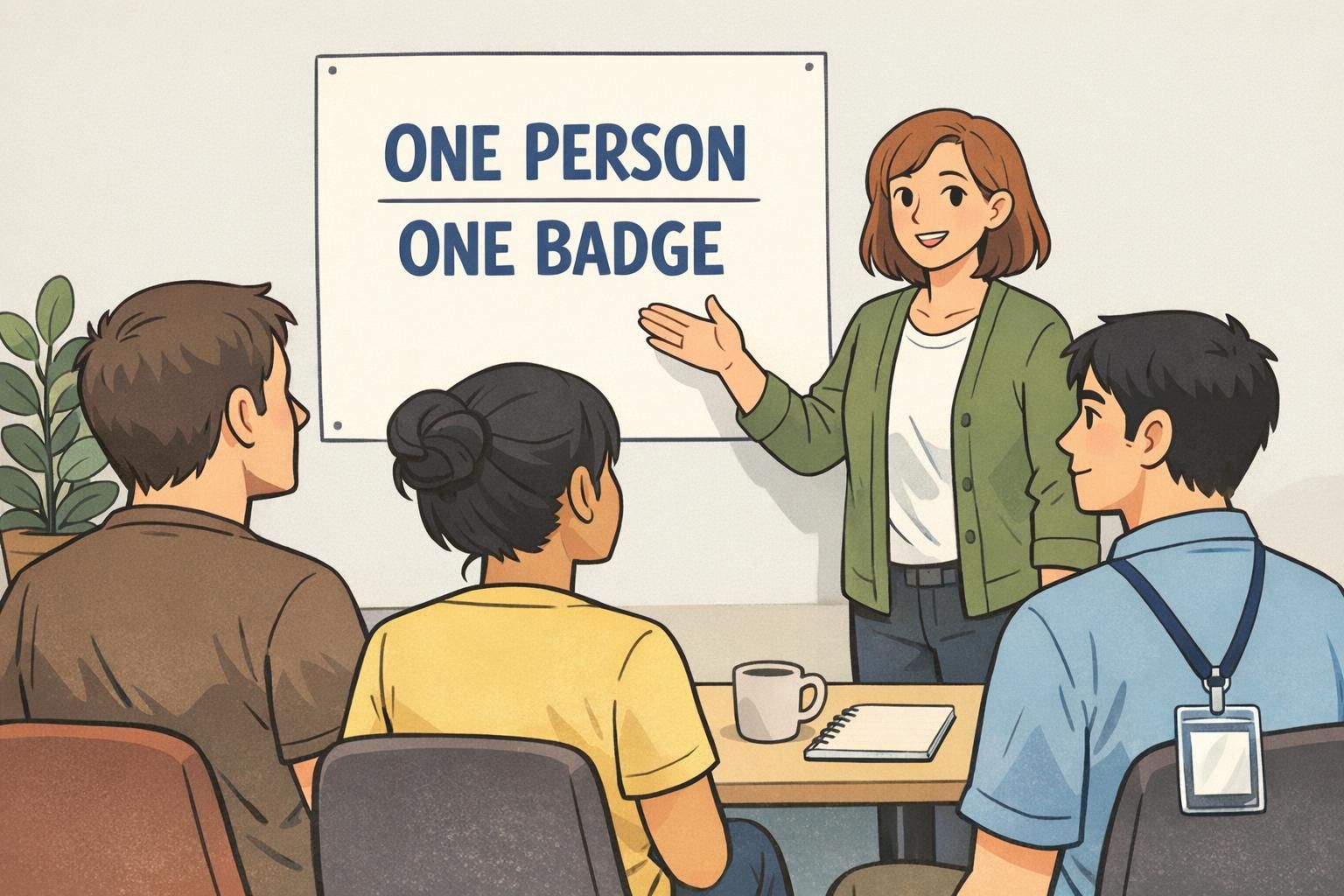
What to do when badge sharing happens: a simple response plan
Even with good systems, badge sharing can still happen—especially during stressful or time-sensitive moments. A consistent response plan helps you correct the behavior, protect the integrity of the logs, and keep the interaction respectful.
- Confirm identities immediately: Separate the “who is here” question from the “what rule was broken” question.
- Document what happened: Keep it factual—who used which credential, where, and when—so the access record can be interpreted correctly later.
- Reset expectations in the moment: A quick reminder (“We can’t loan badges—let’s get you a temp”) prevents repeat behavior.
- Decide whether to deactivate and reissue: If there’s uncertainty about where the credential went or who may have used it, reissuing can restore trust in the system.
- Close the loop: Update training, signage, or the temporary badge process so the next person has an easy, compliant path.
A supportive response protects people and the organization: it restores accurate accountability while reinforcing that the goal is safety and clarity—not embarrassment.