What a Badge Buddy Is (and How It Differs From an ID Badge)
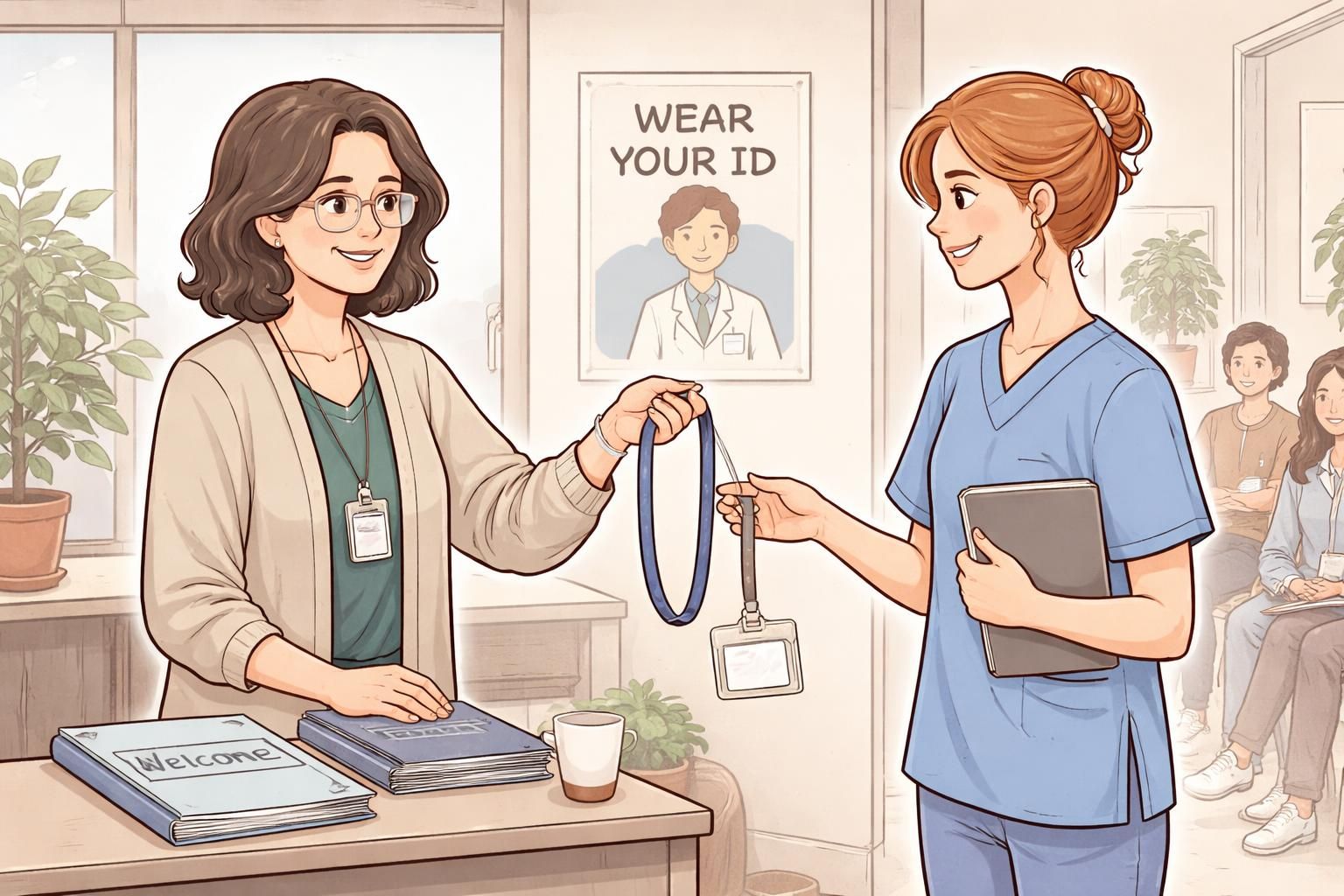
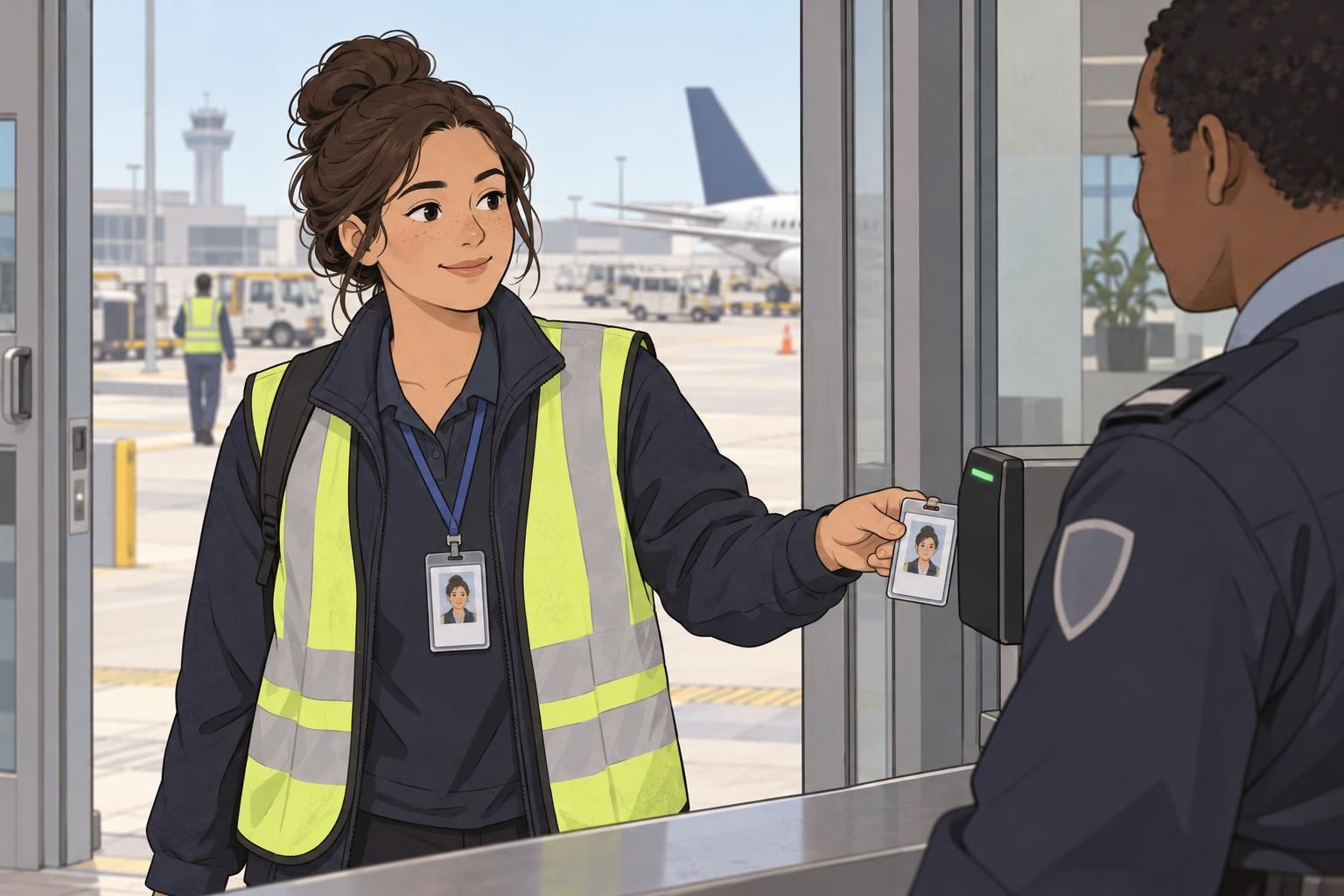
A badge buddy is a rigid, badge-sized card that sits behind (or alongside) a standard photo ID badge to make a person’s role easier to recognize at a glance. In healthcare, where teams are large and work moves quickly, that extra visibility can help patients, visitors, and coworkers immediately understand who someone is in the care process.
It’s helpful to separate a few common identification items that often get grouped together:
- ID badge (photo ID card): The primary identification card issued by a facility. It typically supports identity verification and, in many organizations, access control. It may include a name, photo, and other required details, but it’s not always readable from several feet away.
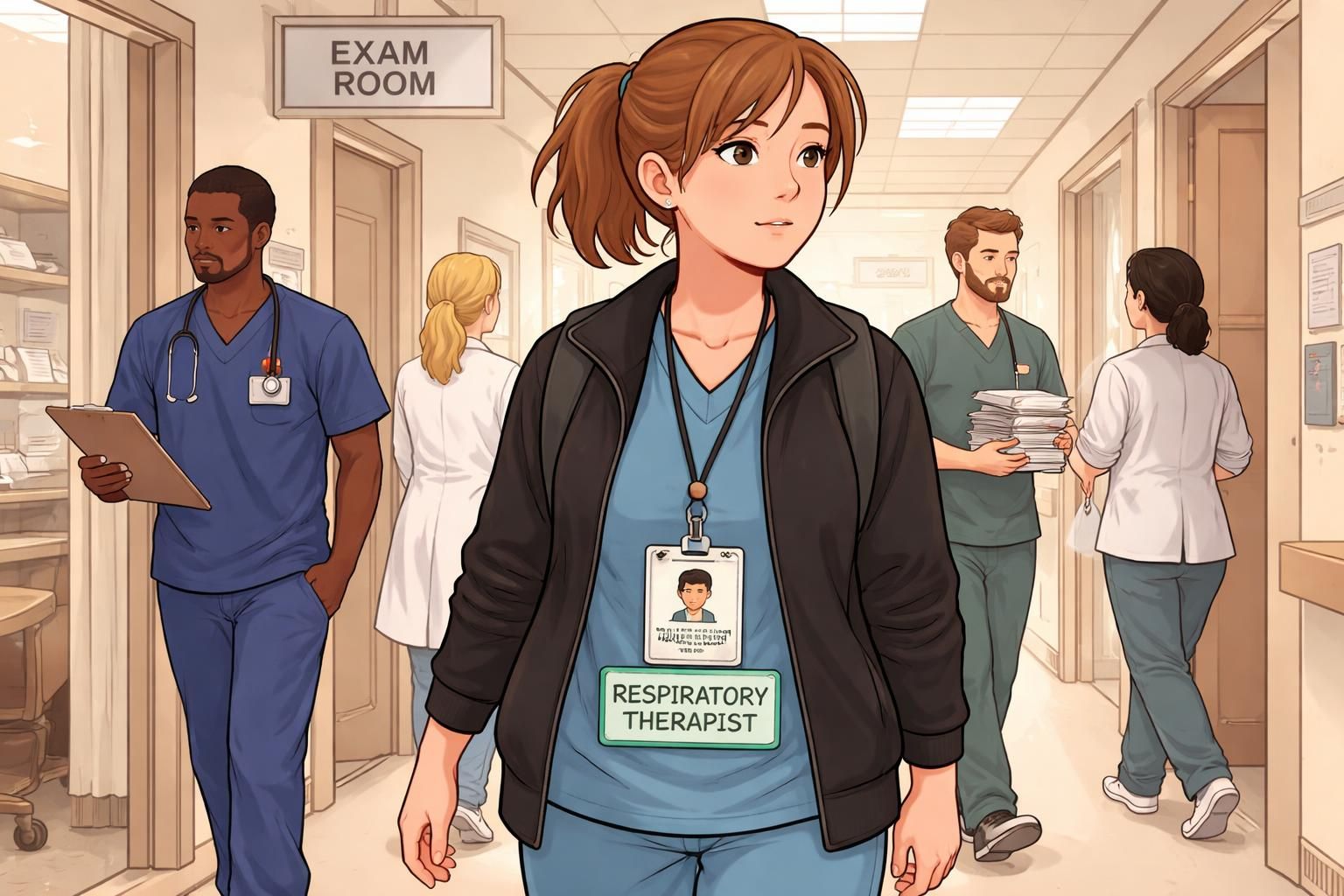
- Badge buddy: A role-visibility card designed for quick recognition (for example, “REGISTERED NURSE” or “RESPIRATORY THERAPIST”). It’s meant to be seen quickly, often using large type and strong contrast.
- Name tag: Usually worn on clothing and typically emphasizes a person’s name (and sometimes pronouns or department). Name tags can be great for friendly introductions, but they may be less standardized across units and roles than an ID badge system.
- Other accessories: Items like clips, retractable reels, lanyards, badge holders, and badge covers help keep ID visible, secure, and easy to present when needed.
Policies vary by facility, unit, and role. Some organizations specify exactly what can be displayed on or behind an ID badge, while others allow role cards, reference cards, or color-coding. The most effective systems are consistent, readable, and aligned with local requirements.
Helping Patients and Families Understand Who’s Who
Hospitals and clinics are full of specialized roles, and to patients and families—especially during stressful visits—those distinctions can be hard to track. In a busy unit, people may meet multiple clinicians within a short time: nurses, nursing assistants, residents, attending physicians, pharmacists, respiratory therapists, students, and more. Even when staff introduce themselves clearly, it’s common for patients to forget titles, confuse training levels, or assume every person in scrubs is “the nurse” or “the doctor.”
Badge buddies help because they give patients a clear, repeatable cue. When a role label is visible at chest level, patients can quickly connect the face they see with the role they need—whether that’s asking a medication question, requesting help with breathing treatments, or getting an update on the plan of care. That small reduction in uncertainty can support comfort and trust, particularly for families trying to understand who is overseeing decisions.
Research also suggests that patients value knowing clinician roles and training levels but often have limited understanding, and that more prominent role identification can help make credentials and roles easier to notice (source).
"When you’re scared and there are a lot of people in the room, you don’t always remember names. A big, clear role label helps you know who to ask—and it helps you feel more oriented." – Patient family member

Reducing Role Misidentification and Supporting Professional Respect
Role misidentification happens in many directions in healthcare. Patients may assume a clinician is in a different role than they are. Staff may mistake a float nurse for a resident, a student for a staff clinician, or a tech for a nurse—especially when teams are moving fast and uniforms look similar. These mix-ups are usually unintentional, but they can create friction, delays, and a feeling of being unseen.
Clear, standardized role labeling supports respectful day-to-day interactions by helping people address each other appropriately. It also reduces the need for repeated clarifying conversations (“Are you the nurse?” “Are you covering this patient?”) so professional communication can start on the right footing.
- Supports accurate introductions when names are hard to hear or remember
- Helps staff and trainees feel recognized for their responsibilities and scope
- Creates a more consistent experience across units and shifts
- Reduces awkward or repeated clarifications during clinical conversations
Respect and clarity go together. When roles are easy to identify, teamwork often feels smoother—especially in large facilities where not everyone knows each other.
Faster Team Communication in High-Tempo Clinical Work
In high-tempo environments, quick visual cues matter. When an urgent question comes up, the fastest path is often: identify the right person, confirm their role, and communicate clearly. Badge buddies support that first step—role recognition—so requests and escalations can move with fewer pauses.
This is especially helpful when staff don’t know each other well: float pool coverage, travelers, cross-coverage teams, nights and weekends, or rotating residents. Instead of relying on memory or introductions that may be missed in a noisy hallway, a large role label acts like a quick “routing signal” for the team.
- Handoffs: Easier to spot who is the assigned nurse, charge nurse, or provider for a patient area
- Escalation: Faster recognition of the right clinician to contact when a situation changes
- Interdisciplinary requests: Helps staff quickly find respiratory therapy, pharmacy, or imaging support
- Floating coverage: Reduces confusion when faces are unfamiliar but roles must be clear
Badge Buddies as “Micro–Reference Cards” at the Bedside
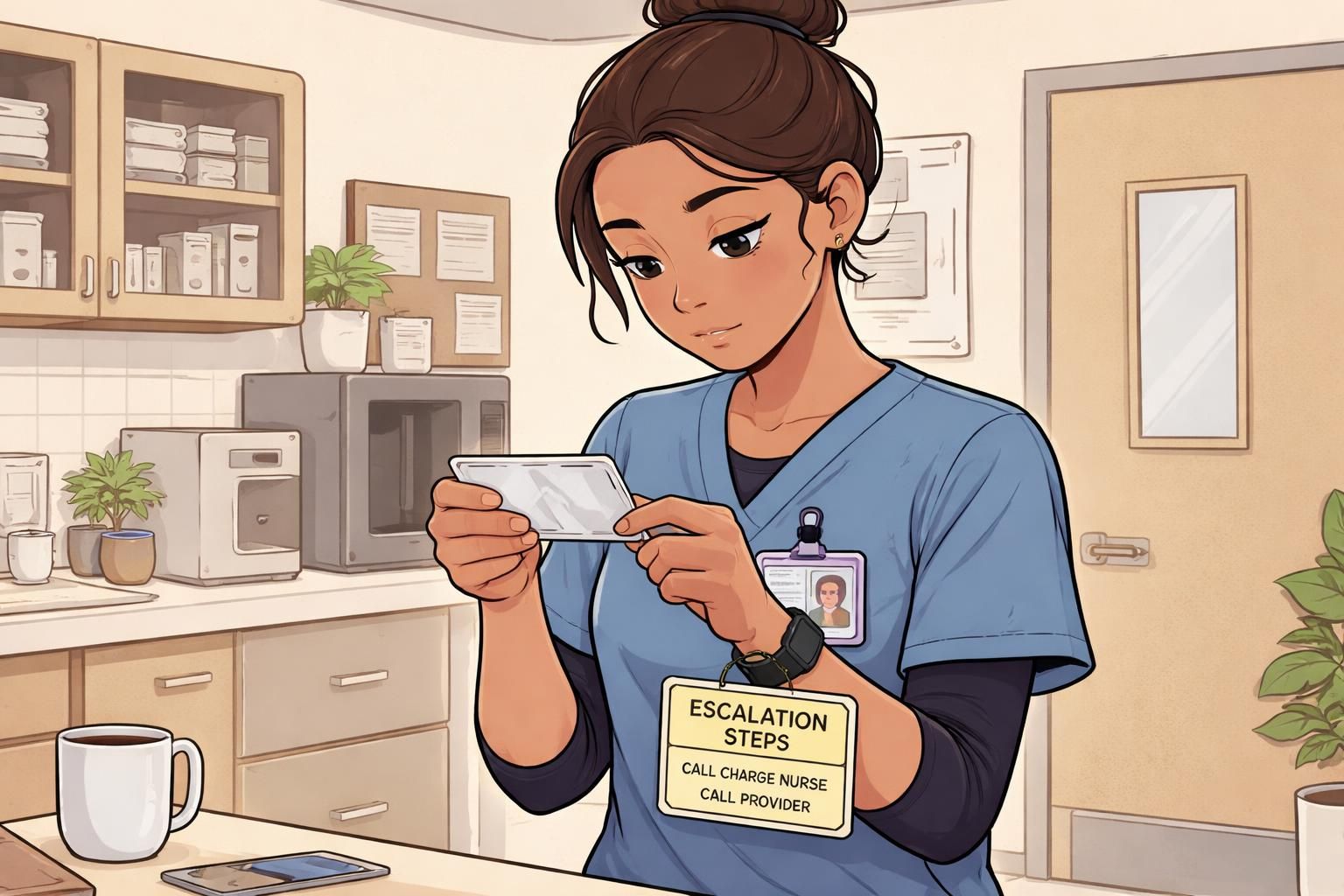
Badge buddies aren’t only used for role labels. Many clinicians also carry laminated, badge-sized “micro–reference cards” that travel with them throughout the shift. These cards can provide quick reminders without pulling out a phone or searching a workstation—useful when time is tight and attention is split across tasks.
Because units often have their own workflows and priorities, reference cards are frequently tailored to the clinical environment. The goal isn’t to replace formal policies or training—it’s to support consistent practice under pressure and reduce cognitive load for new staff, float staff, or anyone returning after time off.
- Scoring tools and thresholds (unit-approved quick reminders)
- Key phone numbers or extensions for rapid coordination
- Escalation steps or who-to-call reminders
- Documentation checklists or handoff prompts
- Common dosing or compatibility reminders when permitted by policy
- Unit-specific isolation or transport reminders (as allowed)
If reference cards are used, organizations should review content for accuracy, currency, and alignment with local policies—especially for clinical decision support and privacy considerations.
Visibility During PPE Use and in Stressful Environments
Personal protective equipment (PPE) helps keep patients and staff safe, but it can also make it harder to recognize people. Masks and face shields cover facial cues, and gowns can obscure uniforms and pockets where name tags might sit. In isolation rooms, emergency situations, and noisy hallways, introductions can be missed—yet patients still want to know who is helping them.
More prominent identification—whether that’s a clearly displayed ID badge, a high-visibility badge buddy, or consistent placement—can help restore rapport. When patients can easily identify a nurse, provider, or therapist, they’re often more comfortable asking questions, repeating concerns, or following instructions. For teams, fast recognition can reduce seconds lost to uncertainty, particularly in high-acuity areas like the ED and ICU.

Design Best Practices: Readability, Color, and Durability
A badge buddy only works if people can read it quickly. Good design prioritizes clarity over decoration. In healthcare settings, where lighting, motion, and PPE can interfere with visibility, small design choices—font size, contrast, and wording—make a noticeable difference.
- Use large role text: Aim for role titles that can be read from several feet away during normal interactions.
- Keep wording short: One clear role label is better than multiple lines of competing information.
- High contrast colors: Dark text on a light background or light text on a dark background improves readability.
- Consider color-coding by role: When appropriate and consistent, color can speed recognition (but it should not be the only cue—text must remain clear).
- Choose legible fonts: Simple sans-serif fonts are often easiest to read quickly.
- Plan for frequent cleaning: Materials and printing should hold up to routine wipe-downs as required by local infection control practices.
- Align with privacy and policy: Avoid sensitive personal details; confirm what information is permitted to display.
Consistency is a feature. A standardized system—same placement, same role naming, same general style—helps patients and staff learn what to look for.
Common Hospital Use Cases and Role Examples
Badge buddies are most effective when they reflect the real roles patients see and the team structure staff rely on. Many facilities start with the highest-contact roles and expand once the system is familiar. Clear, plain-language role names can be especially helpful in teaching hospitals where training levels are part of the daily workflow.
- REGISTERED NURSE
- NURSE PRACTITIONER
- PHYSICIAN
- RESIDENT
- MEDICAL STUDENT
- RESPIRATORY THERAPIST
- PHARMACIST
- TECH
- CNA / PCT (as used by the facility)
- CHARGE NURSE
- UNIT SECRETARY
Reference-card use cases are also common, particularly when units have distinct rhythms and safety checks. A med-surg floor might emphasize documentation prompts and contact numbers; an ED might prioritize escalation steps and quick phone lists; perioperative areas might focus on handoff and transport reminders. Float pools and trainees often benefit most from unit-specific quick references because they reduce the time spent searching for “how we do it here.”
Choosing the Right Identification Setup for Your Facility
There isn’t one universal setup that fits every hospital or clinic. The best approach is the one that patients can interpret quickly and staff can follow consistently—while aligning with security, infection control, and privacy expectations. Some facilities emphasize updated ID card layouts; others add role visibility through badge buddies; many combine an ID badge with a readable name tag or standardized placement guidelines.
When you’re evaluating options, it can help to use a simple checklist and involve the teams who see the downstream effects: nursing leadership, unit educators, security, infection prevention, and patient experience.
- Clarify the goal: patient role clarity, staff-to-staff recognition, access identification, or a combination
- Decide where role information should live: on the ID card, on a badge buddy, on a name tag, or in a standardized combination
- Choose how badges are worn: clip vs lanyard, and required placement (for example, high on chest for visibility)
- Set naming standards: role titles and training levels should match how the facility communicates with patients
- Plan a replacement cadence: how worn, cracked, or outdated items are replaced to keep identification readable
- Confirm cleaning expectations: ensure materials and placement support routine hygiene practices
- Test in real workflows: pilot on a unit, gather feedback from patients and staff, and refine for readability
If your team is exploring customizable badge buddy options for healthcare teams, prioritize a design that makes the role unmistakable at a glance and fits smoothly into your existing badge holders and wear policies.
"The best identification system is the one everyone can understand instantly—patients, visitors, and staff. Clear role visibility reduces friction and helps the right conversations happen faster." – Nurse educator