What a Badge Buddy Is (and How It’s Different From an ID Badge)
A badge buddy is a larger, easy-to-read backing card that sits behind a standard ID badge. While an ID card is primarily used to confirm identity (and often supports access control and facility policies), a badge buddy is designed for quick, at-a-glance role clarity—especially in busy environments where people may not have time to read small print.
In healthcare, badge buddies commonly display a large role title (like “REGISTERED NURSE”) and may use a consistent color to indicate department or role category. The goal is simple: make key information visible from several feet away so patients, families, and coworkers can orient quickly.
- Bigger text than an ID badge: Role labels are designed to be readable at a glance.
- Role-forward design: Focuses on “who does what” (RN, NP, RT, etc.) rather than identity details.
- Often color-coded: Facilities may assign colors to roles or groups for faster recognition.
- Worn together with the ID: Typically clipped or held with the same badge reel, clip, or holder used for the primary ID card.
Healthcare Is a Fast-Moving Team Environment—Visual Clarity Helps
Hospitals and clinics are built around teams. On any given shift, a patient may interact with nurses, physicians, advanced practice providers, respiratory therapists, radiology techs, pharmacists, environmental services staff, and more—often across multiple handoffs. In that constant motion, clear, visible identification reduces friction and helps the day run more smoothly.
Identification practices vary by facility, unit, and local policies. Some areas rely heavily on color cues, others prioritize large titles, and many use a combination. Regardless of the exact standard, visual role cues are widely used because they reduce confusion in the moments where people are moving quickly and trying to do the right thing.
In a team-based care setting, role clarity is not just a convenience—it’s part of how staff coordinate safely and efficiently.
Helping Patients and Families Understand Who’s Who
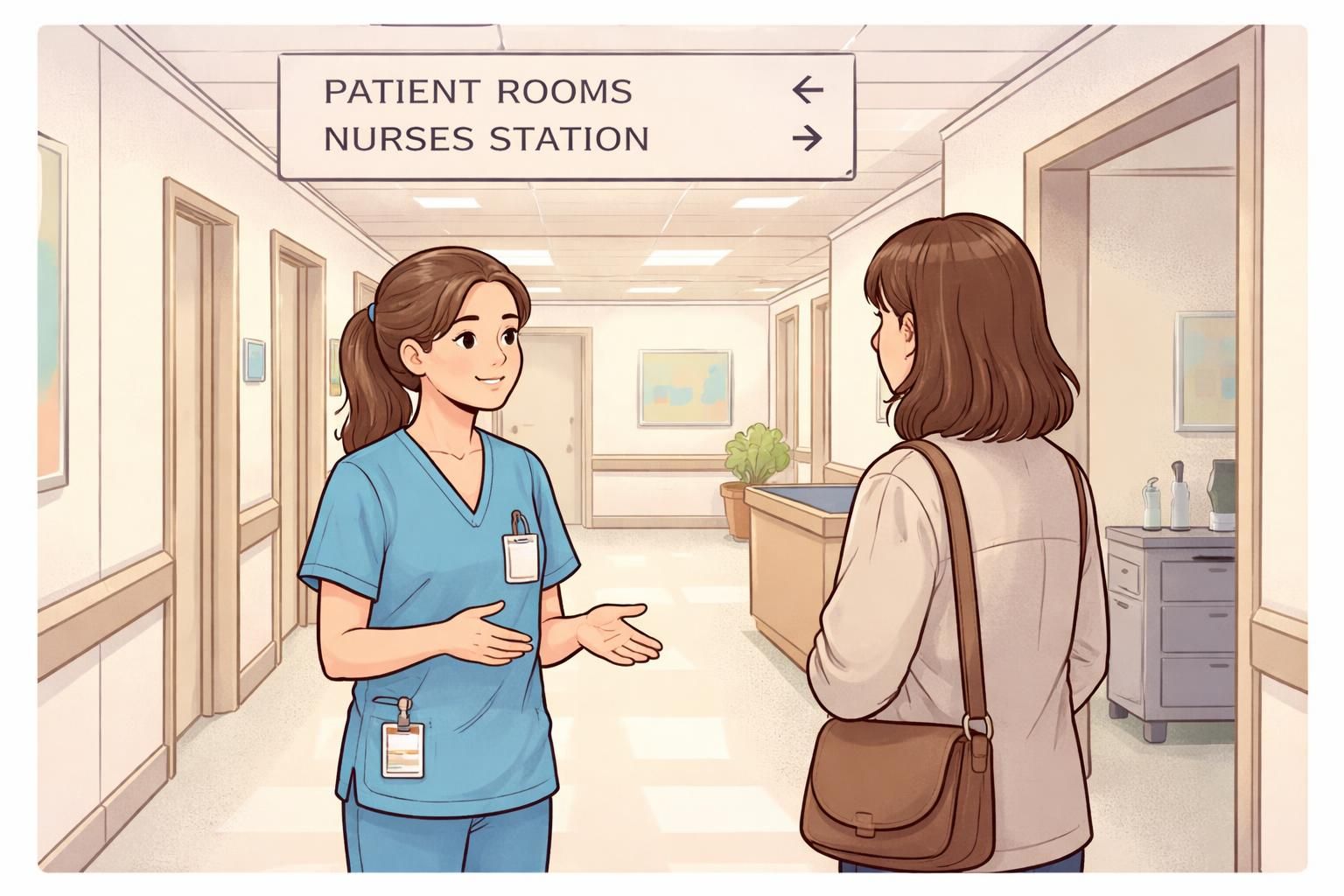
Patients and families often meet many clinicians in a short period of time—sometimes while anxious, in pain, or sleep-deprived. Even when introductions are thoughtful, it can be hard to remember names, roles, and who to ask for what. This is especially true in fast-paced settings like emergency departments, perioperative areas, or inpatient units with frequent rounding.
Another challenge is that clinical titles and training levels can be unfamiliar to the public. People may feel they understand who is caring for them, but objective understanding of roles can still be limited. Research has found gaps between perceived and actual understanding of provider training levels and roles, suggesting that clearer role labeling can improve identification and reduce confusion (source).
Badge buddies help by making role labels prominent and consistent. When patients can see a clear title—without needing to squint at small print—it supports comfort and trust. It also helps families ask the right questions of the right person, which can make conversations feel calmer and more productive.
"When you’re overwhelmed, you don’t always remember who said what. Seeing a clear role on a badge helps you know who to talk to next." – Family member, inpatient unit
Improving Staff-to-Staff Communication and Workflow
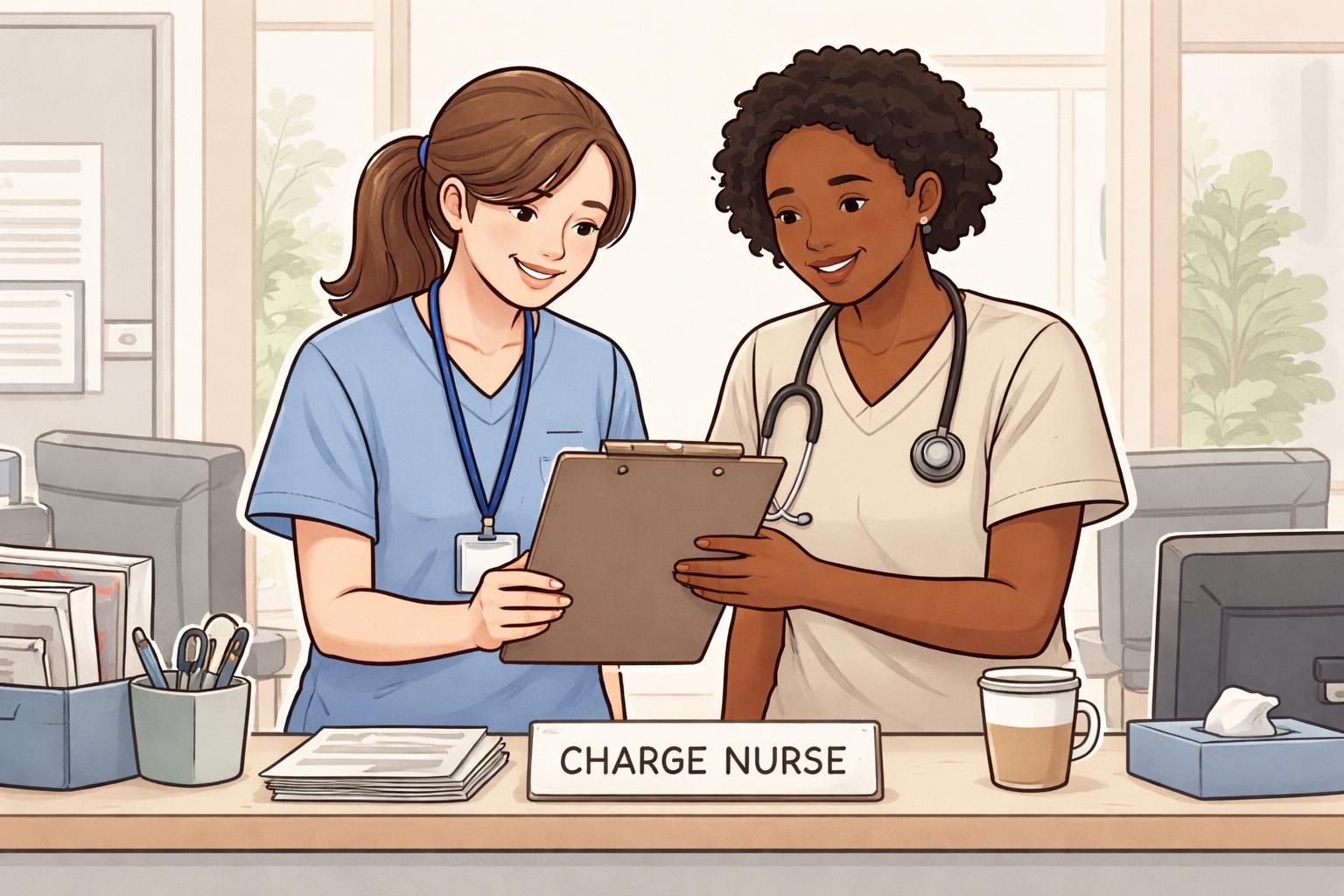
Badge buddies are just as valuable for staff-to-staff coordination as they are for patient-facing clarity. Clinical teams constantly make small decisions about workflow: Who can place orders? Who should be updated first? Who is precepting? Who is covering a specific service today?
When roles are visible, teams spend less time clarifying basics and more time on care. This can be especially helpful when people are floating between units, when new hires are onboarding, or when multiple consulting teams are involved.
- Reduce repeated questions: Fewer interruptions like “Are you the RN for this patient?” or “Who’s the resident on today?”
- Speed up escalation: Staff can identify who to call when something changes.
- Support teaching environments: Clear labels can distinguish a student, a preceptor, a resident, or an attending.
- Improve interdisciplinary handoffs: RT, PT, pharmacy, and nursing can coordinate faster when roles are obvious.
For example, distinguishing RN vs. NP vs. RT vs. resident vs. attending can reduce delays and prevent messages from bouncing between people. Even when everyone is well-intentioned, small misroutes add up over a shift.

Supporting Patient Safety and Faster Escalation When It Matters
In healthcare, there are moments where time matters and hesitation is costly. Badge buddies can function as quick-reference tools in those high-pressure situations—especially when they’re designed to reinforce a unit’s escalation pathways or code roles.
Some teams use wearable references as a complement to formal training and posted protocols. The idea isn’t to replace education, but to keep key steps accessible at the bedside—where real work happens and where clinicians may be balancing multiple urgent tasks.
- Clear code roles: Reinforce who is responsible for which tasks during a rapid response or code.
- Escalation reminders: Support consistent “who to call” pathways for deterioration concerns.
- Unit-specific pathways: Keep the most-used contact routes or response steps easy to recall in the moment.
Wearable references can help teams stay consistent under stress by placing critical cues in the same place every shift: on the clinician.
Just-in-Time Education and Consistency With Best Practices
Clinical work includes constant learning—new guidelines, updated documentation standards, refreshed safety bundles, and unit-specific best practices. Badge buddies can support “just-in-time” reinforcement by presenting a simple, standardized cue that helps staff remember the same approach across the team.
Teams sometimes use badge buddies to reinforce standardized tools such as mobility scales, assessment checklists, or other agreed workflows. When everyone sees the same cue, it supports consistency and can reduce variation between shifts or between experienced and newer staff—without adding another screen to search or another paper to find.
- Reinforce shared language: Helps teams use the same terms and steps.
- Support documentation accuracy: Quick cues can reduce missed elements or inconsistencies.
- Close knowledge gaps: Particularly helpful for float staff, travelers, students, and new hires.
Standardization, Professional Appearance, and Floating Between Units
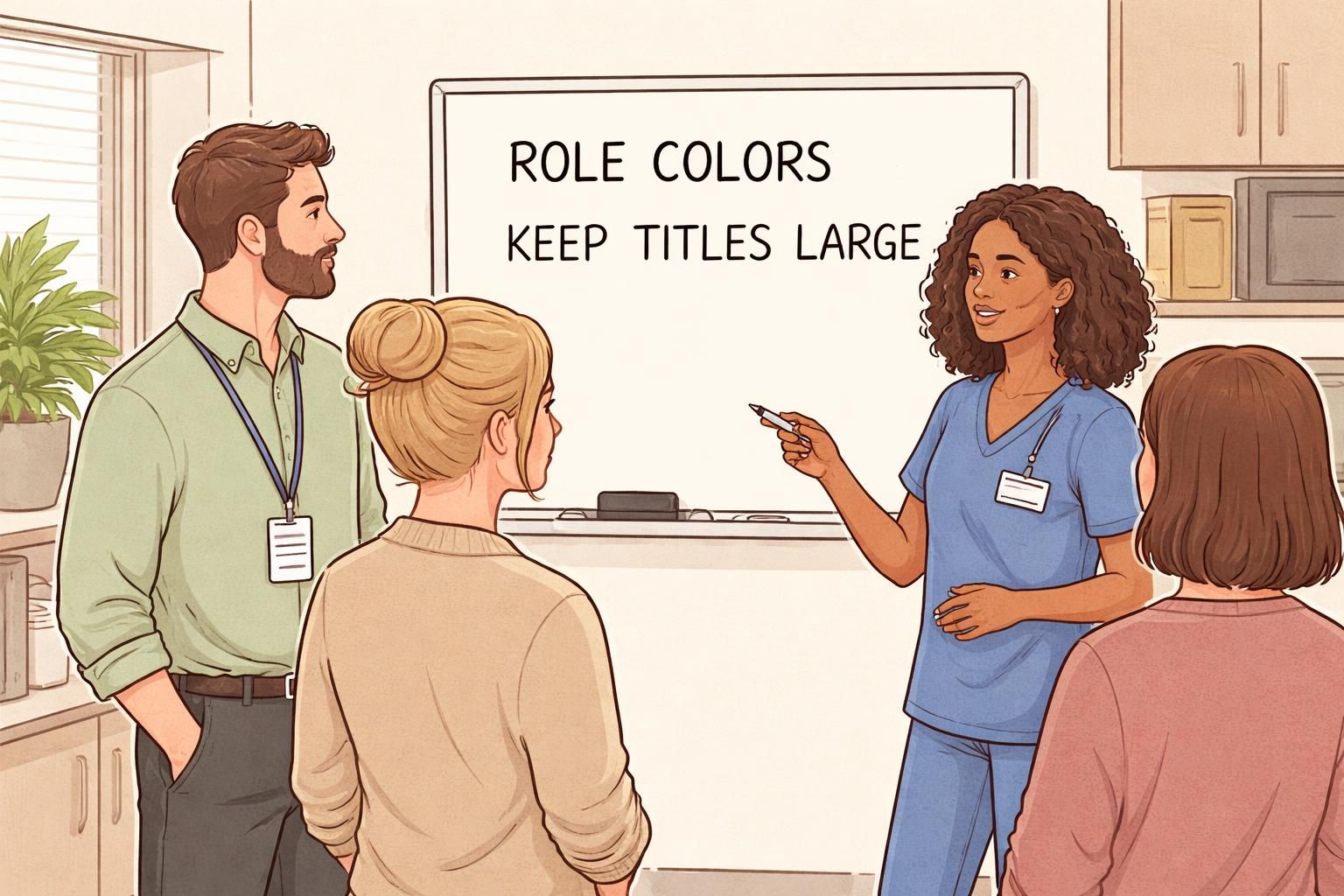
When a facility uses a consistent badge buddy system—such as standard colors and standardized titles—it can make the environment feel more organized and easier to navigate. Patients and visitors benefit because the visual cues are more predictable. Staff benefit because it reduces the cognitive load of figuring out who is who in new spaces.
Standardization is especially helpful for people who move around: float staff, travelers, cross-coverage clinicians, and those supporting multiple clinics or units. When role cues remain consistent, it’s easier to integrate quickly and collaborate with unfamiliar teams.
"When the colors and titles are consistent across units, it’s easier to jump in and help—especially when you’re covering somewhere new." – Float pool clinician
Equity and Respect: Reducing Role Misidentification
Role misidentification happens in many workplaces, including healthcare. People may make quick assumptions about someone’s role based on limited cues, which can lead to awkward corrections or unnecessary conflict. Clear role labeling helps reduce misunderstandings before they start.
The most practical benefit is respectful communication: when roles are easy to identify, coworkers and patients can address questions appropriately, route requests to the right person, and avoid repeated explanations. Accurate identification supports a culture where people are recognized for their responsibilities and expertise.
Clear role cues are a simple way to support respectful, accurate interactions—especially in high-traffic clinical settings.
Design Best Practices for Healthcare Badge Buddies
Great badge buddy design is less about adding more information and more about making the right information unmistakable. In clinical environments, readability, consistency, and durability matter because badges are viewed quickly and cleaned often.
- Keep titles large and readable: Aim for legibility at approximately 6–10 feet in typical hallway lighting.
- Use high-contrast text: Light text on a dark background (or vice versa) improves quick recognition.
- Color-code by role when appropriate: A clear, limited palette is easier to learn than many similar shades.
- Use consistent naming conventions: Choose standard titles (e.g., “REGISTERED NURSE” vs. mixing “RN,” “Nurse,” and “Staff Nurse”).
- Avoid ambiguous abbreviations: If a label could mean multiple things, spell it out.
- Minimize clutter: Role first; additional details only if they remain easy to scan.
- Choose durable, cleanable formats: Healthcare badges are handled frequently and should hold up to routine cleaning aligned with facility policy.
- Align with facility policies: Confirm what must appear on IDs and what can appear on supporting identifiers like badge buddies.
It can also help to test designs in real conditions—hallway distance, glare from overhead lights, PPE situations, and typical motion (walking, bending, turning). A design that looks good on a screen may not be readable during a busy shift unless it’s intentionally simplified.
How Badge Buddies Fit With ID Cards, Name Tags, and Other Accessories
Badge buddies are typically part of a broader identification setup. Each piece has a different job. ID cards generally confirm identity and support organization-specific requirements. Name tags support face-to-face introductions and can be helpful in settings where people are close enough to read them. Badge buddies add fast role clarity from farther away, which is particularly useful in team environments.
- ID card: Identifies the individual and may support facility requirements and access policies.
- Name tag: Supports personal introductions and patient-friendly communication.
- Badge buddy: Highlights role or key information in a large, easy-to-see format.
- Accessories: Badge reels, lanyards, clips, and rigid holders influence how visible and secure the system feels day to day.
Organizations choose a setup based on workflow and safety needs. For example, some prefer badge reels clipped to clothing for quick scanning and reduced swing, while others use lanyards for comfort or visibility. Badge buddies usually attach using the same clip or holder as the ID so the full stack moves together and stays easy to check.
For teams considering options, a customizable badge buddy option for healthcare teams can be a useful reference point when discussing role labels, department cues, and consistent visual standards.

Implementation Tips for Units and Administrators
A badge buddy program works best when it’s treated like a small standardization project: define what success looks like, keep choices consistent, and make adoption easy. Whether you’re rolling out on one unit or across an entire system, a clear plan reduces rework and makes the end result easier for staff and patients to understand.
- Define a role taxonomy: Decide which roles need a badge buddy label and what the official titles should be.
- Assign colors thoughtfully: Keep the palette limited and intuitive; confirm it doesn’t conflict with existing unit color cues.
- Approve wording and formatting: Standardize capitalization, font style, and whether credentials are included.
- Pilot on one unit: Start with a high-traffic area and measure clarity, readability, and staff feedback.
- Collect feedback and refine: Ask staff and patient-facing teams what is most helpful and what causes confusion.
- Standardize across the facility: Expand with the same conventions so floating staff don’t have to relearn each area.
- Plan replacements: Set a simple process for lost or damaged badge buddies and keep spares accessible.
- Include in onboarding: Add badge buddy guidance to new-hire and trainee packets so expectations are clear from day one.
A small pilot—followed by consistent system-wide standards—often works better than a broad rollout with multiple competing designs.