
What a badge buddy is (and how it differs from an ID badge)
A badge buddy is a rigid backing card that sits behind an organization-issued ID badge, making key role information easier to see at a glance. It’s typically the same width as the ID card and slightly taller, so the role label is visible above or below the ID—without covering the ID photo, barcode, or access features the facility relies on.
Unlike an ID badge (which is primarily for identity verification, access control, and official credentials), a badge buddy is primarily for fast role recognition in real-world interactions. In healthcare, that “who are you?” question often needs an answer in seconds—especially in busy hallways, patient rooms, and triage areas.
- Common badge buddy formats include bold color blocks with large role text (e.g., NURSE, RESIDENT), role + department (e.g., RN — ICU), and simple icons that reinforce the role label.
- Badge buddies are usually worn in the same holder or clip as the ID badge, forming one neat vertical stack that stays readable as the wearer moves.
- Most systems are designed so the organization’s ID remains the “official” credential, while the badge buddy adds visibility for patients and teammates.
Think of an ID badge as official identification, and a badge buddy as a clear, quick “role label” that helps people orient themselves instantly.
Why role visibility matters at the point of care
Modern care is delivered by teams, not individuals. A single patient encounter may involve nurses, physicians, advanced practice clinicians, residents, students, therapists, technicians, phlebotomy, imaging staff, and environmental services—often in rapid succession. Even when everyone introduces themselves, it’s easy for names and roles to blur together.
Role visibility matters because healthcare is fast-moving. On a busy unit, introductions can be missed, interrupted, or forgotten—especially when alarms sound, phones ring, or multiple family members are asking questions at once. Clear identification helps patients and staff orient faster, reducing the mental load of constantly re-figuring out who does what.
- Patients can more quickly understand who is leading their plan of care versus who is providing bedside care.
- Families can direct questions to the right team member sooner, rather than waiting or repeating themselves.
- Staff can coordinate faster during shift changes, cross-coverage, or when float staff join the unit.
Helping patients and families understand who’s who
Many patients and families genuinely struggle to distinguish between roles in a hospital or clinic. Scrubs may look similar across departments, and patients may see multiple clinicians in a short span—sometimes while they’re in pain, anxious, sleep-deprived, or processing complex information.
Clear, readable role markers—such as badge buddies—support patient understanding by making the “identity” of the interaction easier to grasp: Who is the nurse I should call? Who is the doctor making decisions? Is this person a resident, a student, or a consultant from another service? Research has noted that patients often have difficulty recognizing provider roles and that clearer identification approaches can improve understanding of who is caring for them (source).
This clarity can be especially helpful during admissions, transfers, handoffs, and discharge teaching—moments when patients and families are trying to absorb a lot, quickly. When the role is clearly visible, the interaction starts with less uncertainty and more confidence.
"When patients can see my role immediately, the conversation starts smoother. We spend less time clarifying who I am, and more time focusing on what they need." – Bedside Nurse

Improving trust, comfort, and the overall patient experience
Healthcare can be stressful even in the best circumstances. Patients may feel vulnerable, uncertain, or overwhelmed—especially in emergency care, post-op recovery, or when receiving new diagnoses. When names and roles are easily visible, interactions can feel more personal and grounded. Patients know who is speaking with them, and that clarity helps reduce the feeling of “strangers coming in and out.”
Prominent identification also supports continuity. If a patient needs to ask for someone again, remembering a name or role becomes easier when it was displayed clearly from the start. Small moments—like being able to say, “Can you find my nurse?”—can meaningfully affect comfort.
In PPE-heavy situations, identification becomes even more important. Masks and face shields can muffle voices and obscure faces, and patients may have trouble recognizing staff from one interaction to the next. Larger role markers (or other prominent identification strategies) help patients connect what they’re hearing to who is providing care.
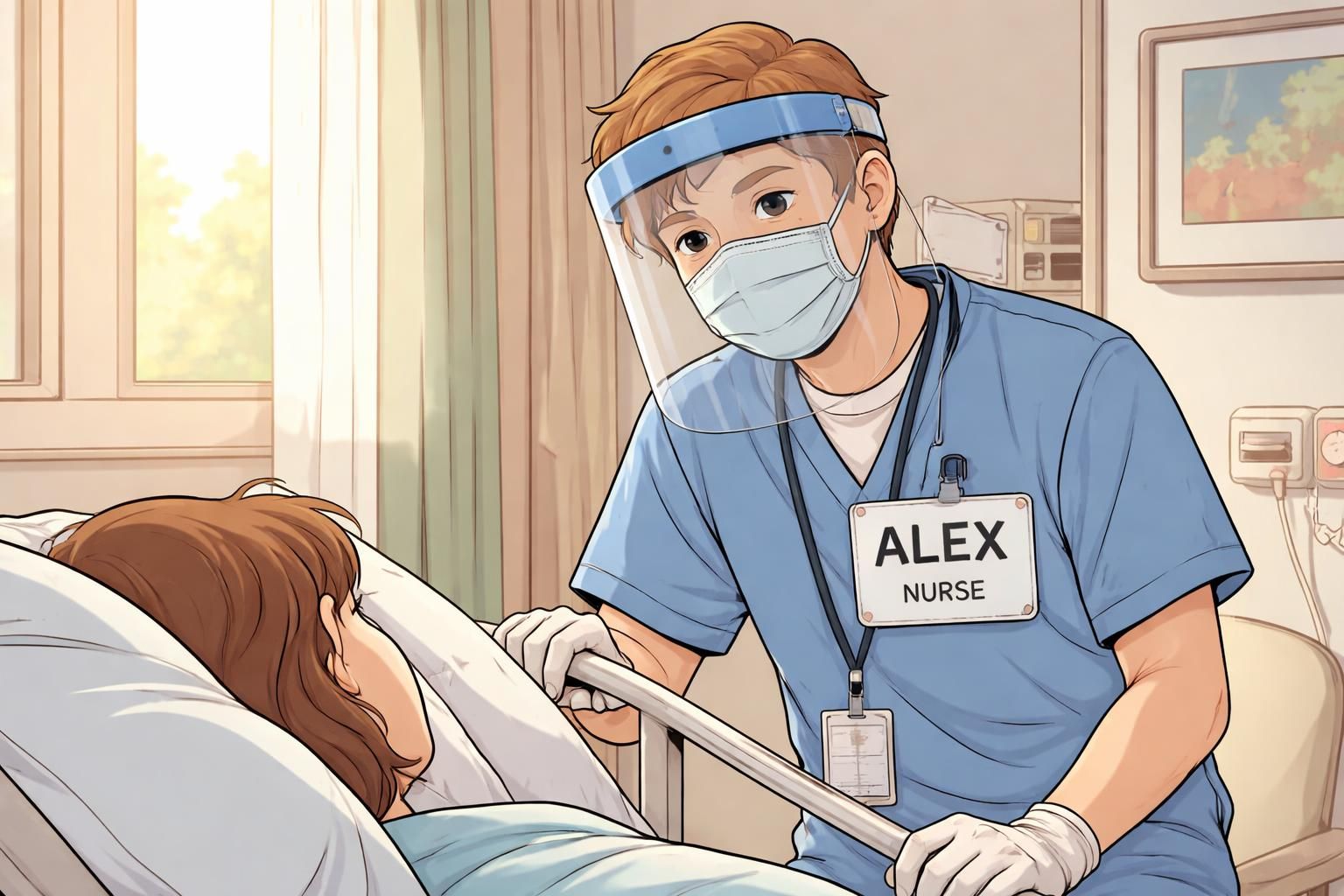
Role visibility doesn’t replace good communication—but it supports it, especially when stress, noise, and PPE make it harder for patients to process information.
Reducing misidentification and supporting respectful workplaces
Misidentification happens frequently in healthcare. Patients and visitors may make assumptions based on gender, age, or appearance, or they may confuse trainee roles (such as student, intern, resident, fellow) with fully independent clinicians. Over time, these repeated misunderstandings can be frustrating for staff and confusing for patients.
Clear role indicators help reduce the frequency of these moments. A visible, standardized role label makes fewer interactions hinge on assumptions, and more interactions start with accurate context. That can support a more respectful workplace culture—one where titles and responsibilities are recognized correctly and consistently.
- Reduces repeated corrections ("I’m your nurse" / "I’m the resident") during busy rounds and call-bell interactions.
- Helps trainees be introduced accurately, supporting appropriate expectations and supervision.
- Supports professionalism by making roles clear without requiring staff to restate credentials repeatedly.
Smoother teamwork: faster routing of questions and requests
Hospitals run on constant coordination. Orders, consults, procedures, reassessments, and escalations all depend on getting the right question to the right person quickly. When roles are visible, staff can route requests faster—even when team members don’t know each other well.
This is especially valuable with unfamiliar float staff, cross-coverage at night, rotating residents, or rapid changes in unit staffing. If a respiratory therapist needs the covering resident, or a physician needs the charge nurse, quick role recognition reduces delays and avoids unnecessary back-and-forth.
- During cross-coverage, a clear “RESIDENT” marker can help staff find the appropriate clinician faster.
- In teaching settings, role labels help distinguish student vs. resident vs. fellow—important for supervision and workflow.
- In procedural areas, visible roles help ensure questions go to the correct person without interrupting multiple team members.

Badge buddies as quick-reference tools for safety and workflow
Not all badge buddy-style cards are role labels. Some facilities use rigid cards worn with (or carried alongside) an ID badge as quick-reference tools: escalation steps, checklists, or simplified algorithms that support bedside decisions and consistent workflows.
These tools can be helpful because they put key steps within reach during high-pressure moments. However, they should always be organization-specific and aligned with local protocols, training, and governance. The goal is consistency—so staff are supported by the same guidance across shifts and units.
- Escalation and communication pathways (who to call first, second, and third).
- Unit-specific checklists or reminders that support standardized processes.
- Brief cognitive aids intended to complement (not replace) formal training.
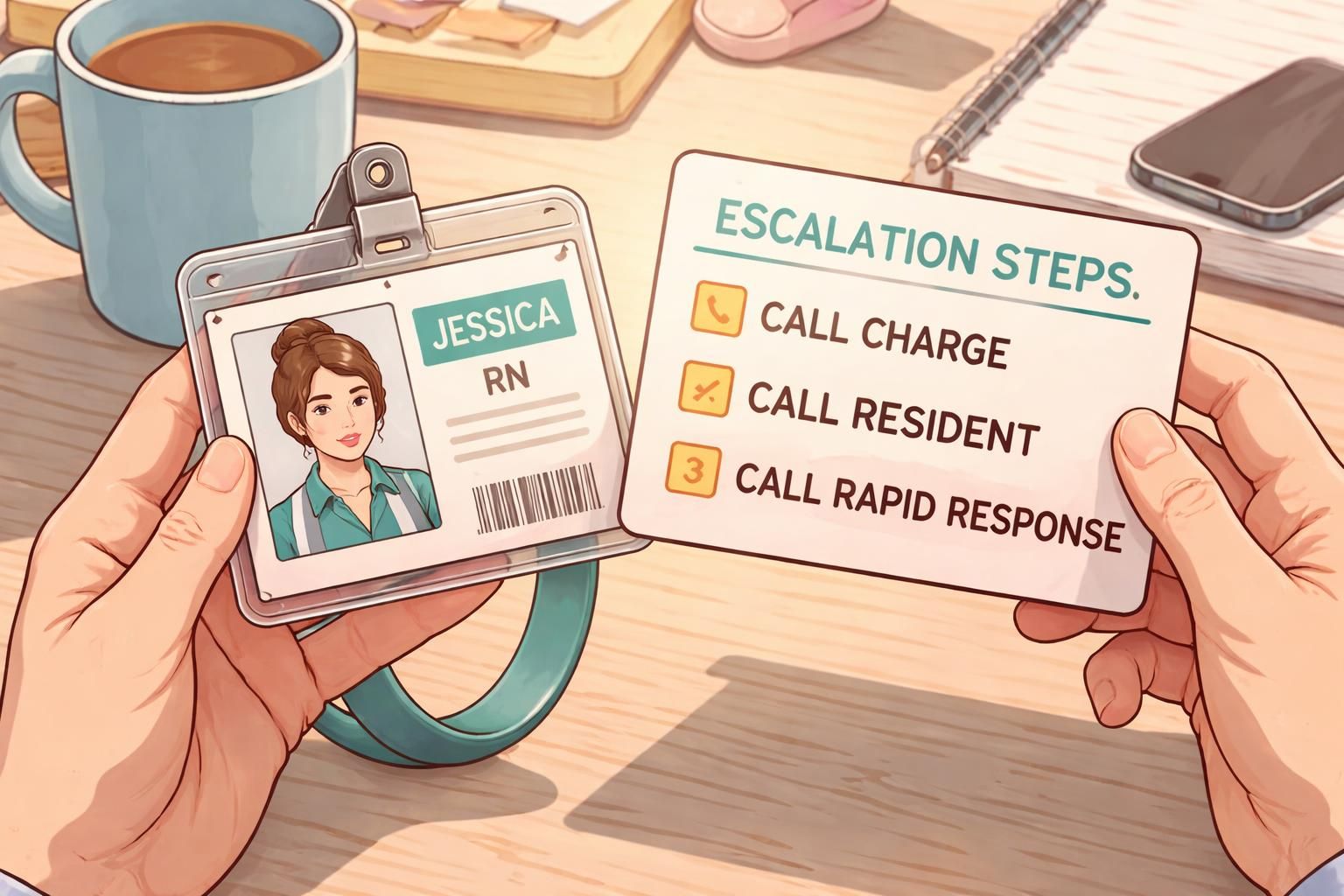
Quick-reference cards work best when they’re clearly governed: updated regularly, consistent with policy, and familiar to the teams using them.
Design best practices for healthcare badge buddies
Good badge buddy design is about readability, durability, and compatibility with how staff actually work. In healthcare, identification has to remain visible while people move, bend, wash hands, don PPE, and pass through secure areas. A badge buddy that’s hard to read or constantly flips around won’t deliver the intended benefit.
- Use large, high-contrast role text that can be read from a few feet away.
- Keep wording minimal (one role label is often more effective than a full sentence).
- Choose a color-coding system that matches unit or facility conventions so staff and patients learn it quickly.
- Consider simple icons only if they reinforce (not replace) readable text.
- Select durable, cleanable materials appropriate for the environment and day-to-day handling.
- Ensure compatibility with existing ID holders, clips, and lanyards so the ID and buddy stay aligned and visible.
Policies vary by facility—especially around infection control, branding, and security. Before introducing or changing badge buddy designs, organizations and individuals should confirm local requirements (such as allowed sizes, attachment styles, and what information may be displayed).
Common implementations hospitals use (and how to roll them out)
Hospitals adopt badge buddy systems in different ways depending on size, staffing model, and patient population. Some prefer simple role-only cards to keep things universally understandable, while others include department or training level to better reflect complex team structures.
- Role-only: RN, NURSE, DOCTOR, PHARMACIST, RT (respiratory therapist).
- Role + department or unit: RN — ICU, TECH — ED, THERAPY — REHAB.
- Trainee level: STUDENT, INTERN, RESIDENT, FELLOW.
- Standardized color systems: consistent colors assigned to broad role groups, reinforced by large role text.
A smooth rollout is usually less about printing the cards and more about setting expectations. When teams understand what each badge buddy means, the system becomes a shared language for the unit.
- Gather staff input before finalizing roles, terms, and color choices—especially from nursing, trainees, and ancillary services.
- Create clear guidelines for who receives which badge buddy and when it should be worn (e.g., on-unit vs. everywhere).
- Align terminology across departments so labels are consistent (for example, choosing between “PHYSICIAN” vs. “DOCTOR”).
- Plan for onboarding and updates so role indicators stay accurate when staff change units, roles, or training levels.
- Review periodically to confirm the system still matches staffing patterns and patient needs.
"The best systems are the ones everyone follows the same way. Consistency is what makes it instantly understandable." – Unit Educator
When badge buddies make the most sense (and when a name tag may be enough)
Badge buddies are most helpful when role clarity needs to be readable quickly, from a short distance, and across a wide range of staff. In many healthcare settings, that’s a daily reality—particularly where teams are large, roles are layered, and patient turnover is high.
- High-acuity units (e.g., emergency care, ICU, step-down) where interactions are fast and frequent.
- Large teaching hospitals where trainee levels and rotating teams can be difficult for patients to track.
- Multi-disciplinary areas (imaging, perioperative services, rehab floors) where many specialties intersect.
- Facilities with frequent float, agency, or cross-coverage staffing where teams change rapidly.
In smaller clinics or stable outpatient settings, a standard ID badge and a clear name tag may cover most needs, especially when patients see a consistent, familiar team. Identification practices depend on the environment, patient population, and organizational policy—and many organizations combine approaches (ID badge + role marker + name display) to fit the setting.

The goal is not “more” identification—it’s the right identification for the setting, so patients and teams can communicate clearly and confidently.
Choosing a badge buddy that fits your role and environment
If your facility uses (or is considering) badge buddies, the best choice is the one that stays readable, comfortable, and consistent with your team’s workflow. A strong badge buddy system makes roles clear without adding friction to how staff move through their day.
- Clarity: large role labeling with high contrast, readable in real working conditions.
- Comfort and wearability: sits flat behind the ID and works with your typical clip, holder, or lanyard.
- Durability: stands up to daily handling and routine cleaning practices appropriate to the setting.
- Consistency: matches team standards so patients learn what labels mean and staff recognize them instantly.
Many facilities standardize badge buddy designs to keep identification uniform and easy to interpret. If you’re considering a personal variation, it’s smart to confirm what’s permitted first—especially regarding color conventions, displayed titles, and attachment style—so your identification remains compliant and helpful to patients and coworkers.