Leadership Badge Policy: Why Leaders Should Wear Badges Too to Build Company Culture
Why a Leadership Badge Policy Starts With Leaders
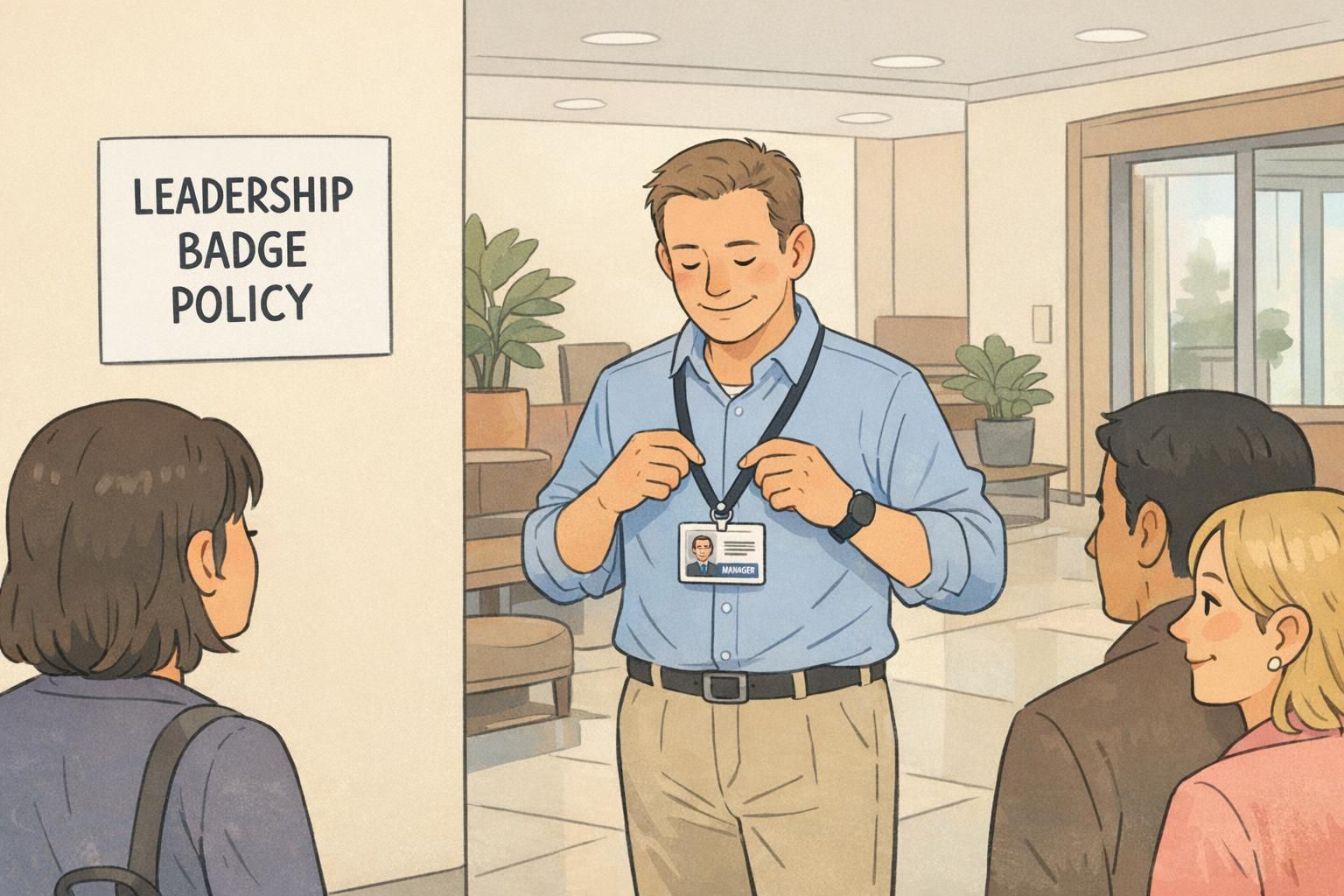
A leadership badge policy only feels real when leaders treat it as their own everyday standard—not something that applies “to everyone else.” When supervisors, managers, and executives wear identification consistently, correctly, and without exceptions, the message is simple: this is normal here. That one visible habit removes a common mental loophole employees use to decide whether rules matter: “Do the people at the top do this too?” When the answer is yes, badge compliance rises because the expectation feels fair, shared, and predictable. It also improves day-to-day confidence in the workspace. People can quickly identify names, roles, and who belongs in a space without awkward interruptions. In busy hallways, multi-shift sites, clinics, schools, and offices with frequent visitors, that clarity supports a calmer, more organized environment. This is one reason leadership actions are so influential in shaping norms. Research on organizational culture emphasizes that what leaders consistently do signals what the organization truly values—more than what policies say on paper (source).
- Leaders make badge-wearing feel like a shared professional norm, not a compliance task
- Consistency reduces confusion about who is staff, who is a visitor, and who needs help
- Visible IDs reinforce respectful interactions—people can greet and direct others appropriately
What Badge-Wearing Signals: Trust, Consistency, and Belonging
A badge is small, but the signal is repeated all day: “We follow the same rules,” and “we respect the environment we work in.” That repetition matters because culture is built through patterns people can count on. When leaders participate, it reduces the perception that policies are only for certain groups (frontline teams, contractors, new hires, or night shifts). Instead, it communicates equality of expectation—especially important in organizations where job roles vary widely. Over time, consistent identification builds trust in two directions: Employees trust that the workplace is orderly and that visitor processes are real. Leaders earn trust because they model what they ask for, rather than relying on reminders that feel one-sided. This is also where company culture shows up in practical, human ways. A stable environment—where you can quickly confirm who someone is—supports belonging. New hires feel less lost. Cross-functional teams collaborate faster. And people feel more comfortable asking for help when roles are easy to identify.
Badges aren’t just about access. In many workplaces, they also reduce uncertainty: Who is this? What’s their role? Are they supposed to be here?

How Leaders Quietly Undermine Badge Compliance (and How to Fix It)
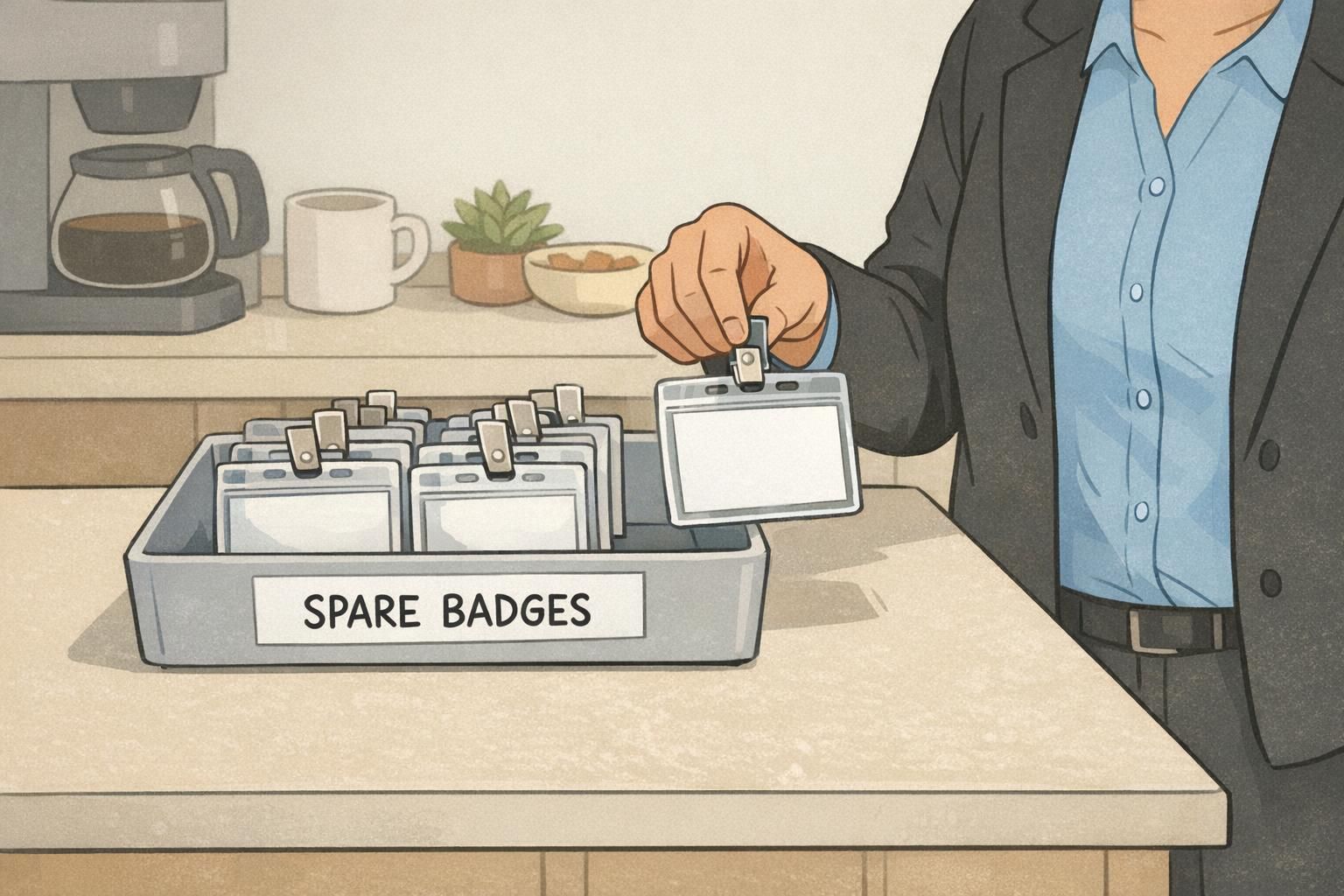
Most drops in badge compliance aren’t caused by bad intentions—they come from small, understandable slip-ups that get repeated and noticed. A leader skipping a badge during a quick meeting, tucking it under a jacket, or using an old badge sends an unspoken message: “This rule is situational.” Employees then mirror that flexibility, and soon the organization is trying to enforce a standard that leaders accidentally softened. Common ways leaders unintentionally weaken badge habits: – Not wearing a badge in meetings because “we all know each other.” – Wearing it, but hiding it under outerwear or turning it around. – Using an outdated badge after a role change. – Walking a colleague or vendor in through a side door without the visitor process. The fix doesn’t need to be heavy or punitive. It just needs to be easy and repeatable—so leaders can correct themselves quickly and keep the tone calm. Practical, lightweight fixes leaders can adopt: – Keep a spare badge or spare holder in a known spot (office drawer, car, bag). – Do a quick “pre-meeting check” when people sit down. – Treat corrections as routine (“Let’s get squared away”) rather than disciplinary. – Standardize the visitor flow so it’s not dependent on who is hosting.
- Make the correct behavior easier than the workaround (spares, holders, clear steps)
- Correct quietly and consistently—especially when you’re the one who forgot
- Remove ambiguity: visitors and temporary staff always follow the same check-in pattern
Friendly Ways Leaders Can Model the Behavior Without Policing
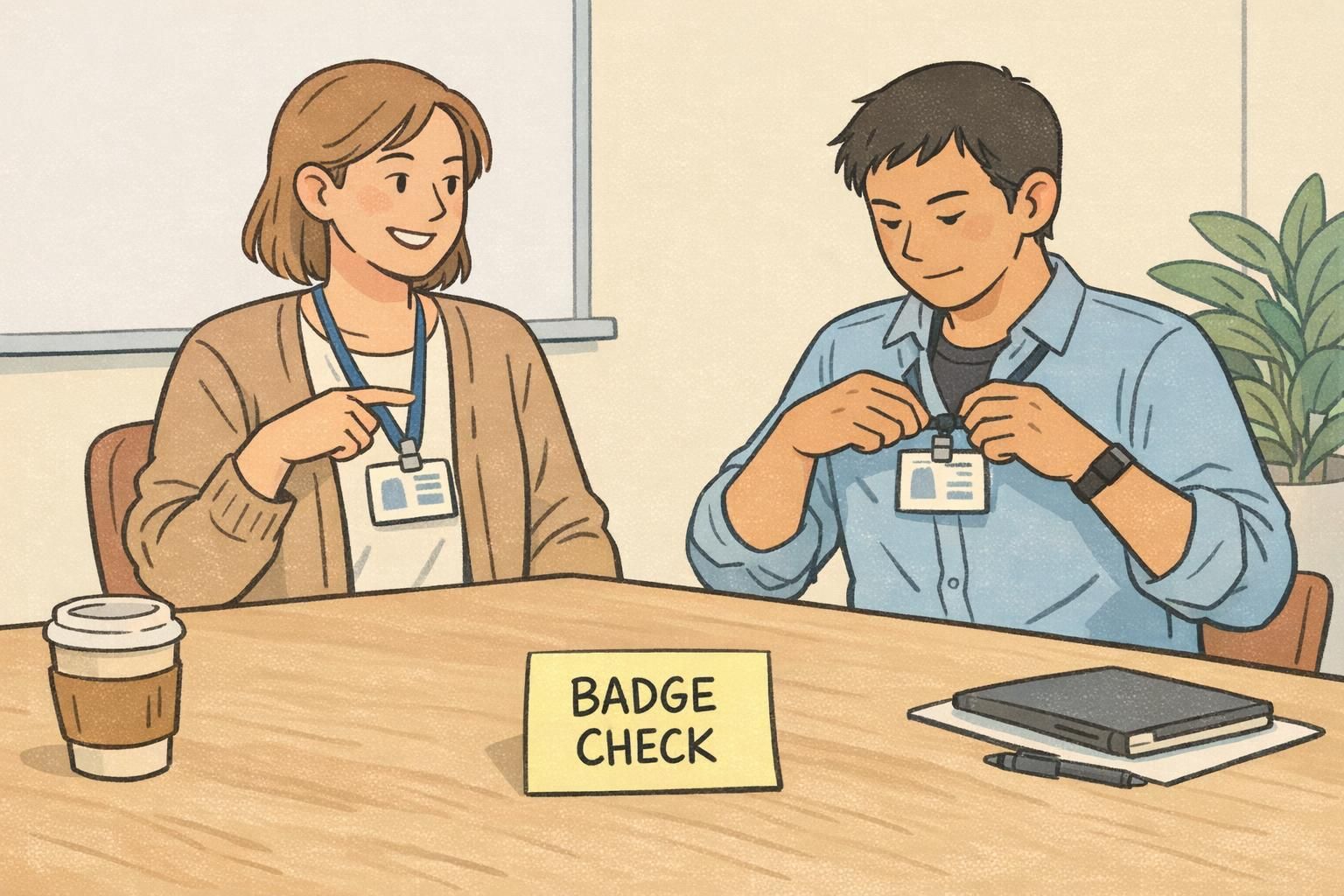
Leaders can set a respectful tone by making badge-wearing feel like a shared routine—not a gotcha. The goal is to normalize visibility and clarity while preserving dignity. Try reminders that include everyone and keep the moment moving: – “Quick badge check—then we’ll start.” – “Let’s all get badged in before we head back.” – “Before we go on the floor, let’s make sure IDs are visible.” The difference is subtle but important: you’re reinforcing the purpose (clear identification and a calmer environment), not calling out individuals. You can also link identification to recognition. When leaders greet people by name because they can see an ID, it turns the badge into a tool for connection rather than just enforcement. That approach supports badge compliance because it adds a positive payoff: people feel seen, not monitored.
“When leaders wear their badges and use names naturally, the whole building feels more welcoming—and we spend less time figuring out who’s who.” – Operations Coordinator
Treat it as a normal operational hiccup: use a temporary badge process and move on. When leaders handle forgetfulness calmly and consistently, teams learn that the standard matters without feeling shamed.
Keep reminders group-based and routine (“badge check”) rather than personal. If a specific correction is needed, a quiet side comment preserves dignity and keeps the tone respectful.
Make It Easy to Do the Right Thing: Design and Comfort Matter
Even the best leadership badge policy will struggle if the badge itself is uncomfortable, hard to read, or awkward for the work. When employees constantly adjust a lanyard, fight with a flimsy clip, or wear something that flips backward, badge visibility becomes fragile—especially in fast-moving roles. Leaders can help by treating badge design and wear options as part of the system, not an afterthought. A few practical factors make compliance more effortless: – Readability: a clear name/role layout that can be read at a normal conversation distance. – Durability: holders and clips that stay aligned and don’t crack or fog quickly. – Wear options that fit the job: lanyard vs. clip vs. retractable reel depending on movement, uniforms, and safety needs. Leaders can gather quick feedback (“What makes this annoying to wear?”) and champion simple upgrades that remove friction. When wearing a badge feels easy, people do it more consistently—without needing reminders.
- If it flips, tangles, or digs in, compliance drops over time
- Clear layout beats tiny text—especially across shifts and departments
- Offer more than one wear option so staff can choose what works in their environment
Leadership Habits That Strengthen Company Culture Through Identification
Identification works best when it’s embedded into positive routines. Leaders can use badges, name tags, and visitor IDs to make everyday coordination smoother—and that’s where company culture gets stronger over time. A few leadership habits that turn identification into connection: – Greet people by name when you can see their ID. It’s a small act of respect that scales. – Introduce new hires with their name tag visible, especially in cross-team settings. – Normalize visitor badges in meetings so no one has to guess who is internal vs. external. – Thank people for following the process (“Appreciate everyone getting badged in”). These are not “security theater.” They’re simple behaviors that reduce uncertainty, speed up collaboration, and make shared spaces feel more stable. And because leaders are seen by more people across the day, their consistency has outsized impact on what becomes normal. When identification is treated as part of professionalism—rather than a rule that only matters sometimes—badge compliance becomes a cultural default.
If badges only appear during audits or special events, they feel optional. If badges appear in everyday leadership habits, they feel like part of how the organization works.
Practical Badge Standards Leaders Can Adopt (Without Overcomplicating It)
Standards work when people can remember them and check them quickly. A good starting point is a short set of basics that leaders follow first—and that anyone can audit with a glance. Consider defining three simple elements: 1) Where it must be visible For example: worn at chest level, front-facing, not tucked into a pocket or hidden by outerwear. 2) When it must be worn For example: on-site, in shared spaces, during internal events, and any time visitors are present. 3) What happens if it’s forgotten For example: a temporary badge process that is fast, respectful, and consistent. When leaders follow these standards, the organization doesn’t have to rely on constant reminders. The expectation becomes a shared professional norm. If you want the standard to stick, keep it short enough to repeat in one breath—and specific enough that people don’t have to interpret it differently across teams.
- Visible: chest level, front-facing
- When: on-site and in shared spaces (including meetings and events)
- Forgotten badge: use the temporary badge process every time
Typically, no. The point of a leadership-led standard is shared expectations. If exceptions exist, they should be rare, clear, and tied to a real operational need—not convenience.
Emphasize clarity and coordination, keep reminders routine and group-based, and make the process easy (spares, clear wear options, quick temporary badges).
Tools That Help: Name Tags, ID Badges, and Event Badges From BadgeZoo
If leaders are expected to model consistency, it helps to provide identification tools that are easy to wear, easy to read, and aligned with the environment—office, campus, plant, clinic, or event. Many organizations use a mix of formats: – ID cards for daily workplace identification – Name tags for customer-facing roles, tours, or internal introductions – Event badges (including clear “VISITOR” indicators) for conferences, trainings, and on-site events – Badge buddies when you need quick role recognition at a glance BadgeZoo supports organizations with custom ID badges as part of a consistent identification approach. When the badge layout is readable and the wear method fits the job, leaders have fewer reasons to “just skip it,” and teams have fewer reasons to drift. If your organization is adjusting layouts, holders, or formats to reduce friction, it can help to choose durable options and a clear design that works across departments. (For custom questions, teams can reach out via http://badgezoo.com/contact.)

A Simple Rollout Plan for Leaders: 30 Days to Better Consistency
A rollout works best when it’s steady and supportive. Instead of a sudden enforcement spike, aim for a month of visible leadership habits that make the standard feel normal. Here’s a simple 30-day plan leaders can follow to improve badge compliance without creating tension.
- Week 1: Align on the basics and wear badges in every shared space (leaders first, every day)
- Week 2: Add friendly reminders (“badge check”) and place spare holders or temporary badges in predictable locations
- Week 3: Fix friction points—readability, comfort, wear options, and anything that causes badges to flip or disappear
- Week 4: Reinforce wins, thank teams for consistency, and clarify the visitor flow so it’s uniform across departments
The goal is normalization. When leaders make visible identification part of everyday professionalism, the policy starts to run itself.