
Badge Reel Lanyard Combo Basics: When a Retractable Setup Makes Sense
What a badge reel lanyard combo is (and why it exists)
A badge reel lanyard combo is a simple idea: wear your ID on a neck lanyard so it’s easy to see, then add a retractable reel so you can extend the card to a reader without taking it off. For workplaces that want IDs clearly displayed (for security, recognition, and compliance), this setup keeps the badge visible on the upper chest while still being easy to use all day.
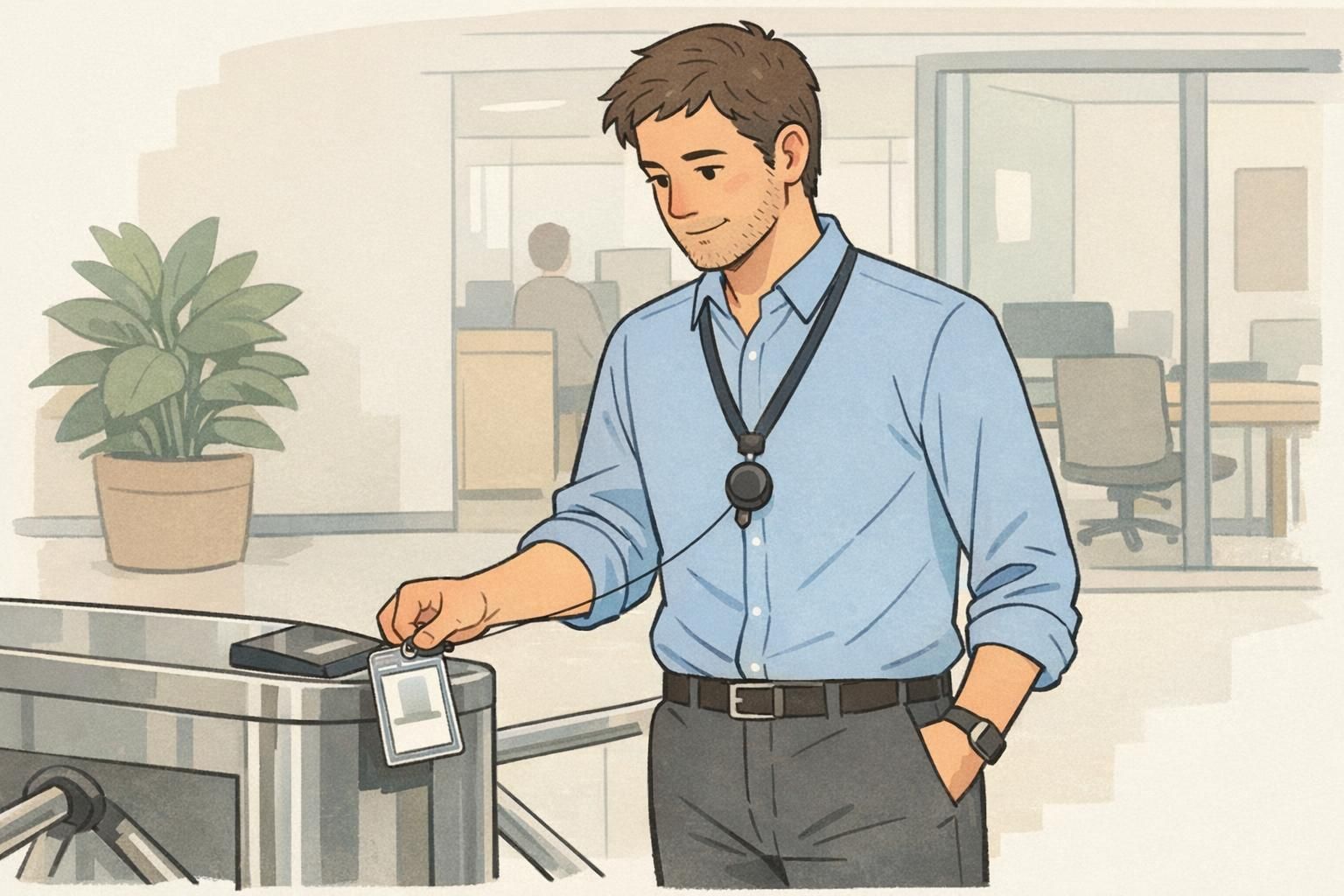
Where a fixed-length lanyard can fall short is the moment you need to scan—especially if the reader is mounted at waist height, on a door frame, or on a counter. The retractable reel gives you extra reach so you’re not repeatedly bending, twisting, or tugging at your lanyard just to get the card close enough.
The goal of a badge reel lanyard combo is to keep your ID visible, controlled, and easy to scan—without constantly unclipping or handling the card.
When two tools beat one: frequent scanning and hands-busy roles
A combo setup makes the most sense when scanning is a routine part of the job, not a once-a-day task. If you badge into multiple doors per shift, tap into a medication room, enter a lab, release a print job, or pass through a turnstile, the “visible on the chest, extend to the reader” pattern quickly becomes the most practical way to work.
It’s also a strong fit for hands-busy roles—when you’re carrying supplies, pushing a cart, holding a clipboard, or wearing gloves. In those moments, the reel extension helps you scan without fumbling with a clip or removing the card from a holder. That can mean fewer interruptions, less wear on the badge itself, and less chance of setting an ID down where it doesn’t belong.
- Healthcare: frequent door access, medication rooms, unit entry, staff-only areas
- Labs: controlled access points and gloved workflows where handling a card is inconvenient
- Corporate campuses: secure doors, elevator access, turnstiles, and shared devices
- Schools: staff entry points and interior doors while carrying materials or managing students
Breakaway lanyard reel safety: what to choose and why
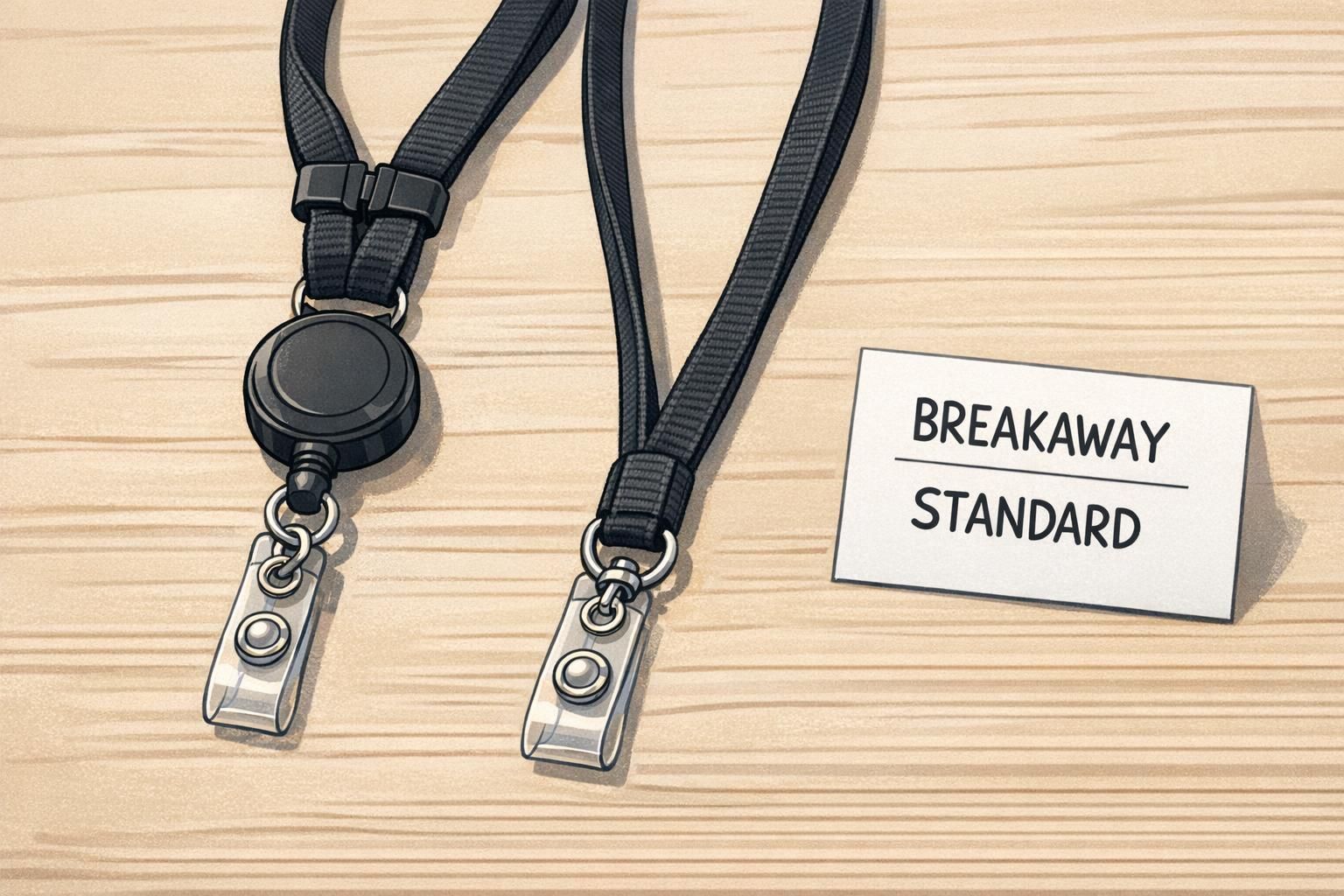
In many healthcare, lab, and school environments, safety policies focus on reducing snag and entanglement risks for anything worn around the neck. A breakaway lanyard reel is designed to release under tension, which can reduce the risk of injury if the lanyard is pulled or caught.
If you work in busy hallways, do frequent reaching, or support patient-facing tasks, prioritize a true breakaway connector at the neck. It’s also wise to avoid overly long straps that can swing, snag on door handles, or get pulled during close-contact work. The goal is controlled wear: visible enough for identification, but not so loose that it becomes a hazard.
For environments near moving machinery, your local rules matter. Some roles may not be suited to any neck-worn option, even with a breakaway connector. In those cases, organizations often choose alternative placements (like non-neck-mounted reels) to better match the hazard profile.
If your workplace requires a breakaway, look specifically for a breakaway connector at the neck—don’t assume every lanyard-and-reel combination includes one.
Cord length and badge resting position: set it up for clean, controlled access
A good combo feels “quiet” when you wear it: the badge sits where it’s easy to identify you, and it doesn’t constantly swing into desks, counters, or equipment. Start by choosing a lanyard length that keeps the badge resting higher on the upper chest rather than hanging low. Then rely on the reel extension for scanners and readers that sit lower than your resting position.
This matters for cleanliness and comfort, especially in settings where the badge could brush work surfaces or people. A controlled resting position helps reduce contact with counters, patient areas, or lab benches. When you do scan, the retractable lanyard extension should reach comfortably—without forcing you to lean forward, twist your torso, or pull the card at an awkward angle.
- Aim for a higher resting position so the badge stays visible and less likely to bump surfaces
- Test extension distance against the readers you use most (doors, desks, wall-mounted scanners)
- Check that the badge returns smoothly and doesn’t snap back into your hands or equipment
- Keep the path clear: cords should extend straight without rubbing against sharp edges

Wear points to inspect: where combos fail first
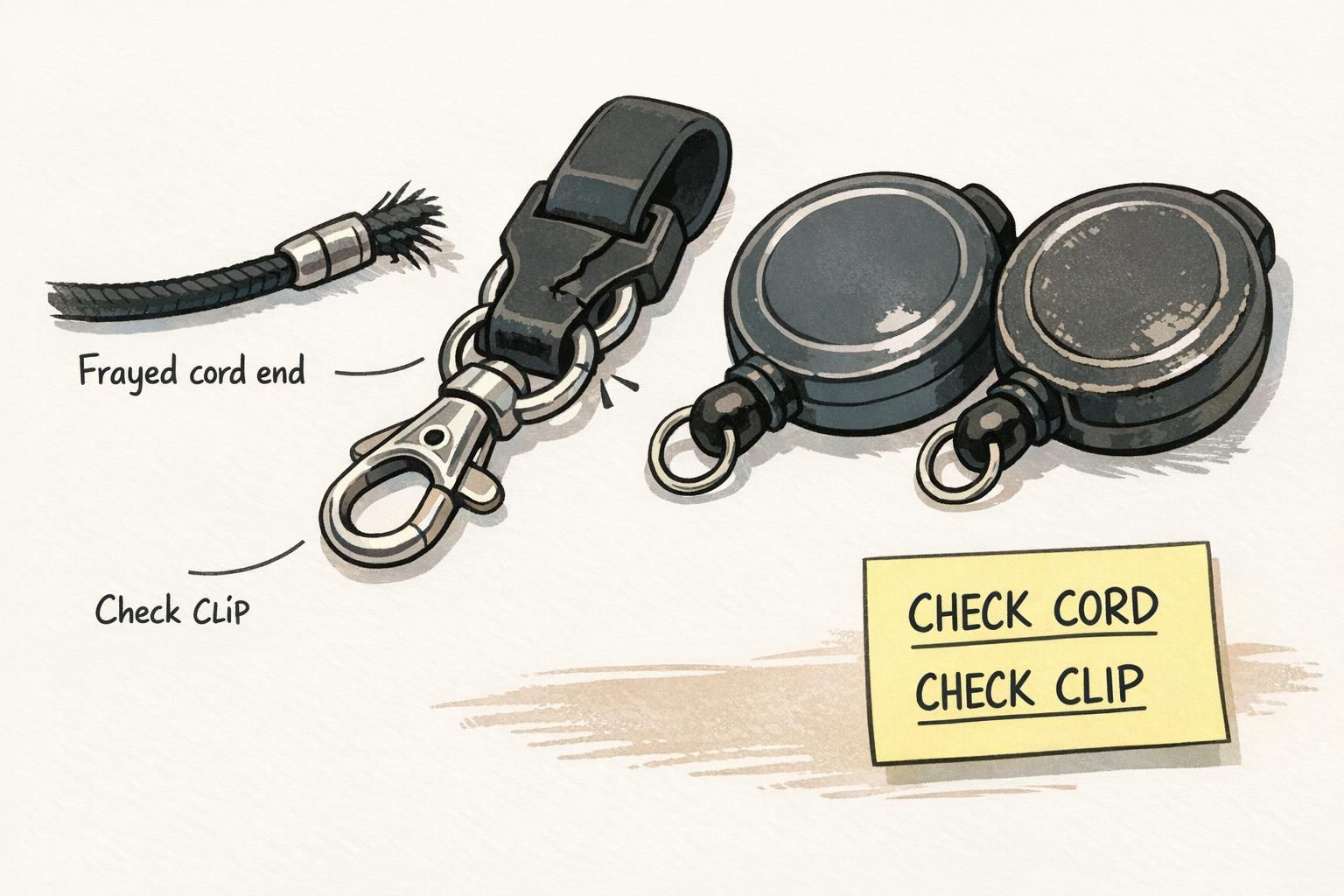
Because combo units are used repeatedly, they tend to wear out in predictable places. The highest-wear components are usually the reel’s spring mechanism, the retractable cord or tape, and the attachment hardware that connects to your badge (such as a swivel clip, snap strap, or split ring).
Small changes are early warnings. If retraction becomes slow, sticky, or uneven, the reel may be nearing the end of its useful life. Fraying or thinning at the cord end can be a sign the line is rubbing against edges or being pulled at an angle. And if the clip no longer stays closed, the badge can detach at exactly the wrong moment.
If your organization expects photo IDs to face forward, choose attachment hardware that reduces flipping and twisting. A badge that constantly rotates can make identification harder—especially in quick interactions where someone is trying to confirm your role at a glance.
- Reel mechanism: slow retraction, sticking, grinding, or failure to retract fully
- Cord or tape: fraying, thinning, kinks, or a worn spot near the end
- Attachment point: cracked plastic, bent metal, or a clip that won’t stay shut
- Rotation issues: frequent twisting that turns the photo away from view
How a combo compares to a lanyard-only or reel-only setup
A lanyard-only setup is straightforward: it keeps IDs visible and is easy to put on and take off. The tradeoff is that a fixed length doesn’t always match where your readers are. If you scan often, you can end up repeatedly leaning, twisting, or bringing your chest toward the reader to close the distance—and the badge may swing into work areas.
A reel-only setup (often worn at the belt or pocket) can be great for controlling dangling and for readers that are already near waist level. However, some organizations expect IDs to be visible above the waist for quick identification, which a reel-only placement may not satisfy.
A badge reel lanyard combo aims to balance both needs: consistent visibility plus easy extension. In high-scan roles, that can also support a broader ergonomics goal—reducing repeated awkward movements like bending, twisting, and reaching. That’s a common theme in ergonomics guidance because small movements add up over a full shift (source).
If your badge needs to be visible and you scan often, a combo can reduce the “reach-and-bend” friction that comes from forcing a fixed-length lanyard to do a retractable job.
Choosing compatible ID pieces: holders, clips, and print requirements
Most teams pair combo units with a clear vertical ID holder. It keeps the photo visible for identification, helps protect the card from wear, and gives the badge enough structure to scan reliably. If your badge needs to remain face-forward, a holder and attachment choice that reduces flipping can make daily interactions smoother.
If you carry more than one identifier—such as an access card plus a role or visitor designation—some workplaces allow a companion card behind the main badge in the same holder. The key is to follow your organization’s policy so information stays clear rather than cluttered. When done thoughtfully, supporting identifiers can reduce confusion and help others quickly understand access levels or responsibilities.
If you’re building a broader identification system (not just the wearable hardware), BadgeZoo can also produce custom photo ID cards and related ID formats so badges, holders, and day-to-day scanning workflows fit together cleanly.
- Choose a vertical holder when you want the photo area easy to see at a glance
- Confirm hole/slot compatibility between your holder and the combo’s attachment hardware
- Keep extra cards or identifiers only if policy allows and it improves clarity
- If scanning reliability is critical, protect the card surface from scratches and bending
Quick checklist: is a retractable lanyard right for your role?
A retractable lanyard is often a strong fit when you need your ID visible, scan multiple times per day, and prefer keeping the badge attached rather than removing and handling it. It’s a practical way to keep identification consistent while making access points easier to use.
Before choosing a setup, confirm any safety requirements (like breakaway connectors, maximum lanyard length, and restrictions near equipment). Then match the reel and hardware to how you actually work—how often you scan, whether you wear gloves, and how much movement your day involves.
- Do you scan multiple times per shift (doors, stations, turnstiles, printers)?
- Does your workplace require above-the-waist ID visibility?
- Is a breakaway connector required or strongly recommended in your environment?
- Will the badge rest high on the chest and stay controlled (not swinging low)?
- Does the reel retract smoothly and the clip feel secure after repeated use?
Often, yes. If your main issue is reaching readers comfortably, adding a reel component can make scanning easier while keeping the same neck-worn visibility your lanyard provides.
Not always—it depends on your workplace rules and the environment. Many healthcare and school settings prefer or require breakaway connectors, while other sites may have different standards.
Common signs include slow or incomplete retraction, fraying at the cord end, sticking during extension, or a clip that doesn’t stay closed.