Badge Solutions for Organizations: Best Options for Large Teams
Why badge solutions for organizations matter at enterprise scale
At a small office, identification can feel simple: everyone knows everyone, and new faces stand out. At enterprise scale, that changes fast. Badge solutions for organizations help large teams stay organized, support on-site security practices, and make everyday interactions clearer across departments, shifts, and locations.
In large environments, “best” usually means dependable and repeatable. You’re not just choosing a badge design—you’re building a program that can handle hundreds or thousands of people, predictable turnover, occasional spikes (like large onboarding classes), and multiple sites with different needs. A strong identification approach also supports smoother visitor management, more consistent event check-in, and clearer role recognition for staff, vendors, and contractors.
At enterprise scale, good badging is less about a single print job and more about a system: standards, speed, governance, and clear visual communication.
Common badge use cases in large organizations (employees, visitors, events, contractors)
Large organizations typically use multiple badge types because different groups have different identification needs. The goal is simple: fast issuance, easy visual verification, and consistent branding across locations—without slowing down operations.
- Permanent employee identification: Daily-wear badges for staff, often with photo, name, and a role or department cue to reduce confusion in shared spaces.
- Temporary visitor passes: Time-limited IDs for guests, interview candidates, auditors, and volunteers—designed to be immediately recognizable at a glance.
- Contractor badges with expiration: IDs issued to third-party workers that clearly signal non-employee status and include lifecycle controls such as end dates or return procedures.
- Event badges: Badges for conferences, internal summits, trainings, and multi-day meetings where check-in speed and wayfinding matter.
Visual systems are especially helpful when you have multiple sites or complex facilities. Many organizations use color-coding to speed recognition—for example, different colors for departments, access levels, buildings, shift teams, or event tracks. The key is to keep rules consistent enough that people learn them quickly, while still allowing necessary variation between environments.

Best badge solutions for organizations: a practical category breakdown
When leaders evaluate badge solutions for organizations, it helps to sort options into categories. Each category addresses a different operational problem: daily identification, event throughput, and recognition of skills or training outcomes across a large workforce.
- Physical ID programs: Printed ID cards, name tags, holders, clips, and lanyards that support everyday identification. These programs typically emphasize durability, quick visual verification, and consistent templates.
- Event badging workflows: Processes that support pre-printing, on-site printing, sorting, and reprints. The best workflows minimize lines and reduce check-in friction while maintaining clear attendee identification.
- Digital credentialing for training recognition: Portable digital credentials that validate learning achievements or role readiness. These can complement physical IDs by making training status easier to verify across teams and locations.
For digital credentialing, Open Badges is a widely used standard for issuing portable credentials that can be shared between systems. In practical terms, this can be useful for large enterprises that want skills and learning recognition to remain interoperable—especially when teams use different platforms across regions or business units.
Selection checklist for large-team badging: standards, integrations, and admin controls
A large-team identification program succeeds when it is easy to administer, consistent enough to scale, and flexible enough for real operations. Before you commit to processes or platforms, it helps to align internal stakeholders (HR, IT, Facilities, Security, and event owners) on what “good” looks like in your environment.
- Interoperability and standards: For digital credentials, consider Open Badges support if you want portability and structured verification across systems.
- Integrations: Many organizations prioritize fit with existing tools such as an LMS, HRIS, and SSO for streamlined onboarding and role changes.
- Bulk issuance and batch changes: Look for workflows that handle large onboarding cohorts, mergers, reorganizations, and seasonal staffing surges.
- Role-based administration: Define who can create templates, approve prints, issue reprints, and manage exceptions—especially across multiple locations.
- Multi-location governance: Centralize templates and policies where possible, but plan for site-specific needs like different access zones, languages, or visitor flows.
- Security and verification needs: Choose clear validation workflows and consider physical safeguards like tamper-resistant holders or design elements that reduce casual misuse.
- Lifecycle controls: Plan for expirations, renewals, re-issuance, and what happens when someone changes roles, departments, or locations.
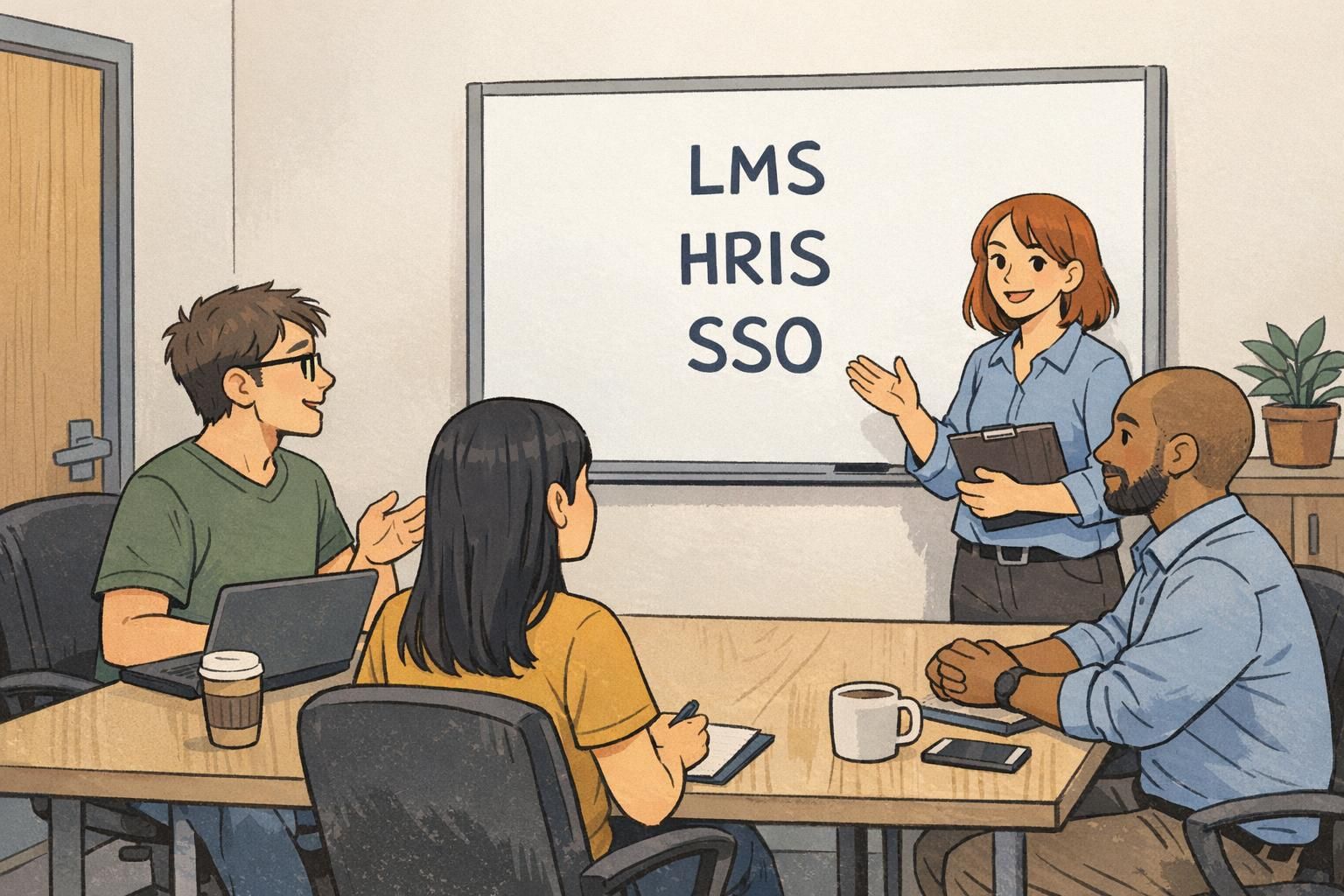
Different environments prioritize different checklist items. A corporate HQ may emphasize branding and visitor experience, while a warehouse or healthcare setting may prioritize fast visual identification and durable daily-wear components.
Designing employee badges for teams: clarity, durability, and fast visual identification
In large organizations, the badge design itself does a lot of day-to-day work. Well-designed employee badges for teams reduce hesitation in shared areas, support smoother customer-facing interactions, and help staff feel confident when coordinating across departments.
Clarity starts with a layout that prioritizes what people need in real time. In many workplaces, that means a readable name, a consistent photo placement, and a simple role or department indicator. When the same layout is used across sites, people learn where to look—saving seconds that add up over thousands of daily interactions.
- Readable names: Use strong contrast and adequate font size so names can be read at conversational distance.
- Consistent photo placement: Keep the photo in the same location on every badge to reduce scanning time and confusion.
- Role/department indicators: A short label, icon, or color band can help others route questions quickly (and reduce misdirected requests).
- Durable daily-wear setup: Consider holders, clips, or lanyards that keep badges flat and visible during movement and active work.
- Simple, consistent branding: A unified look across locations supports professionalism and helps visitors recognize staff.
“When the badge layout is consistent, people stop squinting and start moving. It’s a small design choice that makes the whole workplace feel more coordinated.” – Facilities coordinator
Scaling production and distribution: central standards with local flexibility
Scaling an identification program typically requires a hybrid approach: central standards for consistency, plus local issuing for speed. Many large organizations centralize templates, fields, and policies, then empower site administrators to issue badges on-site so new hires, contractors, and visitors can be supported without delay.
A practical way to think about it is “one system, many lanes.” Central teams define the lane markers—what must be consistent everywhere—while local teams execute within those boundaries to match real-world conditions.
- Standardized fields: Decide what information is required, optional, or restricted (for example, name, photo, department, and an ID number).
- Approval workflows: Define when a badge requires manager, HR, or security approval—especially for elevated access roles.
- Batch printing: Plan for onboarding cohorts, seasonal waves, or role changes that affect many people at once.
- Reprint procedures: Create a simple path for lost or damaged cards that maintains controls and auditability.
- Location-specific needs: Support differences like multiple languages, unique facility zones, or special visitor categories while keeping core templates recognizable.

Event badges and temporary IDs: smooth check-in and better on-site flow
For large events, internal summits, and multi-session trainings, event badges and temporary IDs are operational tools as much as they are identification. They influence how quickly people enter the space, how easily attendees find sessions, and how smoothly staff can support the day.
The strongest event workflows usually start before anyone arrives. Pre-registration lists can be used to prepare badges in advance, sort them for quick pickup, and reduce bottlenecks at peak times. On-site printing and fast reprint procedures help when names change, badges are lost, or last-minute attendees appear.
- Make names prominent: The attendee name is the fastest way to support networking and reduce awkward introductions.
- Include a simple organization cue: Company, department, or team name can help people connect and route questions.
- Use color bars for tracks or access levels: A clear color strip can signal sessions, meal eligibility, VIP areas, or staff roles without slowing verification.
- Design for scanning and visibility: Badges should hang straight and stay readable when people move through lines and hallways.
- Plan for on-demand reprints: A predictable reprint station prevents small issues from disrupting the schedule.
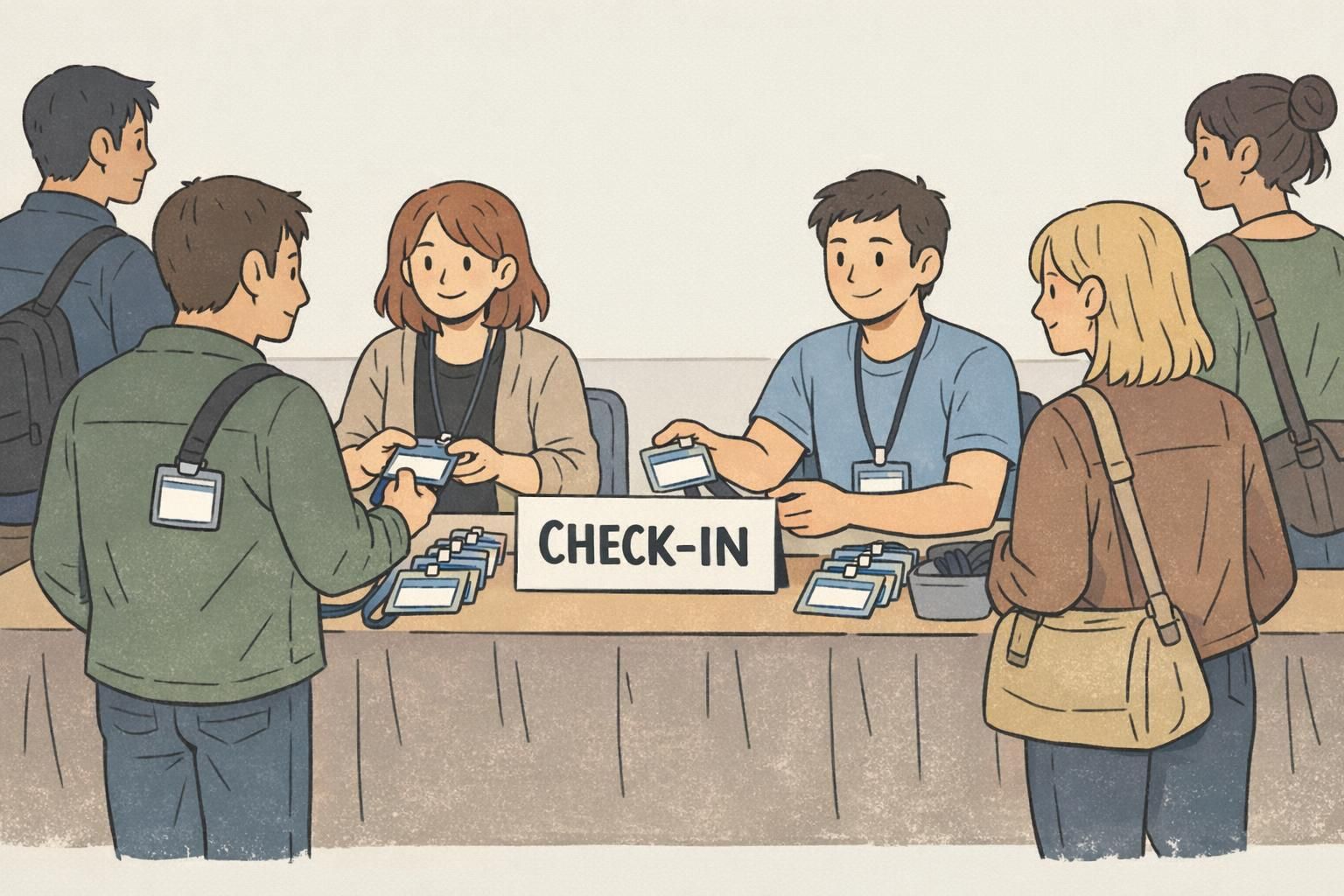
Event badges do more than identify attendees—they support wayfinding, reduce check-in friction, and help staff coordinate quickly when schedules and rooms change.
When digital credentials complement physical IDs (Open Badges and micro-credentials)
In large, distributed workforces, training and compliance can be difficult to track across teams, job types, and locations. Digital credentials can complement physical identification by making learning achievements easier to verify and share—especially for role readiness, safety training, and internal career pathways.
Open Badges are designed as portable digital credentials with structured metadata. In practice, that means a credential can include information such as the issuer, criteria, and evidence—supporting clearer verification and reducing friction when credentials need to move between systems. This standards-based approach is one reason enterprises often evaluate interoperability and governance early, particularly when multiple platforms or vendors are involved (source).
It’s also helpful to keep expectations realistic: digital credentials are typically not a replacement for workplace identification. Instead, they add a complementary layer—helping organizations recognize skills and training outcomes while physical IDs continue to support on-site visual identification and day-to-day access processes.
Products that support enterprise identification programs (templates, name tags, badges, and add-ons)
An enterprise identification program usually includes a mix of formats and accessories so each environment gets what it needs without reinventing the process. Common components include organizational ID badges for employees, name tags for select roles, and add-ons that keep IDs visible, protected, and easy to interpret at a glance.
Teams often standardize the template (layout, fields, and brand elements) while varying the format by role or location. For example, an office may prioritize a clean, professional badge layout and comfortable everyday wear, while a warehouse or operations site may prioritize holders and clips that keep identification stable during movement. Healthcare and customer-facing environments frequently benefit from especially clear name and role visibility to reduce confusion during high-traffic interactions.
- Printed ID cards: A consistent foundation for employee identification across sites and departments.
- Name tags: Useful for roles where quick first-name recognition improves service and communication.
- Holders, clips, and lanyards: Help badges stay visible, protected, and oriented correctly throughout the day.
- Badge buddies and role identifiers: Add an extra layer of fast recognition (for example, visitor status or access category) when appropriate for the environment.
- Standard templates: Reduce friction by ensuring everyone knows where to look for key information on a badge.
For organizations building or expanding a physical ID program, custom plastic ID badges for large teams are a common starting point because they support standardized layouts and consistent day-to-day identification.

Standardization reduces friction for large teams: fewer exceptions, faster issuance, clearer recognition, and a more consistent experience across locations.