Best Badge Options for Trade Shows and Networking Events
Why event badges matter at trade shows and networking events
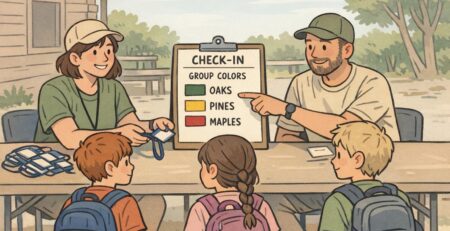
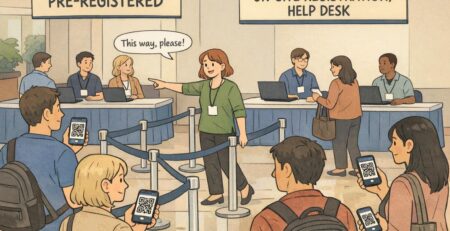
Trade shows and networking events move fast. People are balancing schedules, booths, meetings, and conversations—often in loud, crowded spaces where introductions can be awkward or rushed. A well-designed badge, especially trade show badges, turns “Who are you again?” into an easy, natural start: someone can see your name, organization, and role at a glance and begin the right conversation.
Event badges also help organizers create a more professional, orderly experience. When badges are consistent and readable, they support smoother check-in, reduce confusion on the floor, and make it easier for attendees to find the right people—whether that’s exhibitors, speakers, staff, VIPs, or other attendees.
- Fast introductions: readable names and organizations reduce friction and help conversations start naturally.
- Role clarity: clear labels like ATTENDEE, EXHIBITOR, SPEAKER, or STAFF help everyone navigate the event confidently.
- Sponsor visibility: many events use badge real estate (or lanyards and add-ons) for sponsor recognition without overwhelming the core info.
- Operational flow: badges can support quicker check-in, room access, and on-site problem-solving when details need to be confirmed.
- Trade show badges enhance networking opportunities by providing essential information quickly and clearly.
Start with your event needs: a quick checklist before you choose a badge
The “best” badge option isn’t universal—it depends on how your event runs. Before you pick materials, printing methods, or accessories, it helps to map your workflow from registration to the show floor. That way, your badge choice supports your staff and attendees instead of creating last-minute workarounds.
Requirements vary by organization and venue. A badge that fits your check-in process, branding goals, and on-site realities will outperform a “fancier” badge that’s hard to update or distribute.
- Attendee volume: How many people are you processing per hour at peak check-in?
- On-site changes: How often do you expect walk-ins, substitutions, misspellings, or role changes?
- Days of access: Is this a one-day meetup or a multi-day conference where durability matters more?
- Budget priorities: Are you optimizing for unit cost, staff time, speed, or a premium look?
- Brand expectations: Do you need a specific aesthetic (high-end, minimalist, bold, sponsor-forward)?
- Sponsor placements: Where will sponsor marks go—badge front, back, lanyards, or separate add-ons?
- Scanning or access control: Do you need barcodes/QR codes for lead capture, check-in, session entry, or security checkpoints?
Paper insert badges in reusable plastic holders (the flexible workhorse)
Paper inserts inside reusable plastic badge holders are a popular choice for trade shows and networking events because they balance cost control with day-of flexibility. When your event has walk-ins, frequent edits, sponsor-heavy layouts, or shifting roles, paper inserts are forgiving—and they keep the badge system running even when plans change.
Operationally, the biggest advantage is how quickly you can reprint an insert. If a name is misspelled, someone changes companies, or a substitute speaker arrives, you can update the insert on the spot without having to replace a full premium badge.
- Best for: low–medium budgets, events with expected walk-ins, events that anticipate frequent corrections, sponsor-forward designs, and teams that want straightforward on-site reprints.
- Pros: easy to reprint inserts, flexible for last-minute changes, supports reuse (holders and sometimes lanyards), works well with color bars/role labels, generally familiar to attendees.
- Cons: paper inserts can bend or wrinkle if unprotected, holders can glare under bright lighting if the finish is very shiny, and the overall look may feel less “premium” than direct-print options.
“Paper inserts in holders are the option we can adjust in real time. When someone shows up with a last-minute change, we don’t have to hold up the whole line.” – Event Registration Lead

Direct-print plastic/PVC badges (premium, durable, multi-day ready)
Direct-print plastic/PVC badges are a strong fit when you want a more polished look and a badge that holds up across multiple days. For conferences with VIP programming, exhibitor teams, speakers, or staff who will wear badges continuously, durable plastic can reduce wear and keep badges readable through long schedules.
These badges can signal professionalism and help the event feel cohesive—especially when paired with consistent branding and role identification. The tradeoff is that on-site changes are usually less flexible than swapping a paper insert, so planning and a backup approach matter.
- Best for: VIPs, exhibitors, speakers, staff/crew badges, multi-day conferences, and events where a premium presentation is part of the experience.
- Pros: durable and long-wearing, professional appearance, less likely to wrinkle or tear, stays readable through repeated handling.
- Cons: higher unit cost compared to paper inserts, last-minute edits may require a full badge reprint, and you’ll want a clear process for replacements and corrections.
If you choose direct-print badges, build a small contingency plan: a method to handle last-minute replacements (and a clear policy for role changes) keeps the badge system consistent on the floor.
On-demand / thermal-printed badges for fast check-in and last-minute changes
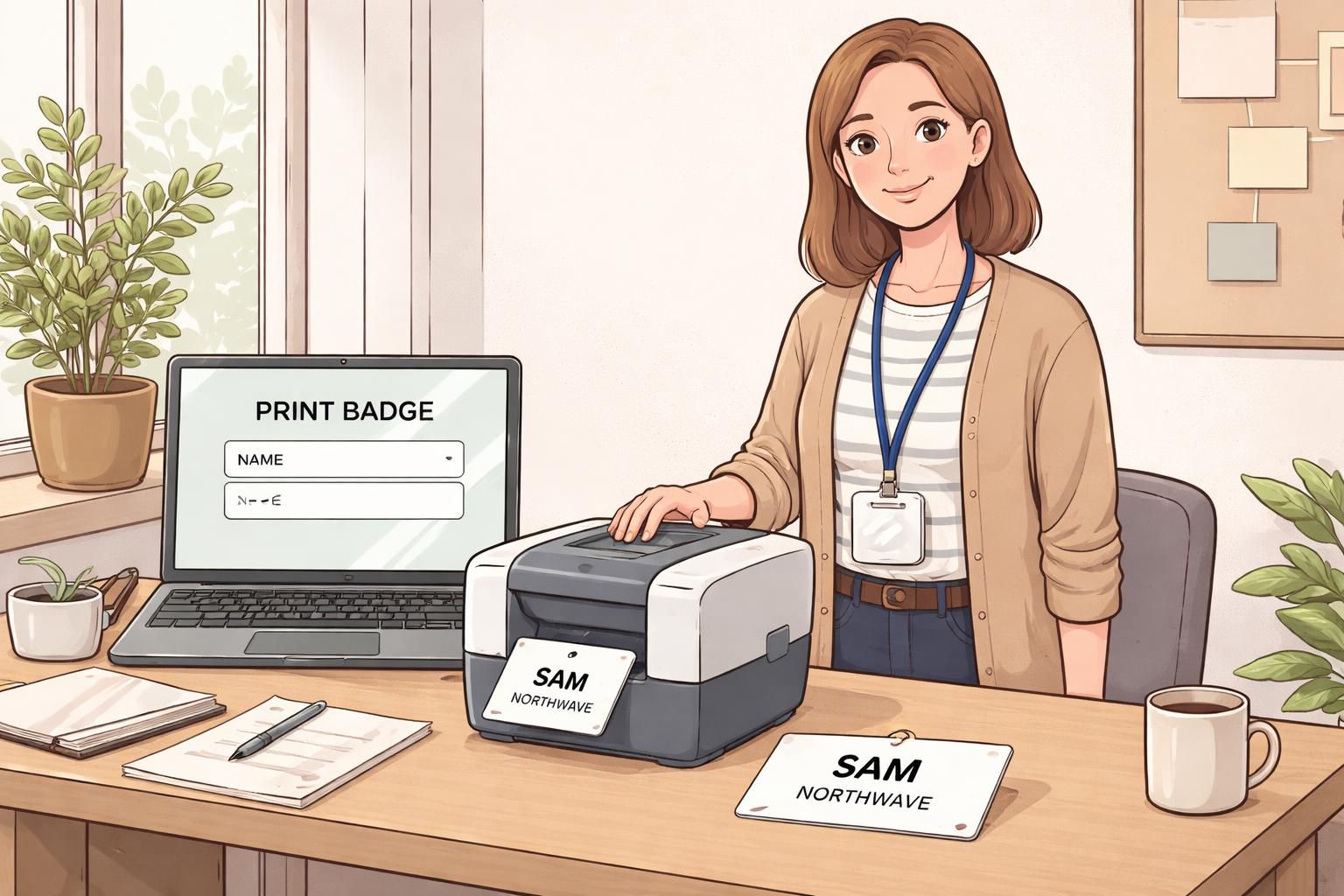
On-demand badge printing at registration can dramatically improve check-in speed while reducing waste from no-shows. Instead of printing every badge days in advance, teams print badges as attendees arrive—making it easier to handle walk-ins, substitutions, and real-time corrections without a separate “fix-it” process.
This approach also pairs well with data-driven events. Barcodes or QR codes can be tied to registration records for quick lookup, session entry, lead capture, or attendance tracking—while still keeping the human-readable name front and center for networking.
- Best for: high-volume check-in, events with many walk-ins, and programs where scannable codes connect attendees to registration data.
- Benefits: fewer pre-printed no-show badges, fast updates, easier corrections, consistent formatting, and the ability to include barcodes/QR codes without manually managing spreadsheets at the desk.
- Watch for: printer backups (have a backup plan), label/stock quality (readability and durability matter), and staff training (a smooth process is as important as the hardware).
Eco-friendly and reuse-focused badge approaches
Sustainability is increasingly part of event planning, and badges are a practical place to make thoughtful improvements. Eco-friendly approaches typically focus on reducing single-use materials, improving reusability, or choosing inputs with recycled content—while still delivering the core purpose of clear identification.
A reuse-focused mindset often delivers the most reliable real-world results: durable components that can be collected and used again can reduce waste without sacrificing legibility or professionalism. The key is to be realistic about disposal and recycling pathways in your venue and region.
- Recycled card stock inserts: a straightforward option that keeps printing simple while reducing virgin material use (durability can vary).
- Sturdy holder-free badges: reduces plastic components, but you’ll want to confirm they hold up through long wear and don’t easily bend.
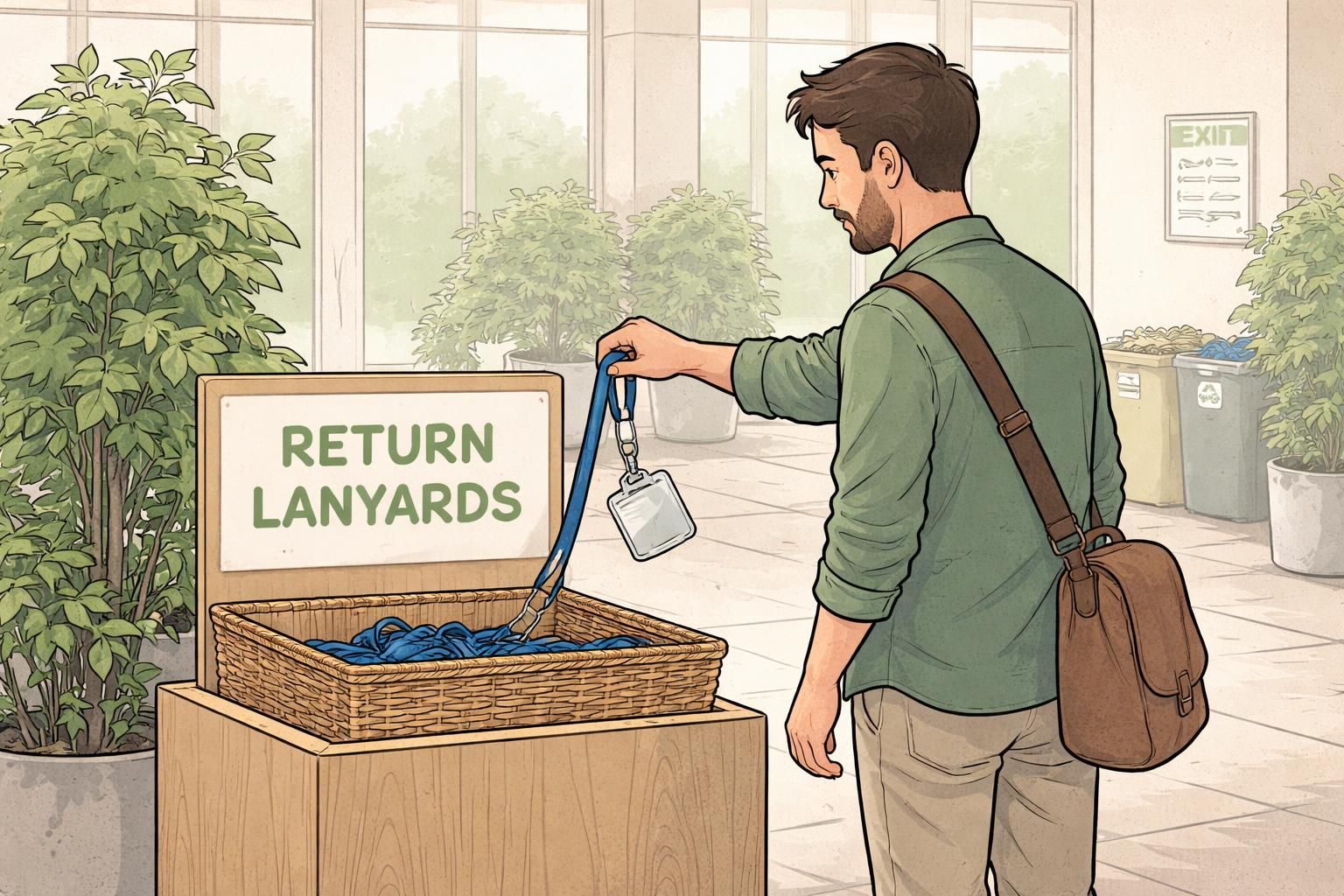
- Collect-and-reuse programs: set up return bins for holders and lanyards, then sort and store them for future events.
Communicate your sustainability approach clearly: a brief note at check-in and visible return signage increases participation and helps attendees understand what to do with holders and lanyards after the event.
Smart badges (QR, NFC, RFID): when tech adds real value
Smart badge features can be extremely useful when they’re tied to a clear operational goal. QR codes and barcodes are common starting points because they’re easy to scan and can connect to registration records. NFC or RFID can support faster taps and automated access control in the right environment.
The strongest use cases are the ones that reduce friction for attendees or staff: quick entry to sessions, reliable exhibitor lead capture, or accurate attendance tracking for continuing education. Smart badges are often most worth the investment for large expos, multi-session conferences, or programs that truly use the data to improve the experience.
- Lead capture: exhibitors can scan codes to capture contact details and notes without manually typing names.
- Access control: checkpoints can verify valid entry (for days, rooms, or VIP areas) efficiently.
- Session tracking: attendance can be logged for popular sessions, capacity planning, or credentialing workflows.
- Analytics: organizers can review traffic patterns and engagement to improve future event design.
Even with smart features, printed readability still matters. A scannable code is helpful, but a clear first name and organization are what power real-time networking.
Because smart badges can involve personal data and tracking, it’s wise to communicate clearly: what’s being scanned, why it’s being used, and how it benefits the attendee experience. Simple, transparent messaging helps maintain trust while keeping the event running smoothly.
Size, layout, and readability: design for quick introductions
Great badge design is less about fitting everything and more about making the most important information instantly visible from a comfortable distance. In networking settings, the badge’s job is to support eye contact and conversation—not force people to squint under overhead lights.
A reliable approach is to choose a common, easy-to-wear size and follow a clear hierarchy: first name first, then last name, then organization. Add role labels only when they serve a purpose (like exhibitor vs. attendee), and keep any QR/barcode placed where it won’t compete with the name.
- Common sizes: many events choose a standard rectangle size that fits common holders and lanyards; choose a size large enough to feature the first name prominently.
- Layout hierarchy: First name (largest) → Last name (smaller) → Organization → Role label (if needed) → QR/barcode (optional).
- Contrast: dark text on a light background is typically easiest to read in busy environments.
- Keep backgrounds simple: gradients, patterns, and busy textures can make names harder to spot quickly.
- Lighting and glare: overly shiny finishes can reflect convention lighting; prioritize readability from multiple angles.
Attachment options: lanyards, clips, and magnets (and how to choose)
How a badge is worn affects comfort, visibility, and whether attendees keep it on throughout the event. The right attachment choice can also reduce friction at check-in—if people can put on a badge quickly, the line moves faster and your identification system is more consistently used.
Many events offer a default attachment (often lanyards) while keeping alternatives available. Having options is a practical way to accommodate different clothing types, sensory preferences, and accessibility needs. In public-facing settings, it’s wise to be prepared with reasonable alternatives rather than relying on a single method (source).
- Lanyards: comfortable for most attendees, strong brand visibility, easy to distribute at check-in; can swing or flip in crowded spaces if the badge is very light or not stabilized.
- Clips/pins: keeps the badge higher on the chest for easy reading; can be preferred for short events; pins may not suit delicate fabrics.
- Magnets: convenient and fabric-friendly for many people; provide a clean look; offer a non-magnetic option for attendees who prefer it or have medical considerations.
A simple best practice: offer at least one alternative attachment method at check-in so attendees can choose what works best for comfort and visibility.
Role recognition with color coding and badge add-ons (without clutter)
Role recognition helps everyone make sense of a busy event. When attendees can instantly identify STAFF, EXHIBITOR, SPEAKER, or VIP, they know who to approach with questions, where to go for support, and how to start conversations appropriately. The trick is to make roles obvious without shrinking the attendee’s name or overcrowding the design.
Color coding is one of the simplest tools: different lanyard colors, a bold color bar at the top or bottom of the badge, or a clean role label can work well. If you need role text to be large and visible from a distance, add-ons can help maintain a readable name while keeping roles unmistakable.
One popular approach is using badge buddy add-ons for clear role visibility, which place large role text beneath the main badge. This preserves the main badge layout (especially the attendee’s first name) while making roles easier to spot across aisles, at doors, or in staff-only areas.
- Use one primary role indicator: pick either a role label, a color bar, or a buddy add-on as the main signal.
- Keep role text short: STAFF, EXHIBITOR, SPEAKER, VIP—avoid long titles that reduce legibility.
- Standardize colors: choose a small set and apply them consistently across signage, staff instructions, and badge design.
- Prioritize the name: role recognition should support introductions, not compete with them.

Security and access control basics for events
Event security doesn’t have to be complicated to be effective. In many cases, the most helpful “security layer” is simply a clear, consistent badge system that makes it easy to recognize who belongs in which spaces. When badges are readable and roles are obvious, staff can confidently guide attendees and spot issues early.
Start with the lightest security approach that fits your event and scale upward only as needed. For example, a small networking meetup may only need a name and organization, while a large conference with controlled areas may benefit from scannable codes and date validation.
- Photo badges for staff/crew (when appropriate): helps confirm identity for roles with elevated access.
- Prominent role labels: makes it easier to route questions and enforce staff-only or exhibitor-only areas.
- Valid dates or day indicators: supports multi-day entry and reduces confusion at doors.
- QR/barcode checks: quick verification for sessions, VIP areas, or paid add-ons without slowing lines.
Security and clarity work together: a badge can support access control while still respecting attendee privacy by keeping on-badge details purposeful and readable.
Recommended badge setups by event type (quick decision guide)
If you’re choosing quickly, it helps to think in “setups” rather than individual parts. A good setup matches your check-in reality, your on-site change expectations, and the durability you need—while keeping names and roles easy to read.
- Small networking meetups (dozens to low hundreds): paper inserts in holders with simple lanyards or clips; prioritize big first names for fast introductions and easy reprints if someone updates details.
- Mid-size conferences (hundreds to low thousands): on-demand printed inserts in holders for speed and flexibility, plus optional QR/barcodes for session entry or check-in verification.
- Large trade shows with exhibitors (thousands+): on-demand printing at scale, clear role labeling (ATTENDEE/EXHIBITOR/STAFF), and scannable codes for lead capture; consider more durable badges for exhibitors and staff who wear them continuously.
- Sustainability-focused events: recycled card stock inserts, return-and-reuse bins for holders and lanyards, and clear signage so attendees know how to participate; choose materials that stay readable through the full event.
“The best setup is the one that matches how your registration actually works. A badge system should reduce friction, not create a new bottleneck.” – Conference Operations Coordinator
Common pitfalls to avoid (and simple fixes)
Most badge problems aren’t caused by the badge itself—they come from small design or process choices that make badges harder to read, harder to manage, or inconsistent across the event. The good news is that the fixes are usually straightforward and have an immediate impact on attendee experience.
- Pitfall: tiny names. Fix: make the first name the largest element; remove nonessential fields from the front.
- Pitfall: overcrowded layouts. Fix: move secondary details to the back (or remove them) and use whitespace to improve scanning speed.
- Pitfall: glare-heavy laminates or overly shiny holders. Fix: prioritize finishes and materials that remain readable under bright convention lighting.
- Pitfall: inconsistent role labeling. Fix: standardize role names (e.g., STAFF/EXHIBITOR/SPEAKER) and apply one consistent color system.
- Pitfall: no reprint plan. Fix: designate a staffed reprint station or process for corrections and substitutions, and keep templates ready for quick edits.
When badges are readable, consistent, and easy to update, attendees spend less time figuring out logistics—and more time having the conversations your event is built for.